Aztec PantheonRealm
Omeyocan
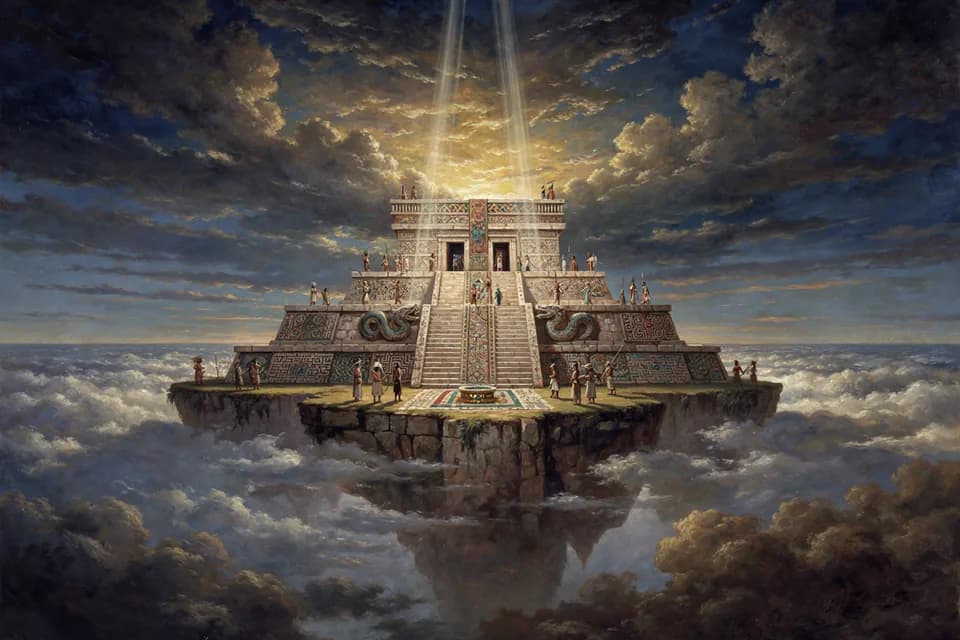
The 'place of duality', the highest of the thirteen heavens in Nahua cosmology, home of the creator pair Ometecuhtli and Omecihuatl (Ometeotl), from which the souls of children were said to descend.
About Omeyocan
The top of the heavens
Nahua sources describe the heavens as a series of levels, most often thirteen, above the earth. At the top is Omeyocan, 'the place of two' or 'place of duality', where the creator pair dwell: Ometecuhtli and Omecihuatl, Lord and Lady of Duality, also called Tonacatecuhtli and Tonacacihuatl. The Florentine Codex records speeches in which a newborn child is said to have been sent from that highest place.
Sources and variation
The layered heavens are drawn and glossed in the Codex Vaticanus A (Codex Ríos), and the creator pair's role opens the Historia de los mexicanos por sus pinturas. The number and names of the heavens differ between sources, and some scholars argue the neat thirteen-level scheme owes something to its Spanish-era presentation. The idea of a dual creator at the top of the cosmos, however, runs through Nahua poetry and prayer.
Sources and further reading
Source notes
These references are recorded in the catalog. Their passage wording and translation have not been checked, so quotations are not displayed here.
- Bernardino de Sahagún, Florentine Codex, Book 6
- Historia de los mexicanos por sus pinturas
About this entry
By Elizabeth Stein for Mythos Atlas. About the author. Editorial notes are grounded in the site's cited sources and can be challenged through the contact page.
Coordinates mark where the myths place a site, or where the tradition locates it today. Mythic realms are left off the map or marked as symbolic placements.