Australia (many distinct Countries)
Aboriginal Australian Traditions

Not one mythology but the living laws and stories of hundreds of Aboriginal nations, often called the Dreaming in English. This entry is a respectful introduction limited to stories that their custodians have chosen to share publicly, each attributed to its people and Country.
History and context
A cultural note before reading
This entry includes only stories that Aboriginal custodians have chosen to share publicly, in forms published by or with the communities concerned: through national park signage written with traditional owners, national heritage listings prepared in consultation with communities, museum exhibitions developed with knowledge holders, and community organisations' own publications. Much Aboriginal knowledge is secret or sacred, restricted by gender, age, or initiation, or belongs to particular families and clans; none of that material is included here, and where a figure is associated with restricted ceremony, this site says so and stops. Summaries on this site are not a substitute for the tellings of the peoples themselves, and readers are encouraged to seek out community-authored sources, such as the publications of Aboriginal land councils and cultural centres, the First Knowledges book series, and works by Aboriginal authors.
Aboriginal and Torres Strait Islander readers are advised that sources linked from this entry may contain names and images of people who have died.
Not one mythology
Before colonisation there were more than 250 Aboriginal languages and many more dialects, each the language of a people with its own Country, law, and stories. There is no single "Aboriginal mythology", any more than there is a single European one, and presenting Kulin, Noongar, and Aṉangu stories on one page does not mean they belong to one system. Each story on this site is attributed to the people and Country it belongs to. Torres Strait Islander peoples have their own distinct traditions, which this entry does not cover.
The Dreaming, and the words for it
"The Dreaming" and "Dreamtime" are English words, popularised by the anthropologists Baldwin Spencer and Francis Gillen from an Arrernte term, and by W. E. H. Stanner's essay "The Dreaming" (1953). Aboriginal languages have their own terms, with their own meanings: Jukurrpa in Warlpiri, Tjukurpa for Aṉangu, Altyerre in Arrernte, Nyitting for Noongar people, and many others. These words name something that is not simply a distant past: ancestral beings travelled and shaped the land, established law, and remain present in Country, in the stars, and in the lives of their descendants. Stanner's word for this was "everywhen". This entry therefore does not give a start or end date.
Not "gods"
The beings on this page are called ancestral beings or creator beings, not gods. Some, like Bunjil and Baiame, were described by nineteenth-century missionaries and ethnographers as a "Supreme Being" or "All-Father", and scholars have long debated how much those descriptions were shaped by Christian expectations. Others, like the Seven Sisters or Kuniya and Liru, are ancestors whose actions left their marks on the land. The site's usual "deity" format is used for technical reasons only, and each figure is labelled as an ancestral being.
Songlines and Country
Many ancestral journeys are recorded as songlines: sequences of songs, stories, dances, and designs that follow the ancestors' tracks across the land, sometimes for thousands of kilometres and through the Countries of many peoples. A songline is at once a map, a law, and a history. The Seven Sisters songline shared through the National Museum of Australia's exhibition Songlines: Tracking the Seven Sisters (2017) is one publicly shared example.
Colonisation and continuity
Colonisation from 1788 brought dispossession, violence, the removal of children, and the suppression of languages and ceremonies. Aboriginal law and story nonetheless continue, held by elders, taught in communities, and increasingly shared on Aboriginal terms, as in the co-management of Uluṟu-Kata Tjuṯa National Park and the National Heritage listing of Baiame's Ngunnhu at Brewarrina. The recognition of Aboriginal cultural authority over these stories is part of that continuing history.
Cosmology
Country, Sky, and Water: No Single Map
There is no one Aboriginal cosmology. This diagram only sorts the publicly shared stories on this site by where their beings are found: ancestors in the sky, in the land, and in the waters, each belonging to a particular people and Country.
In the sky
AboveThe night sky
Where, in their own peoples' stories, Bunjil is seen as Altair (Kulin), and the Seven Sisters as the Pleiades, pursued by Wati Nyiru in Orion (Western and Central Deserts).
In Country
MiddleUluṟu and the desert
Aṉangu Country, where Kuniya and the Liru left their marks in the rock.
Visit UluṟuKulin and Ngemba Country
Land shaped by Bunjil in central Victoria, and the Barwon River at Brewarrina where Baiame laid out the fish traps.
Visit Baiame's Ngunnhu (Brewarrina Fish Traps)
In the waters
WatersRivers and waterholes
The waters made or kept by serpent beings such as the Noongar Wagyl, and by Pallian among the Kulin; dangerous water beings live in some waterholes of the south-east.
Visit Derbarl Yerrigan (Swan River)
 Bunjil
 The Seven Sisters (Minyipuru, Kungkarangkalpa)
 Wati Nyiru (Yurla)
 Kuniya
 Liru
Liru Baiame
 Mimih
Mimih Wagyl (Waugal)
 Rainbow Serpent (an umbrella term)
 Pallian
 Bunyip
Sources
Works cited
National Museum of Australia, Songlines: Tracking the Seven Sisters (exhibition and catalogue, ed. Margo Neale)
Margo Neale (ed.), with Martu, Ngaanyatjarra, and Aṉangu Pitjantjatjara Yankunytjatjara custodians
Aṉangu traditional owners and Parks Australia
Australian Government, National Heritage List: Brewarrina Aboriginal Fish Traps (Baiame's Ngunnhu)
Department of Climate Change, Energy, the Environment and Water
The Dreaming
W. E. H. Stanner
Songlines: The Power and Promise (First Knowledges series)
Margo Neale and Lynne Kelly
About this guide
By Elizabeth Stein for Mythos Atlas. About the author. Editorial notes are grounded in the site's cited sources and can be challenged through the contact page.
The catalog period is the span of the sources this atlas draws on, not the age of the tradition itself. Many traditions are older than their first written record, and many are still practised.
9 in the atlas
Ancestral Beings
 BunjilCreator Ancestor (Kulin)
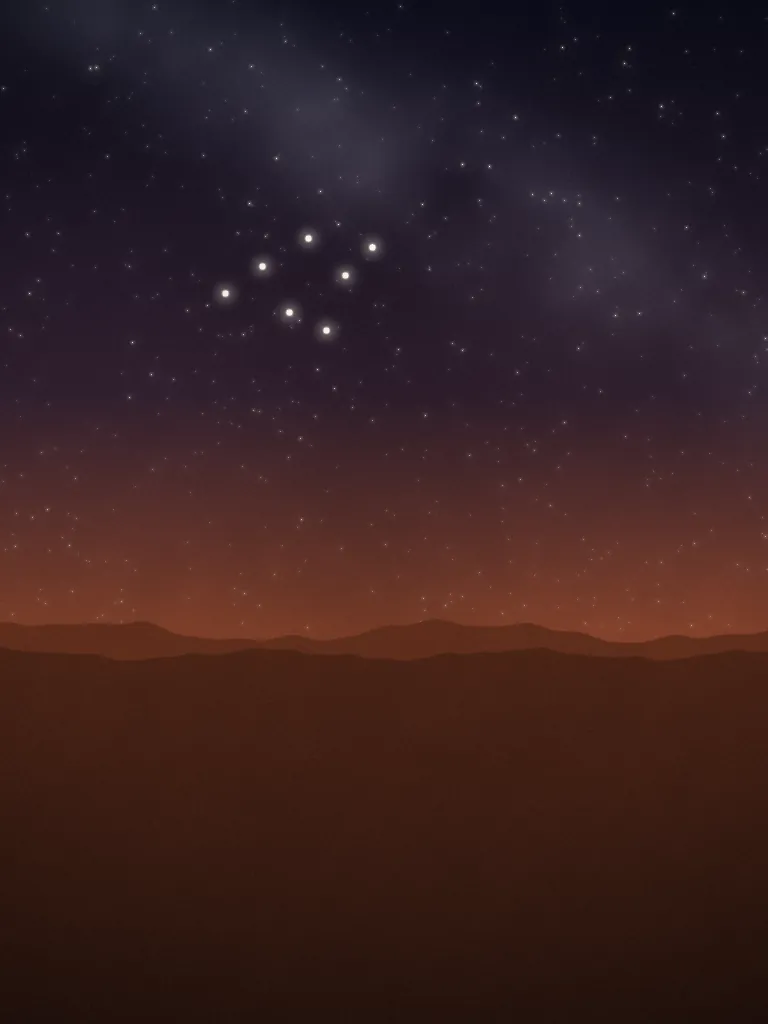 The Seven Sisters (Minyipuru, Kungkarangkalpa)Ancestral Sisters (Western and Central Deserts)
 KuniyaAncestral Being (Aṉangu)
 PallianAncestral Being of the Waters (Kulin)
 BaiameCreator Ancestor (NSW nations)
 Wagyl (Waugal)Serpent Being of the Waters (Noongar)
 Wati Nyiru (Yurla)Ancestral Pursuer (Western and Central Deserts)
 Rainbow Serpent (an umbrella term)Scholarly Umbrella Term
 LiruAncestral Beings (Aṉangu)
5 retold
Stories and myths
 Bunjil and the Making of Kulin CountrycreationA Kulin creation story from central Victoria, shared publicly by Kulin people: Bunjil the eagle shapes the land and the first men, his brother Pallian brings the first women from the water, and Bunjil gives them law before rising into the sky.
 The Seven Sisters SonglinelegendShared by Martu, Ngaanyatjarra, and Aṉangu Pitjantjatjara Yankunytjatjara custodians through the National Museum of Australia: ancestral sisters flee across the deserts from a man who uses magic to pursue them, and rise into the sky as the Pleiades.
 Baiame's Ngunnhu: The Brewarrina Fish TrapsoriginShared by the Ngemba people and their neighbours at Brewarrina, New South Wales: the ancestral creation being Baiame revealed the design of the stone fish traps in the Barwon River by throwing his net over it, and gave each family group a trap to use and maintain.
 The Wagyl and the Derbarl YerrigancreationShared publicly by Whadjuk Noongar people: in the Nyitting, the creation time, the Wagyl moved across the land and shaped the Derbarl Yerrigan (Swan River) and the waterways of the Perth region.
 Kuniya and Liru at UluṟulegendShared publicly by Aṉangu at Uluṟu-Kata Tjuṯa National Park: when Liru warriors kill her nephew, Kuniya the woma python woman confronts one of them at Muṯitjulu Waterhole and strikes him down with her digging stick.
4 in the atlas