Hindu Pantheonweapon
Vajra
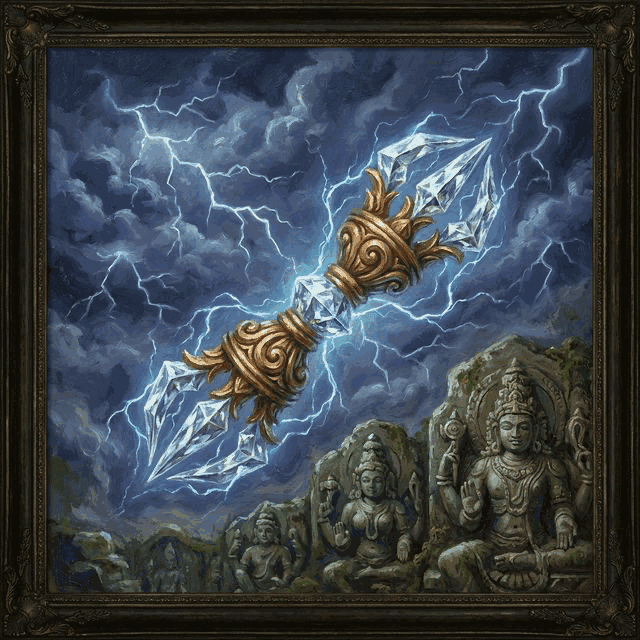
- Lightning Control
- Indestructibility
- Demon Slaying
- Weather Command
Indra's thunderbolt, the weapon of the king of gods. Indestructible and irresistible, it represents both the hardness of diamond and the unstoppable force of lightning.
About Vajra
Indra's bolt, then Dadhichi's bones
The Rigveda has Indra smash Vṛtra with the vajra, the mace or thunderbolt of the king of the gods. A later Brahmana and Puranic story: the gods need a weapon, the sage Dadhīchi gives his bones, Tvaṣṭṛ or Vishvakarma forges the bolt. Buddhist vajra as diamond-thunder is a further career of the same word. For this Hindu weapon, keep Indra, the dragon-obstructor Vṛtra, and the sacrificial gift of the sage. The object is hymn-function first, relic-story later. It is not a temple mace with a proven original.
Origin
Forged by Vishwakarma from the bones of the sage Dadhichi, who sacrificed himself so the gods could defeat the demon Vritra.
Sources and further reading
Source notes
These references are recorded in the catalog. Their passage wording and translation have not been checked, so quotations are not displayed here.
- Rigveda 1.32 (Indra and Vṛtra)
- Mahabharata / Puranas (Dadhichi)
About this entry
By Elizabeth Stein for Mythos Atlas. About the author. Editorial notes are grounded in the site's cited sources and can be challenged through the contact page.
Keep exploring
One myth a week, with its sources in a short email. The sign-up form is just below.