Side by sideParent and child

Aganju vs Shango

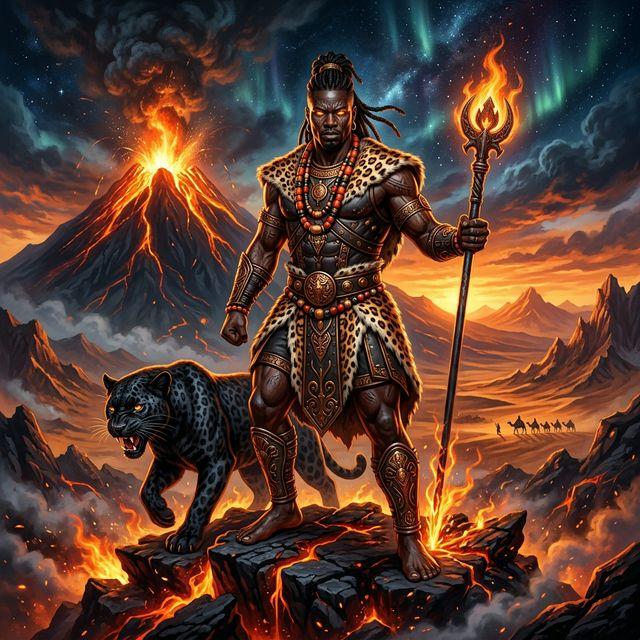
Aganju
AganjuYoruba
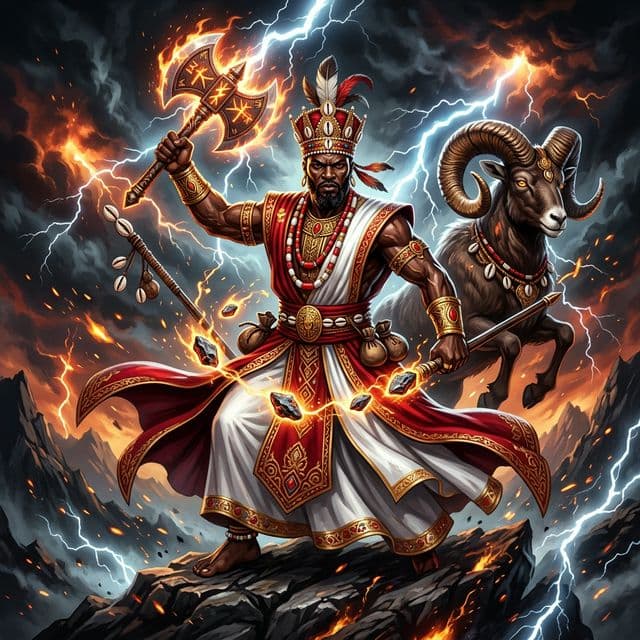
Shango
ShangoYoruba

Aganju and Shango are recorded as parent and child in the Yoruba Tradition.

At a glance

Aganju and Shango compared
AganjuShango
TraditionYoruba TraditionYoruba Tradition
Domainsvolcanoes, wilderness, earth, desert, firethunder, lightning, fire, justice, kingship
Symbolsvolcano, leopard, desert, mountains, firedouble-headed axe, thunderstones, red and white colors, ram, crown
Also calledAganyuSango, Xango, Chango

Where they meet

Both are associated with fire.

Where they part

Only Aganju

Associated with volcanoes, wilderness, earth, and desert.

Only Shango

Associated with thunder, lightning, justice, and kingship.

How each was worshipped

Aganju

Cult sites
Wilderness and volcano in some lineages

Shango's father in some houses, a barren-land orisha in others. Thin public festival file. Treat as a hard-country god, not a carnival headliner.

Shango

Cult sites
Koso at Oyo; Thunder houses in the diaspora
Festivals
Sango festival at Oyo

Double axe, ram, and red-and-white. Possession is loud. Oyo's royal thunder is not a metaphor; the drums mean it.

The two figures

Yoruba Tradition

Aganju

The Orisha of volcanoes, wilderness, and the untamed earth. Aganju represents the raw, primal power of the natural world.

Aganju was born from the union of earth and sky in the earliest days of creation. He embodies the primordial wilderness before human civilization.

Aganju personifies the untamed forces of nature: volcanic eruptions, earthquakes, and the vast wilderness beyond human settlement. He is the father of Shango by Yemoja.

Read the full Aganju entry

Yoruba Tradition

Shango

The Orisha of thunder, lightning, and fire. Shango was once a mortal king of Oyo who became deified after death.

Shango began as a mortal man who became the fourth king of the Oyo Empire. A powerful ruler who could summon lightning, he was elevated to divine status by his devoted followers after his death.

Shango occupies a unique position among the Orishas as a deified human king. According to tradition, he was the fourth Alaafin (king) of the Oyo Empire, one of West Africa's most powerful states.

Read the full Shango entry
About this comparison

Comparisons pair figures that play a similar role across traditions, or that the myths connect within one. A shared role does not, by itself, establish a shared origin.