Side by sideParent and child

Ibeji vs Shango

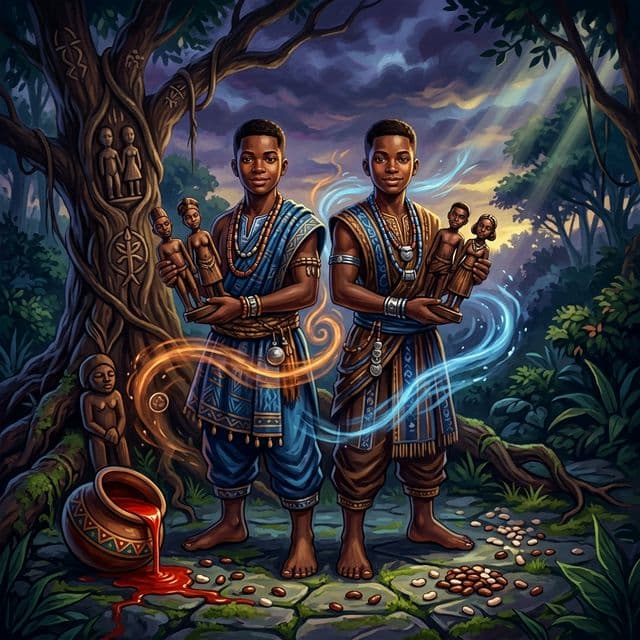
Ibeji
IbejiYoruba
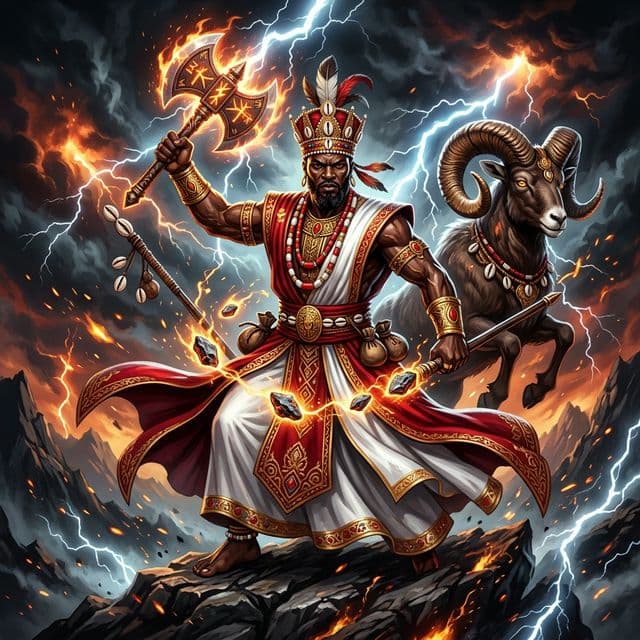
Shango
ShangoYoruba

Ibeji and Shango are recorded as parent and child in the Yoruba Tradition.

At a glance

Ibeji and Shango compared
IbejiShango
TraditionYoruba TraditionYoruba Tradition
Domainstwins, childhood, protection of children, dualitythunder, lightning, fire, justice, kingship
Symbolstwin figures, red palm oil, beans, double imagerydouble-headed axe, thunderstones, red and white colors, ram, crown
Also calledIbeyi, Taiwo and KehindeSango, Xango, Chango

Where they meet

The atlas records no domain or symbol that Ibeji and Shango share.

They are compared because of how the myths connect them, not because of what they rule.

Where they part

Only Ibeji

Associated with twins, childhood, protection of children, and duality.

Only Shango

Associated with thunder, lightning, fire, justice, and kingship.

How each was worshipped

Ibeji

Cult sites
Twin figures in the house; no need for a stone temple

When one twin dies, the image is fed. The cult is the carved pair and the living child. Yoruba twin rates made this ordinary, not exotic.

Shango

Cult sites
Koso at Oyo; Thunder houses in the diaspora
Festivals
Sango festival at Oyo

Double axe, ram, and red-and-white. Possession is loud. Oyo's royal thunder is not a metaphor; the drums mean it.

The two figures

Yoruba Tradition

Ibeji

The divine twins who protect all twins and children. Ibeji represent the sacred duality present throughout existence.

The first twins were born to Oya and Shango, blessed with divine protection. From them descended the Orisha Ibeji, who guard all twins.

The Yoruba have one of the highest rates of twin births in the world, and twins (ibeji) are considered sacred. The Orishas Ibeji protect all twins and embody the spiritual significance of duality.

Read the full Ibeji entry

Yoruba Tradition

Shango

The Orisha of thunder, lightning, and fire. Shango was once a mortal king of Oyo who became deified after death.

Shango began as a mortal man who became the fourth king of the Oyo Empire. A powerful ruler who could summon lightning, he was elevated to divine status by his devoted followers after his death.

Shango occupies a unique position among the Orishas as a deified human king. According to tradition, he was the fourth Alaafin (king) of the Oyo Empire, one of West Africa's most powerful states.

Read the full Shango entry
About this comparison

Comparisons pair figures that play a similar role across traditions, or that the myths connect within one. A shared role does not, by itself, establish a shared origin.