Side by sideParallel across traditions

Hunahpu and Xbalanque vs Ibeji

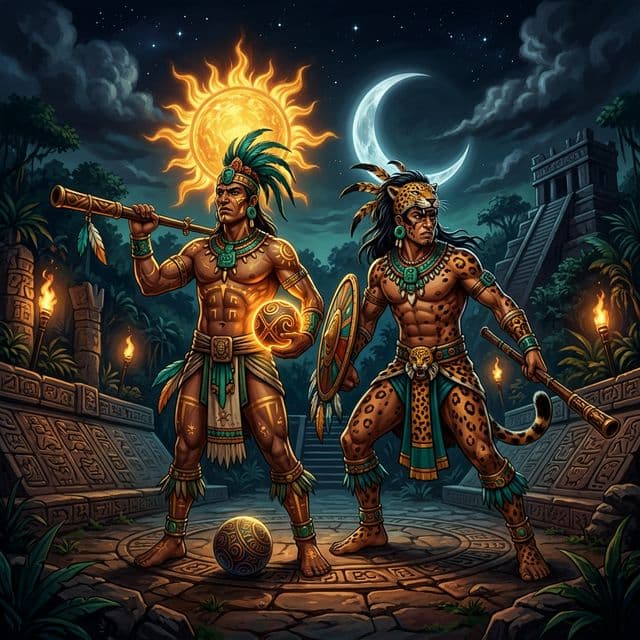
Hunahpu and Xbalanque
Hunahpu and XbalanqueMesoamerican
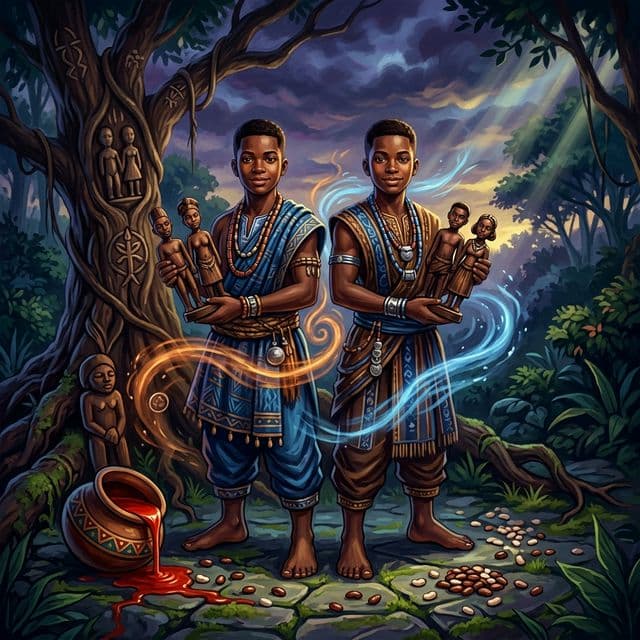
Ibeji
IbejiYoruba

Both represent the widespread 'Divine Twins' motif: paired sacred siblings with complementary natures and shared heroic destiny.

At a glance

Hunahpu and Xbalanque and Ibeji compared
Hunahpu and XbalanqueIbeji
TraditionMesoamerican PantheonYoruba Tradition
Domainssun, moon, heroism, ballgame, victory over deathtwins, childhood, protection of children, duality
Symbolsblowgun, jaguar spots, rubber ball, sun and moontwin figures, red palm oil, beans, double imagery
Also calledThe Hero Twins, One Blowgunner and Jaguar DeerIbeyi, Taiwo and Kehinde

Where they meet

The atlas records no domain or symbol that Hunahpu and Xbalanque and Ibeji share.

They are compared for the part each plays in their own tradition rather than for any attribute in common.

Where they part

Only Hunahpu and Xbalanque

Associated with sun, moon, heroism, ballgame, and victory over death.

Only Ibeji

Associated with twins, childhood, protection of children, and duality.

How each was worshipped

Hunahpu and Xbalanque

Cult sites
Ballcourts across the Maya world as ritual stages of their story; No single temple of Hunahpu and Xbalanque as a pair-god
Festivals
Ballgame rites; Popol Vuh recitation in K'iche' tradition

They are heroes of a book and of the court ballgame, not parish saints. Every ballcourt restages the underworld match. Cult is the game, the decapitation imagery, and the telling, not a pair of cult statues with a festival badge.

Ibeji

Cult sites
Twin figures in the house; no need for a stone temple

When one twin dies, the image is fed. The cult is the carved pair and the living child. Yoruba twin rates made this ordinary, not exotic.

The two figures

Mesoamerican Pantheon

Hunahpu and Xbalanque

The Hero Twins of Maya mythology, sons of the maize god Hun Hunahpu. Through cleverness and sacrifice, they defeated the lords of death and became the sun and moon.

The Hero Twins were miraculously conceived from their father's skull. Born in the upper world, they became great heroes who defeated false gods, outwitted the lords of death, and became the sun and moon.

Hunahpu and Xbalanque are the central heroes of the **Popol Vuh**. Their adventures feature monster-slaying, underworld journeys, death and resurrection, and the establishment of cosmic order.

Read the full Hunahpu and Xbalanque entry

Yoruba Tradition

Ibeji

The divine twins who protect all twins and children. Ibeji represent the sacred duality present throughout existence.

The first twins were born to Oya and Shango, blessed with divine protection. From them descended the Orisha Ibeji, who guard all twins.

The Yoruba have one of the highest rates of twin births in the world, and twins (ibeji) are considered sacred. The Orishas Ibeji protect all twins and embody the spiritual significance of duality.

Read the full Ibeji entry
About this comparison

Comparisons pair figures that play a similar role across traditions, or that the myths connect within one. A shared role does not, by itself, establish a shared origin.