Mythos Atlas

Side by sideParallel across traditions

The Dioscuri (Castor and Polydeuces) vs Hunahpu and Xbalanque

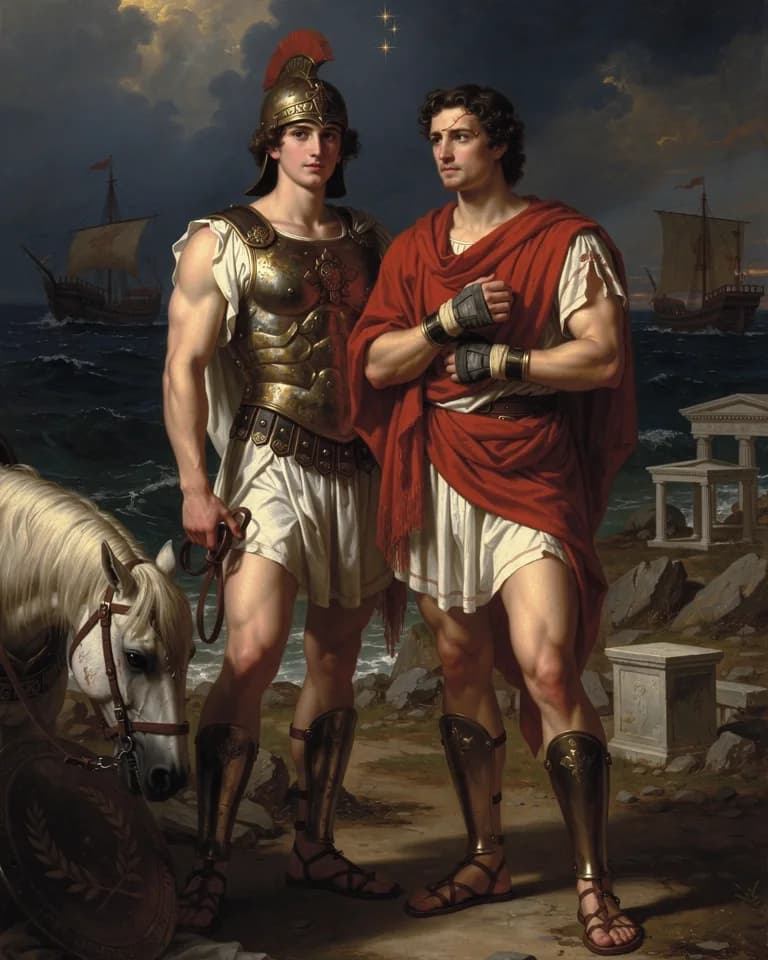
The Dioscuri (Castor and Polydeuces)
The Dioscuri (Castor and Polydeuces)Greek
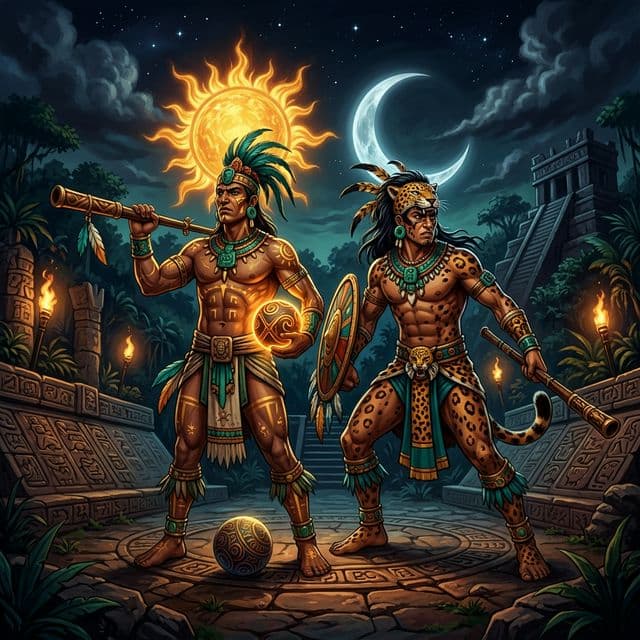
Hunahpu and Xbalanque
Hunahpu and XbalanqueMesoamerican

Both are divine twin heroes.

At a glance

The Dioscuri (Castor and Polydeuces) and Hunahpu and Xbalanque compared
The Dioscuri (Castor and Polydeuces)Hunahpu and Xbalanque
TraditionGreek PantheonMesoamerican Pantheon
Domainsrescue at sea, horsemanship, boxing, hospitality, twinssun, moon, heroism, ballgame, victory over death
Symbolstwin stars, horses, egg-shaped caps (piloi), dokana (twin beams)blowgun, jaguar spots, rubber ball, sun and moon
Also calledCastor and Pollux, Castor and Polydeuces, Tyndaridae, Gemini, Castor-PolluxThe Hero Twins, One Blowgunner and Jaguar Deer

Where they meet

The atlas records no domain or symbol that The Dioscuri (Castor and Polydeuces) and Hunahpu and Xbalanque share.

They are compared for the part each plays in their own tradition rather than for any attribute in common.

Where they part

Only The Dioscuri (Castor and Polydeuces)

Associated with rescue at sea, horsemanship, boxing, hospitality, and twins.

Only Hunahpu and Xbalanque

Associated with sun, moon, heroism, ballgame, and victory over death.

How each was worshipped

The Dioscuri (Castor and Polydeuces)

Cult sites
Temple of Castor and Pollux, Roman Forum; Sanctuaries at Sparta and Therapne
Festivals
Theoxenia (divine hospitality feasts); Roman celebration on 15 July, the anniversary of Lake Regillus

Invoked by sailors in storms and by Spartan armies, which carried their emblem to war. Households set out couches and tables to host them at theoxenia feasts.

Hunahpu and Xbalanque

Cult sites
Ballcourts across the Maya world as ritual stages of their story; No single temple of Hunahpu and Xbalanque as a pair-god
Festivals
Ballgame rites; Popol Vuh recitation in K'iche' tradition

They are heroes of a book and of the court ballgame, not parish saints. Every ballcourt restages the underworld match. Cult is the game, the decapitation imagery, and the telling, not a pair of cult statues with a festival badge.

The two figures

Greek Pantheon

The Dioscuri (Castor and Polydeuces)

The divine twins Castor, tamer of horses, and Polydeuces (Pollux), the boxer, sons of Leda and brothers of Helen. Sailors prayed to them in storms, and after Castor's death the brothers were said to share immortality, alternating days between Olympus and the world below.

Leda bore the twins beneath Mount Taygetus after Zeus lay with her; some versions make only Polydeuces the son of Zeus and Castor the son of her husband Tyndareus. Their sisters were Helen and Clytemnestra.

The Homeric Hymns call the Tyndaridae the sons of Zeus, born to Leda beneath Mount Taygetus in Sparta: Castor the horse-tamer and Polydeuces the boxer. Other traditions differ: the *Odyssey* calls both sons of Leda's husband Tyndareus, while Pindar divides them, making Castor mortal and Polydeuces the immortal son of Zeus.

Read the full The Dioscuri (Castor and Polydeuces) entry

Mesoamerican Pantheon

Hunahpu and Xbalanque

The Hero Twins of Maya mythology, sons of the maize god Hun Hunahpu. Through cleverness and sacrifice, they defeated the lords of death and became the sun and moon.

The Hero Twins were miraculously conceived from their father's skull. Born in the upper world, they became great heroes who defeated false gods, outwitted the lords of death, and became the sun and moon.

Hunahpu and Xbalanque are the central heroes of the **Popol Vuh**. Their adventures feature monster-slaying, underworld journeys, death and resurrection, and the establishment of cosmic order.

Read the full Hunahpu and Xbalanque entry
About this comparison

Comparisons pair figures that play a similar role across traditions, or that the myths connect within one. A shared role does not, by itself, establish a shared origin.