Mythos Atlas

Side by sideParallel across traditions

The Ashvins vs The Dioscuri (Castor and Polydeuces)

The Ashvins
The AshvinsHindu
The Dioscuri (Castor and Polydeuces)
The Dioscuri (Castor and Polydeuces)Greek

Both are divine horsemen twins and rescuers, a pairing often traced to shared Indo-European tradition.

At a glance

The Ashvins and The Dioscuri (Castor and Polydeuces) compared
The AshvinsThe Dioscuri (Castor and Polydeuces)
TraditionHindu PantheonGreek Pantheon
Domainshealing, rescue, the morning light, horsesrescue at sea, horsemanship, boxing, hospitality, twins
Symbolsgolden three-wheeled chariot, horses or birds drawing the chariot, honeytwin stars, horses, egg-shaped caps (piloi), dokana (twin beams)
Also calledAshvini Kumaras, Nasatyas, Dasras, AśvinsCastor and Pollux, Castor and Polydeuces, Tyndaridae, Gemini, Castor-Pollux

Where they meet

The atlas records no domain or symbol that The Ashvins and The Dioscuri (Castor and Polydeuces) share.

They are compared for the part each plays in their own tradition rather than for any attribute in common.

Where they part

Only The Ashvins

Associated with healing, rescue, the morning light, and horses.

Only The Dioscuri (Castor and Polydeuces)

Associated with rescue at sea, horsemanship, boxing, hospitality, and twins.

Why they are compared

Both are horse-linked divine twins who rescue mortals, a pairing often traced to Indo-European tradition.

How each was worshipped

The Ashvins

Honored in the Vedic morning Soma pressing and with offerings of milk and honey; in later tradition invoked as the physicians of the gods.

The Dioscuri (Castor and Polydeuces)

Cult sites
Temple of Castor and Pollux, Roman Forum; Sanctuaries at Sparta and Therapne
Festivals
Theoxenia (divine hospitality feasts); Roman celebration on 15 July, the anniversary of Lake Regillus

Invoked by sailors in storms and by Spartan armies, which carried their emblem to war. Households set out couches and tables to host them at theoxenia feasts.

The two figures

Hindu Pantheon

The Ashvins

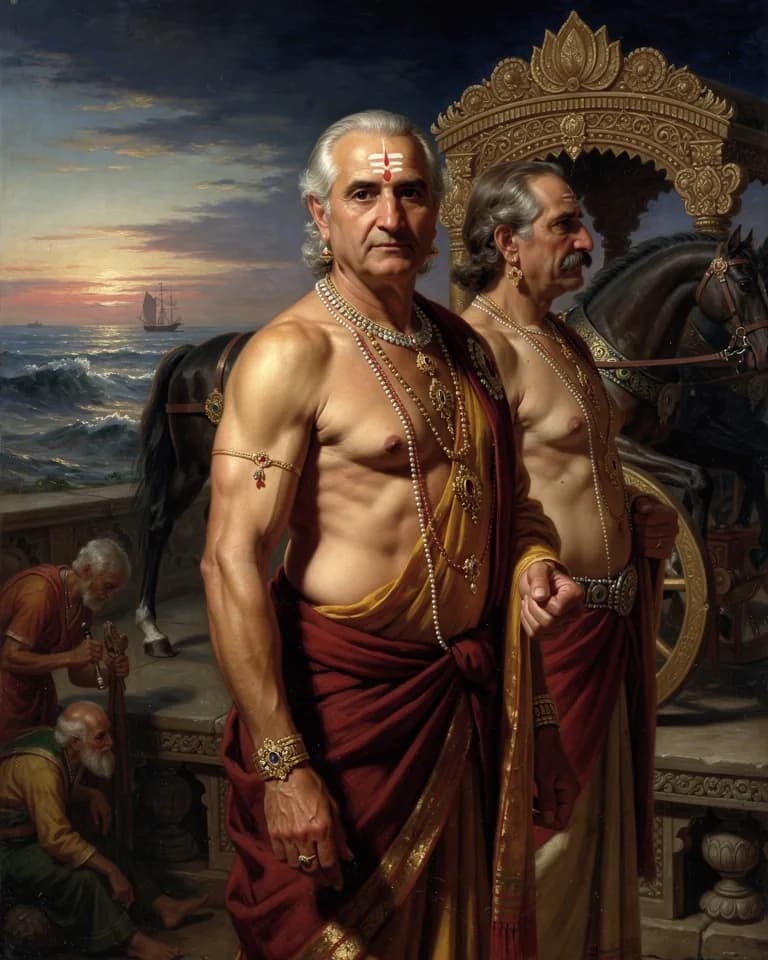
The divine twin horsemen of the Rigveda, physicians of the gods who arrive in their chariot at dawn to heal the sick, rescue the shipwrecked, and restore youth to the old. More than fifty Rigvedic hymns are addressed to them.

Rigveda 10.17 says Saranyu, daughter of Tvashtar and wife of Vivasvat, bore the Ashvin brothers before leaving her children. Later tradition tells that she conceived them in the form of a mare.

The Ashvins are always paired and almost never distinguished. Their name means 'horsemen'; they are also called the Nasatyas. They drive a golden three-wheeled chariot and appear with the dawn, which ties them to Usha in the morning rites.

Read the full The Ashvins entry

Greek Pantheon

The Dioscuri (Castor and Polydeuces)

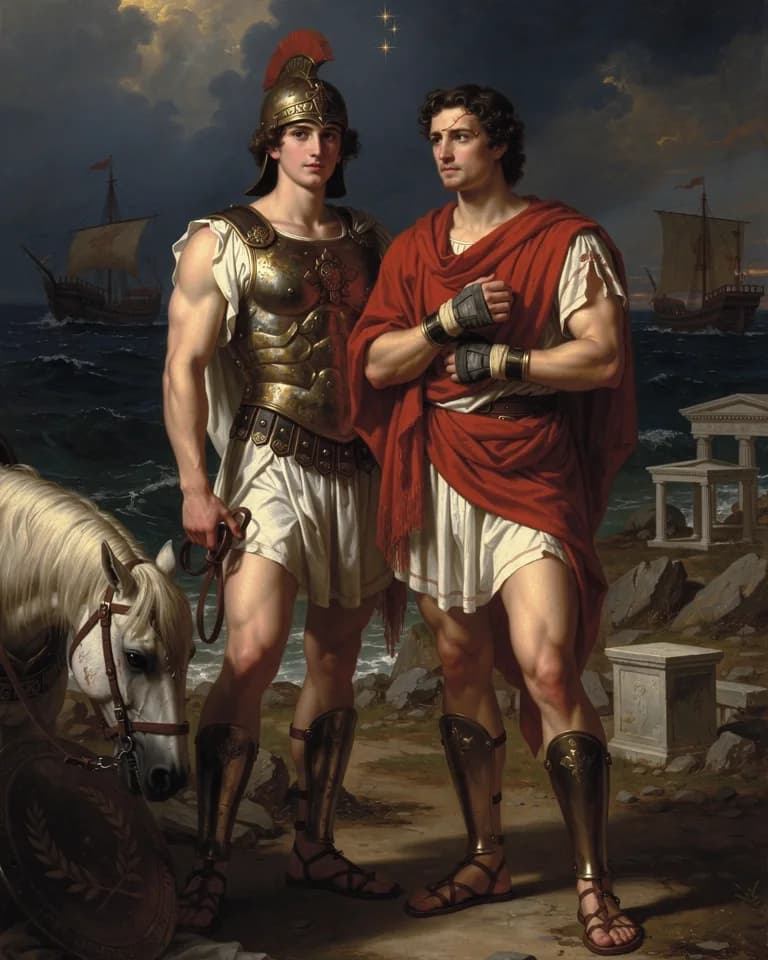
The divine twins Castor, tamer of horses, and Polydeuces (Pollux), the boxer, sons of Leda and brothers of Helen. Sailors prayed to them in storms, and after Castor's death the brothers were said to share immortality, alternating days between Olympus and the world below.

Leda bore the twins beneath Mount Taygetus after Zeus lay with her; some versions make only Polydeuces the son of Zeus and Castor the son of her husband Tyndareus. Their sisters were Helen and Clytemnestra.

The Homeric Hymns call the Tyndaridae the sons of Zeus, born to Leda beneath Mount Taygetus in Sparta: Castor the horse-tamer and Polydeuces the boxer. Other traditions differ: the *Odyssey* calls both sons of Leda's husband Tyndareus, while Pindar divides them, making Castor mortal and Polydeuces the immortal son of Zeus.

Read the full The Dioscuri (Castor and Polydeuces) entry
About this comparison

Comparisons pair figures that play a similar role across traditions, or that the myths connect within one. A shared role does not, by itself, establish a shared origin.