Greek Pantheon
The Dioscuri (Castor and Polydeuces)
Διόσκουροι(Dioskouroi)
Also known as Castor and Pollux, Castor and Polydeuces, Tyndaridae, Gemini, Castor-Pollux
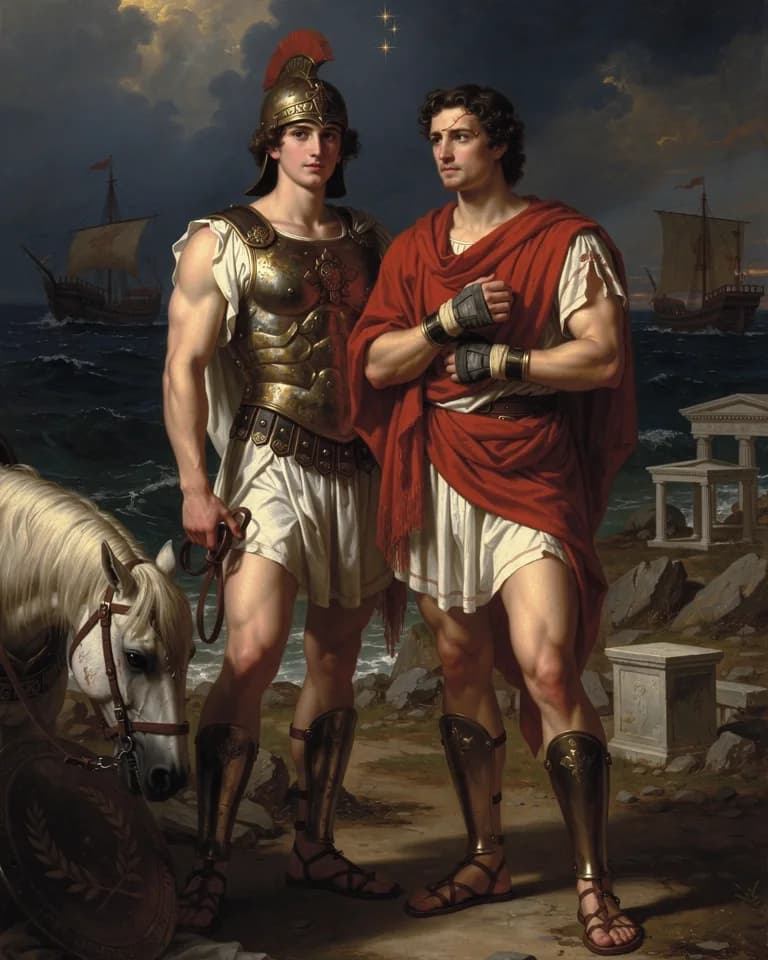
- rescue at sea
- horsemanship
- boxing
- hospitality
- twins
The divine twins Castor, tamer of horses, and Polydeuces (Pollux), the boxer, sons of Leda and brothers of Helen. Sailors prayed to them in storms, and after Castor's death the brothers were said to share immortality, alternating days between Olympus and the world below.
About The Dioscuri (Castor and Polydeuces)
Sons of Zeus
The Homeric Hymns call the Tyndaridae the sons of Zeus, born to Leda beneath Mount Taygetus in Sparta: Castor the horse-tamer and Polydeuces the boxer. Other traditions differ: the Odyssey calls both sons of Leda's husband Tyndareus, while Pindar divides them, making Castor mortal and Polydeuces the immortal son of Zeus.
Shared Immortality
That division drives their central myth. In Pindar's tenth Nemean Ode, Castor is killed in a feud with their cousins Idas and Lynceus. Polydeuces refuses immortality without his brother, and Zeus allows them to share it, spending alternate days among the gods and beneath the earth. The Odyssey already knows them as living and dying by turns.
Saviors at Sea
They sailed with the Argonauts, rescued their sister Helen from Theseus, and above all appeared to sailors in storms. The Homeric Hymn describes them darting through the air on tawny wings to calm the winds; later sailors identified the glow of St. Elmo's fire with them.
Cult in Sparta and Rome
Sparta honored them as protectors, and their symbol, the dokana of two upright beams joined by crossbars, went with Spartan kings to war. Rome adopted them early: the Temple of Castor and Pollux in the Forum commemorated their legendary appearance at the Battle of Lake Regillus. They are the stars of the constellation Gemini.
Origin story
Leda bore the twins beneath Mount Taygetus after Zeus lay with her; some versions make only Polydeuces the son of Zeus and Castor the son of her husband Tyndareus. Their sisters were Helen and Clytemnestra.
Across traditions
Parallel figures
Figures who play a role like The Dioscuri (Castor and Polydeuces)'s in other traditions.
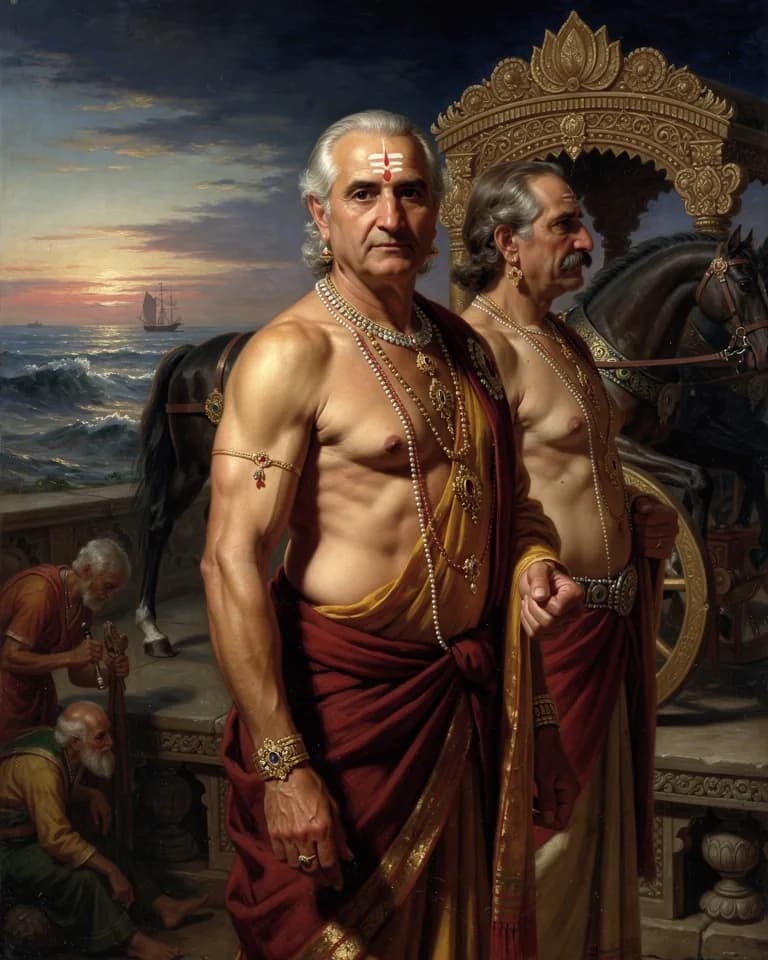 HinduThe Ashvins
Both are divine horsemen twins and rescuers, a pairing often traced to shared Indo-European tradition
Compare The Dioscuri (Castor and Polydeuces) and The Ashvins side by side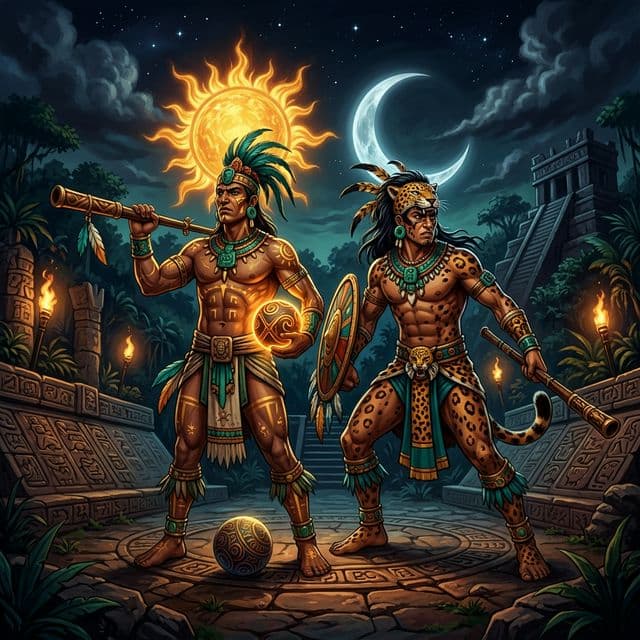 MesoamericanHunahpu and Xbalanque
Both are divine twin heroes
Compare The Dioscuri (Castor and Polydeuces) and Hunahpu and Xbalanque side by side
Worship and cult
Temples, festivals, and practices recorded for The Dioscuri (Castor and Polydeuces)
Invoked by sailors in storms and by Spartan armies, which carried their emblem to war. Households set out couches and tables to host them at theoxenia feasts.
Sacred sites
- Temple of Castor and Pollux, Roman Forum
- Sanctuaries at Sparta and Therapne
Festivals
- Theoxenia (divine hospitality feasts)
- Roman celebration on 15 July, the anniversary of Lake Regillus
Family
The Dioscuri (Castor and Polydeuces)'s family at a glance
- Who are The Dioscuri (Castor and Polydeuces)'s parents?
- The atlas's kinship records name one parent of The Dioscuri (Castor and Polydeuces): Zeus. Ancient accounts do not always agree on divine parentage.
Sources and further reading
Source notes
These references are recorded in the catalog. Their passage wording and translation have not been checked, so quotations are not displayed here.
- Homeric Hymn 17, To the Dioscuri (trans. Evelyn-White)
- Homeric Hymn 33, To the Dioscuri (trans. Evelyn-White)
Further reading
Hymns 17 and 33 to the Dioscuri
Read online: Homeric Hymns (opens in new tab)Their birth, the fight with Idas and Lynceus, and the shared immortality
Read online: Bibliotheca (Library) (opens in new tab)
About this entry
By Elizabeth Stein for Mythos Atlas. About the author. Editorial notes are grounded in the site's cited sources and can be challenged through the contact page.
Parallels are editorial comparisons across traditions: a shared role does not, by itself, establish a shared origin.
Family relationships come from the atlas's kinship records. Ancient sources often disagree on divine genealogy.
Genealogy
Family tree
The Dioscuri (Castor and Polydeuces)'s parents, consorts, children and rivals, as recorded in the atlas.