Mythos Atlas

Side by sideParallel across traditions

The Ashvins vs Ibeji

The Ashvins
The AshvinsHindu
Ibeji
IbejiYoruba

Both are sacred twin powers who bring blessing and protection.

At a glance

The Ashvins and Ibeji compared
The AshvinsIbeji
TraditionHindu PantheonYoruba Tradition
Domainshealing, rescue, the morning light, horsestwins, childhood, protection of children, duality
Symbolsgolden three-wheeled chariot, horses or birds drawing the chariot, honeytwin figures, red palm oil, beans, double imagery
Also calledAshvini Kumaras, Nasatyas, Dasras, AśvinsIbeyi, Taiwo and Kehinde

Where they meet

The atlas records no domain or symbol that The Ashvins and Ibeji share.

They are compared for the part each plays in their own tradition rather than for any attribute in common.

Where they part

Only The Ashvins

Associated with healing, rescue, the morning light, and horses.

Only Ibeji

Associated with twins, childhood, protection of children, and duality.

How each was worshipped

The Ashvins

Honored in the Vedic morning Soma pressing and with offerings of milk and honey; in later tradition invoked as the physicians of the gods.

Ibeji

Cult sites
Twin figures in the house; no need for a stone temple

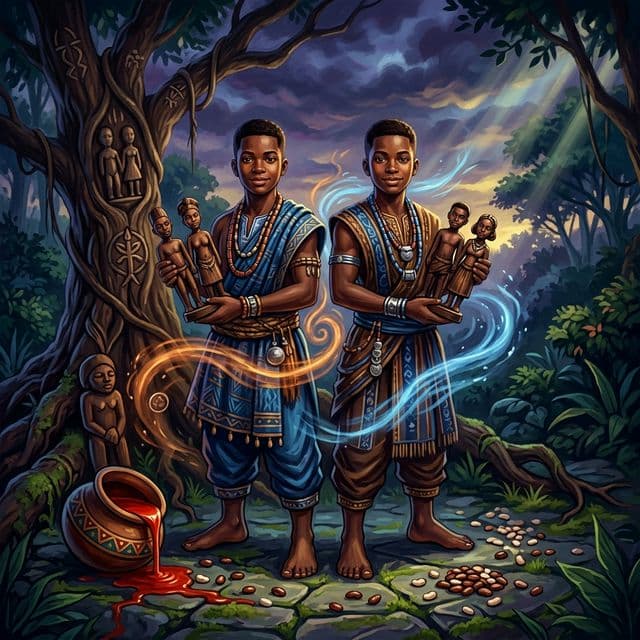
When one twin dies, the image is fed. The cult is the carved pair and the living child. Yoruba twin rates made this ordinary, not exotic.

The two figures

Hindu Pantheon

The Ashvins

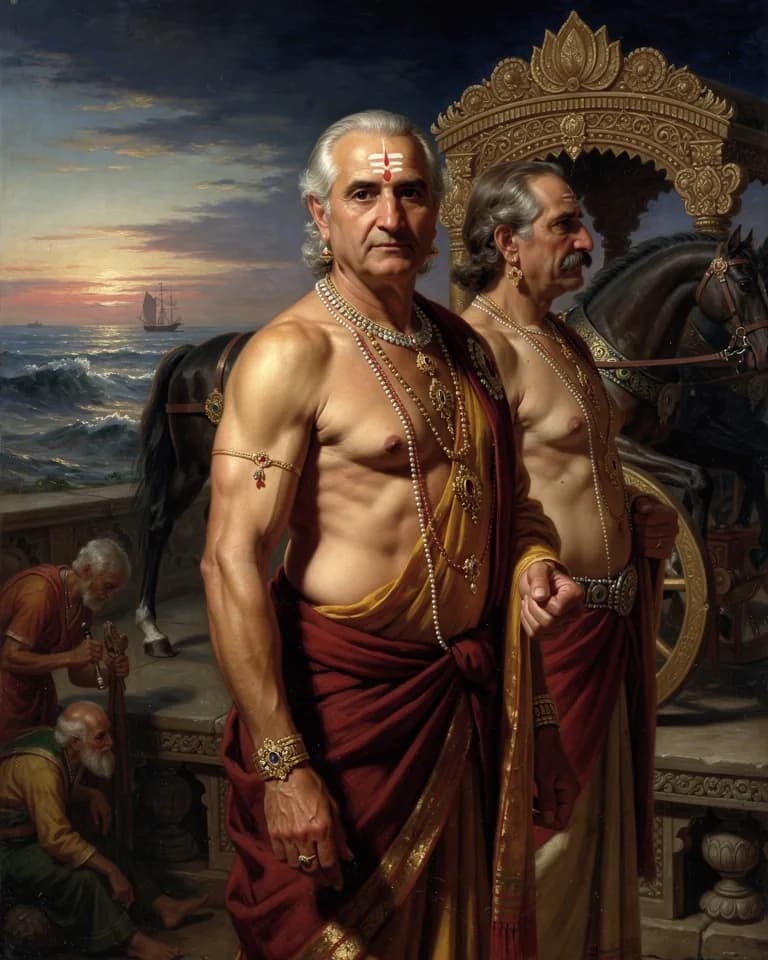
The divine twin horsemen of the Rigveda, physicians of the gods who arrive in their chariot at dawn to heal the sick, rescue the shipwrecked, and restore youth to the old. More than fifty Rigvedic hymns are addressed to them.

Rigveda 10.17 says Saranyu, daughter of Tvashtar and wife of Vivasvat, bore the Ashvin brothers before leaving her children. Later tradition tells that she conceived them in the form of a mare.

The Ashvins are always paired and almost never distinguished. Their name means 'horsemen'; they are also called the Nasatyas. They drive a golden three-wheeled chariot and appear with the dawn, which ties them to Usha in the morning rites.

Read the full The Ashvins entry

Yoruba Tradition

Ibeji

The divine twins who protect all twins and children. Ibeji represent the sacred duality present throughout existence.

The first twins were born to Oya and Shango, blessed with divine protection. From them descended the Orisha Ibeji, who guard all twins.

The Yoruba have one of the highest rates of twin births in the world, and twins (ibeji) are considered sacred. The Orishas Ibeji protect all twins and embody the spiritual significance of duality.

Read the full Ibeji entry
About this comparison

Comparisons pair figures that play a similar role across traditions, or that the myths connect within one. A shared role does not, by itself, establish a shared origin.