Side by sideParent and child

Anansi vs Nyame

Anansi
AnansiAkan
Nyame
NyameAkan

Anansi and Nyame are recorded as parent and child in the Akan Tradition.

At a glance

Anansi and Nyame compared
AnansiNyame
TraditionAkan TraditionAkan Tradition
Domainswisdom, stories, trickery, knowledge, creativitysky, creation, supreme deity, rain, fertility
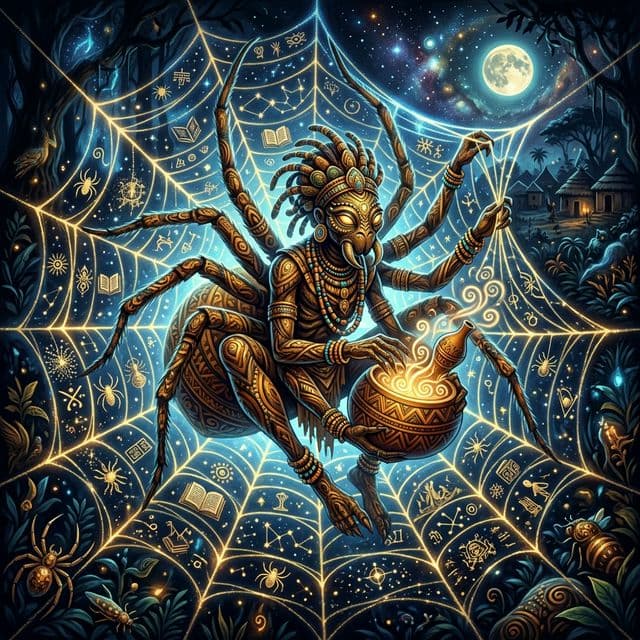
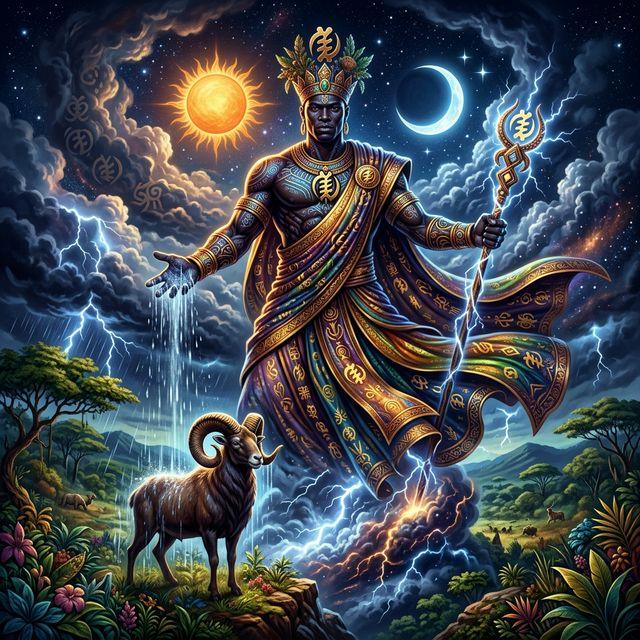
Symbolsspider, web, stories, calabashsky, sun, moon, adinkra symbols, ram
Also calledAnanse, Kwaku Ananse, Aunt NancyNyankopon, Onyankopon, Nyamie

Where they meet

The atlas records no domain or symbol that Anansi and Nyame share.

They are compared because of how the myths connect them, not because of what they rule.

Where they part

Only Anansi

Associated with wisdom, stories, trickery, knowledge, and creativity.

Only Nyame

Associated with sky, creation, supreme deity, rain, and fertility.

The two figures

Akan Tradition

Anansi

The trickster spider god of the Akan people. Anansi is the keeper of all stories and uses wit and cunning to overcome larger, stronger opponents.

Anansi began as a humble spider but desired to own all the stories of the world. He bargained with the sky god Nyame, completing impossible tasks through cleverness.

Anansi is one of Africa's most beloved figures, a cunning spider who uses intelligence and trickery to overcome impossible odds. He is the keeper of all stories, having purchased them from the sky god Nyame.

Read the full Anansi entry

Akan Tradition

Nyame

The supreme sky god of the Akan people. Nyame is the creator of all things and source of all life, though he withdrew from direct involvement with humanity.

In the beginning, Nyame created the heavens and earth, filling them with life. He lived close to humanity until driven away by human actions.

Nyame is the supreme deity of the Akan people of Ghana. He created the universe and everything in it but, like many African high gods, withdrew from daily human affairs.

Read the full Nyame entry
About this comparison

Comparisons pair figures that play a similar role across traditions, or that the myths connect within one. A shared role does not, by itself, establish a shared origin.