
Mythos Atlas

Side by sideParent and child

Nyame vs Tano

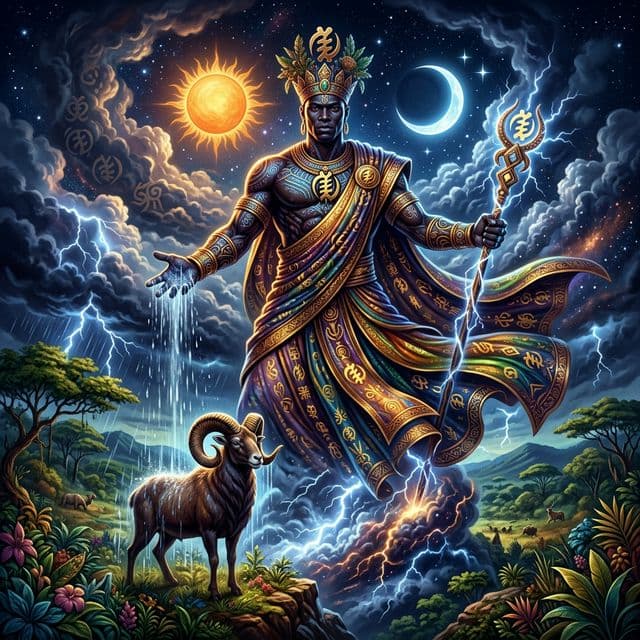
Nyame
NyameAkan
Tano
TanoAkan

Nyame and Tano are recorded as parent and child in the Akan Tradition.

At a glance

Nyame and Tano compared
NyameTano
TraditionAkan TraditionAkan Tradition
Domainssky, creation, supreme deity, rain, fertilitythe Tano River, war, thunder, the abosom
Symbolssky, sun, moon, adinkra symbols, ramthe Tano River, river stones in a brass pan (shrine vessel)
Also calledNyankopon, Onyankopon, NyamieTa Kora, Tando, Taakora

Where they meet

The atlas records no domain or symbol that Nyame and Tano share.

They are compared because of how the myths connect them, not because of what they rule.

Where they part

Only Nyame

Associated with sky, creation, supreme deity, rain, and fertility.

Only Tano

Associated with the tano river, war, thunder, and the abosom.

How each was worshipped

Nyame

No cult sites or festivals are recorded in the atlas.

Tano

Cult sites
Tano shrines at Tanoboase, Bono East region, Ghana

Served through priests (akomfo) at river shrines; the god's presence is kept in a shrine vessel holding water and stones from the river.

The two figures

Akan Tradition

Nyame

The supreme sky god of the Akan people. Nyame is the creator of all things and source of all life, though he withdrew from direct involvement with humanity.

In the beginning, Nyame created the heavens and earth, filling them with life. He lived close to humanity until driven away by human actions.

Nyame is the supreme deity of the Akan people of Ghana. He created the universe and everything in it but, like many African high gods, withdrew from daily human affairs.

Read the full Nyame entry

Akan Tradition

Tano

The great river obosom of the Akan, identified with the Tano River of western Ghana and regarded in Asante as the foremost of the abosom; tellings make him a son of Nyame who tricked his brother Bia out of the fertile land.

The abosom are powers associated with rivers, lakes, and other features of the land, who act through their priests and shrines. Rattray, writing in 1923, called Tano (Ta Kora) 'the greatest of the Ashanti gods upon earth' and described his shrines, where the power of the god was lodged in a brass pan holding material taken from the river. The river rises near Techiman in the Bono region, and the Tano shrines at Tanoboase in that area are among the oldest sacred sites of the Bono and Asante; many other abosom are described as his children.

Read the full Tano entry
About this comparison

Comparisons pair figures that play a similar role across traditions, or that the myths connect within one. A shared role does not, by itself, establish a shared origin.