Side by sideParallel across traditions

Anubis vs Hermes

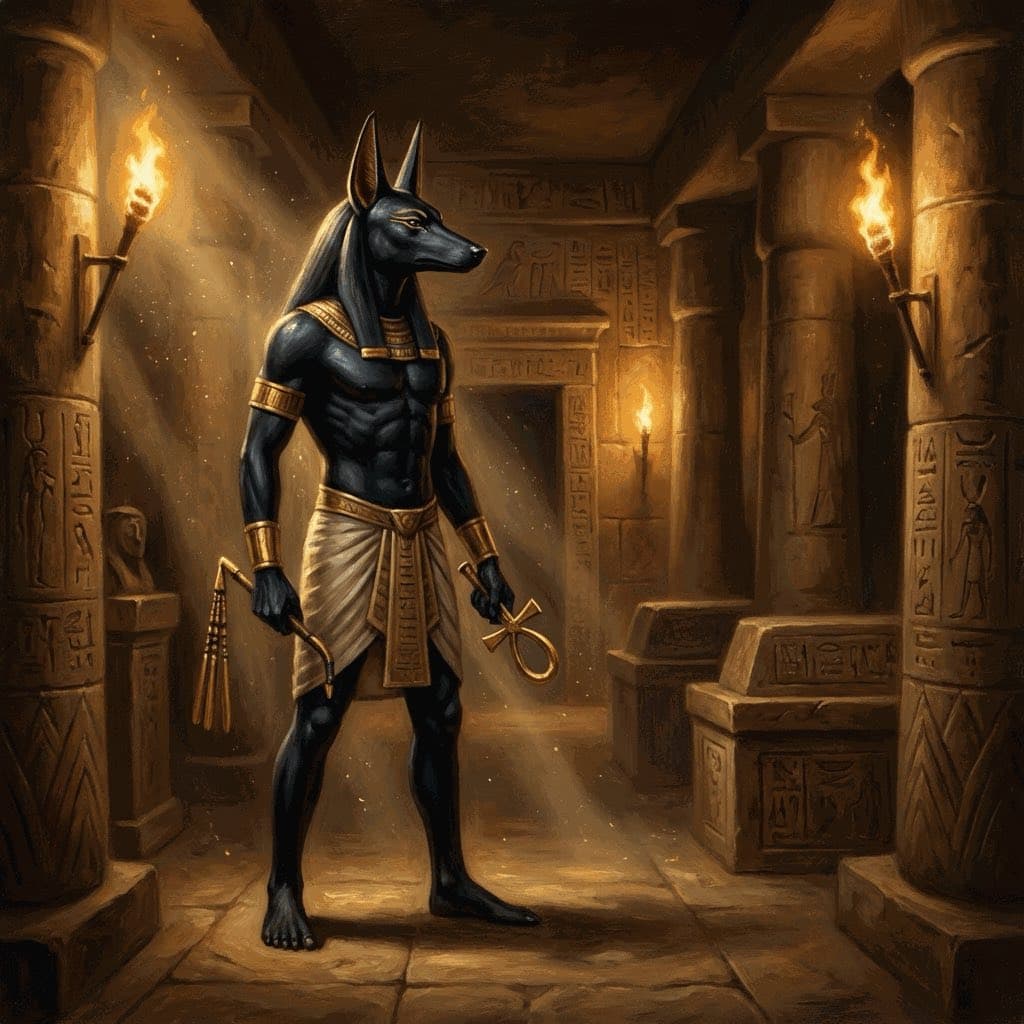
Anubis
AnubisEgyptian
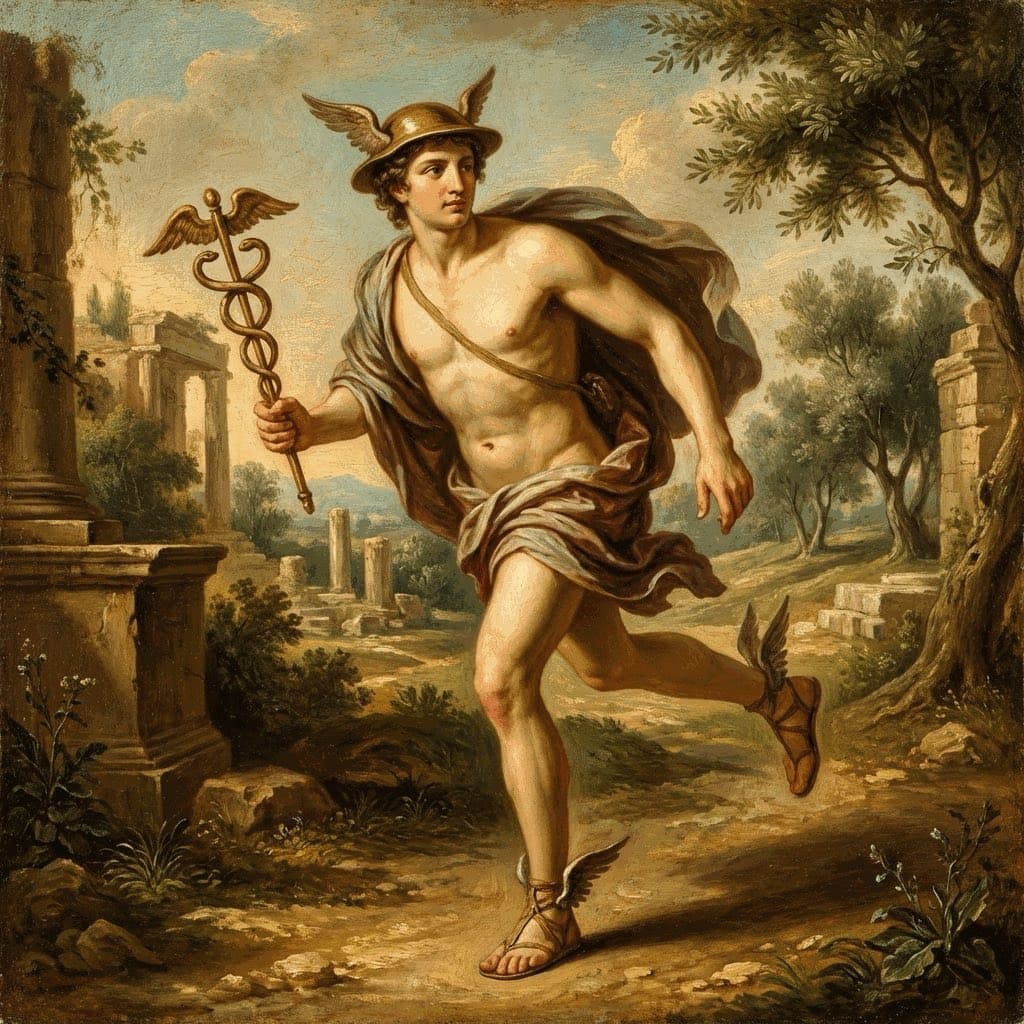
Hermes
HermesGreek

Both are psychopomp gods who guide the souls of the dead; the syncretic deity Hermanubis directly merged the two in the Greco-Roman period.

At a glance

Anubis and Hermes compared
AnubisHermes
TraditionEgyptian PantheonGreek Pantheon
Domainsmummification, death, cemeteries, embalming, judgmentmessengers, commerce, thieves, travelers, boundaries
Symbolsjackal, black color, flail, crook, embalming toolscaduceus, winged sandals, petasos, tortoise, rooster
Also calledAnpu, Inpu, AnupMercury

Where they meet

The atlas records no domain or symbol that Anubis and Hermes share.

They are compared for the part each plays in their own tradition rather than for any attribute in common.

Where they part

Only Anubis

Associated with mummification, death, cemeteries, embalming, and judgment.

Only Hermes

Associated with messengers, commerce, thieves, travelers, and boundaries.

How each was worshipped

Anubis

Cult sites
Cynopolis; Embalming workshops attached to necropolises
Festivals
Opening of the Mouth; Mummification rites

The jackal on the tomb and the priest in the jackal mask. He weighs, wraps, and guards. Cult is the funeral industry of Egypt, not a city-god's procession first.

Hermes

Cult sites
Hermo on roads and at doorways more than a single great temple; Sanctuary of Hermes at Pheneos in Arcadia
Festivals
Hermaia

The herm, a bearded head on a pillar, is the cult you actually meet: boundaries, luck, and theft. Athletic Hermaia marked boys. He leads souls and goats with the same staff. A marketplace god before he is a cute messenger.

The two figures

Egyptian Pantheon

Anubis

God of mummification and the afterlife. Guardian of tombs and guide of souls to judgment. He oversees the weighing of the heart ceremony.

Anubis's parentage varies across Egyptian traditions. In older myths, he was the son of Ra and Hesat, or of Ra alone. The most well-known version makes him the illegitimate son of Osiris and Nephthys. When Nephthys bore Anubis, she abandoned him in the desert, fearing Set's wrath. Isis discovered the infant and raised him as her own, and he became fiercely loyal to the Osirian family. This connection explains why Anubis assisted Isis in mummifying Osiris and why he serves as protector of the dead king.

Anubis is the jackal-headed god who presided over mummification, embalming, and the passage of souls to the afterlife. In the earliest periods of Egyptian religion, he was the supreme lord of the underworld before Osiris rose to prominence.

Read the full Anubis entry

Greek Pantheon

Hermes

God of messengers, commerce, thieves, and travelers. Son of Zeus and the nymph Maia, known for his cunning and speed.

Hermes is the swift messenger of the gods, wearing winged sandals and carrying the caduceus. He is the patron of boundaries and travelers, and the only god (besides Hades and Persephone) who can freely travel to the Underworld.

Read the full Hermes entry
About this comparison

Comparisons pair figures that play a similar role across traditions, or that the myths connect within one. A shared role does not, by itself, establish a shared origin.