
Side by sideParallel across traditions

Ebisu vs Hermes

Ebisu
EbisuJapanese
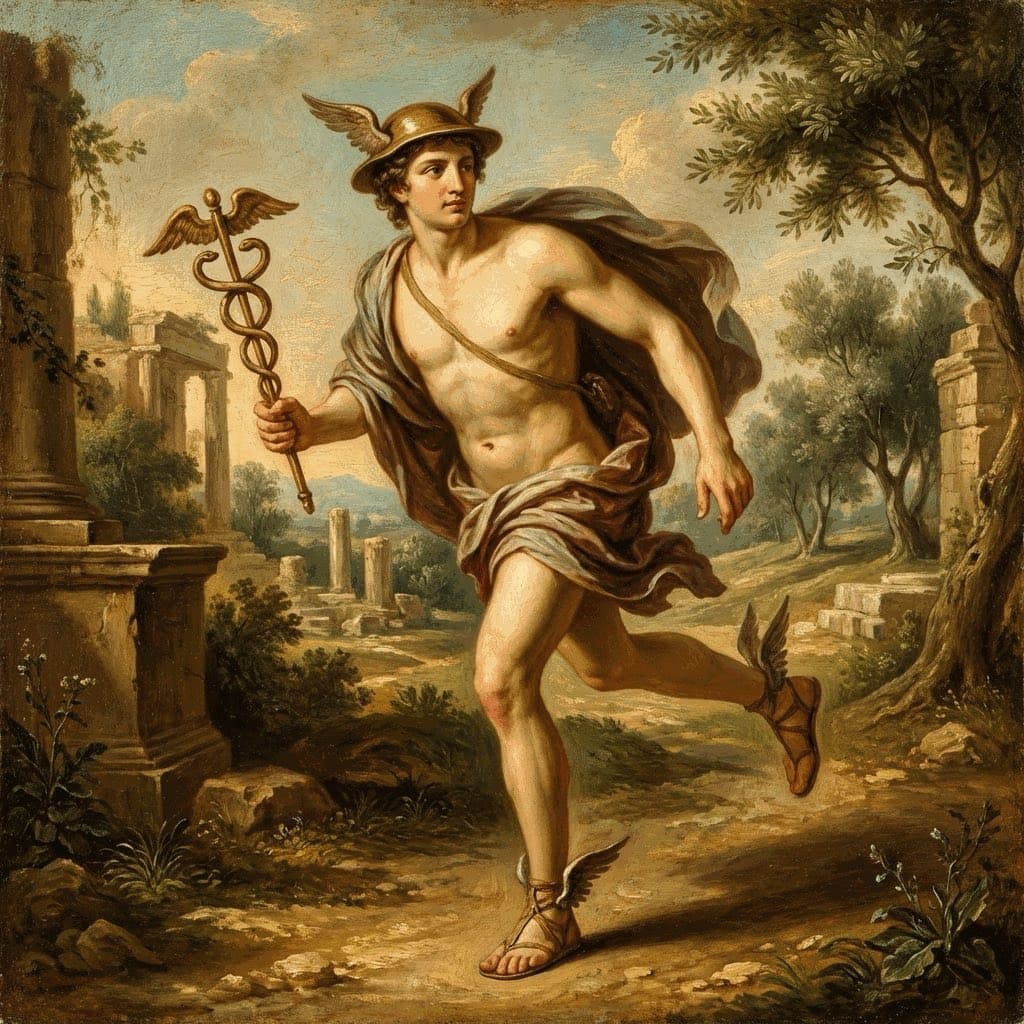
Hermes
HermesGreek

Both are patrons of merchants and commerce, though Hermes has broader trickster associations.

At a glance

Ebisu and Hermes compared
EbisuHermes
TraditionJapanese PantheonGreek Pantheon
Domainsfishing, merchants, luck, prosperity, honest labormessengers, commerce, thieves, travelers, boundaries
Symbolssea bream (tai), fishing rod, eboshi cap, laughing facecaduceus, winged sandals, petasos, tortoise, rooster
Also calledYebisu, Hiruko, KotoshironushiMercury

Where they meet

The atlas records no domain or symbol that Ebisu and Hermes share.

They are compared for the part each plays in their own tradition rather than for any attribute in common.

Where they part

Only Ebisu

Associated with fishing, merchants, luck, prosperity, and honest labor.

Only Hermes

Associated with messengers, commerce, thieves, travelers, and boundaries.

How each was worshipped

Ebisu

Cult sites
Nishinomiya Ebisu; fish-market shrines
Festivals
Toka Ebisu; New Year among the Seven Lucky Gods

Deaf luck and a sea bream. Merchants open the year with him. One of seven; the cult is commerce with a fishing rod.

Hermes

Cult sites
Hermo on roads and at doorways more than a single great temple; Sanctuary of Hermes at Pheneos in Arcadia
Festivals
Hermaia

The herm, a bearded head on a pillar, is the cult you actually meet: boundaries, luck, and theft. Athletic Hermaia marked boys. He leads souls and goats with the same staff. A marketplace god before he is a cute messenger.

The two figures

Japanese Pantheon

Ebisu

One of the Seven Lucky Gods (Shichifukujin). God of fishermen, merchants, and honest labor. The only purely Japanese deity among the Seven, known for his cheerful disposition.

Ebisu's origins are debated. One tradition identifies him with **Hiruko**, the first child of Izanagi and Izanami who was born without bones and set adrift. Another links him to **Kotoshironushi**, son of Okuninushi. Regardless, he became associated with the bounty of the sea and the prosperity that comes from diligent work.

**Ebisu** is the cheerful, rotund deity of fishermen, merchants, and prosperity through honest work. He is one of the beloved **Shichifukujin** (Seven Lucky Gods) and holds the distinction of being the only member of this group who originated entirely within Japan; the others derive from Chinese or Indian traditions.

Read the full Ebisu entry

Greek Pantheon

Hermes

God of messengers, commerce, thieves, and travelers. Son of Zeus and the nymph Maia, known for his cunning and speed.

Hermes is the swift messenger of the gods, wearing winged sandals and carrying the caduceus. He is the patron of boundaries and travelers, and the only god (besides Hades and Persephone) who can freely travel to the Underworld.

Read the full Hermes entry
About this comparison

Comparisons pair figures that play a similar role across traditions, or that the myths connect within one. A shared role does not, by itself, establish a shared origin.