
Side by sideParallel across traditions

Hermes vs Ogma

Hermes
HermesGreek
Ogma
OgmaCeltic

Both are gods of eloquence, language, and learning.

At a glance

Hermes and Ogma compared
HermesOgma
TraditionGreek PantheonCeltic Pantheon
Domainsmessengers, commerce, thieves, travelers, boundarieseloquence, language, learning, strength
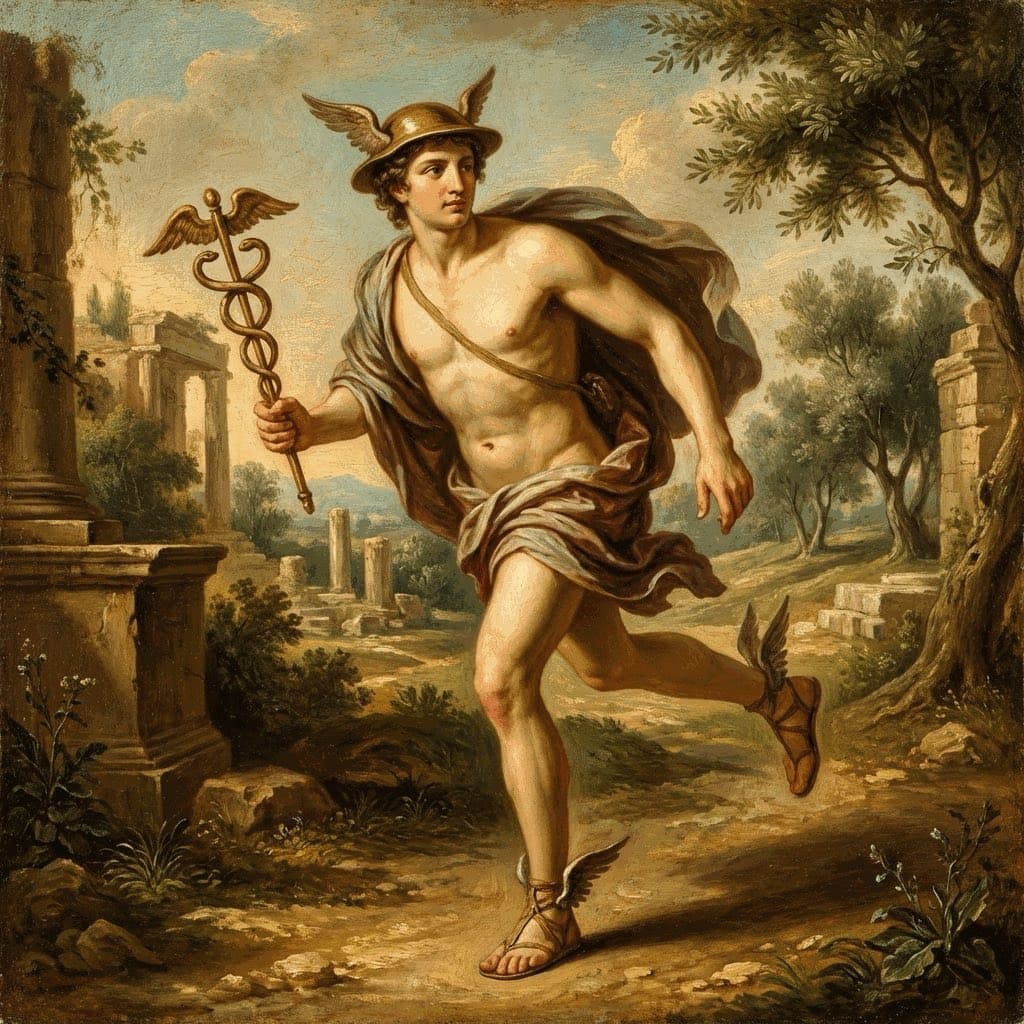
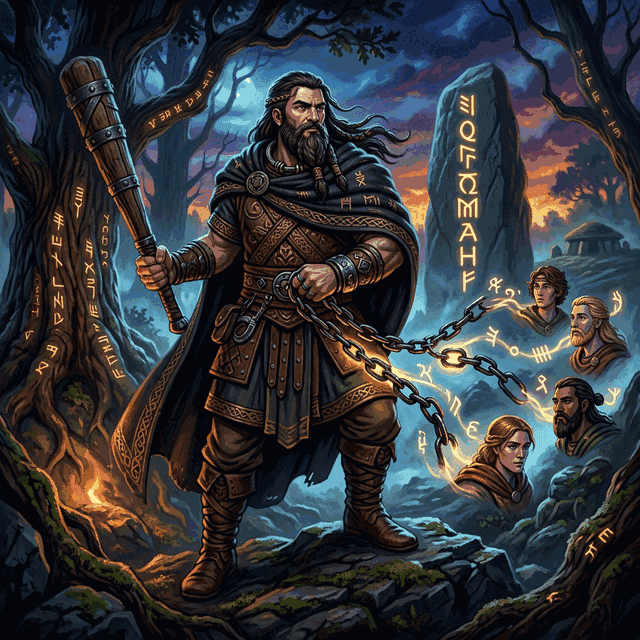
Symbolscaduceus, winged sandals, petasos, tortoise, roosterogham script, chain, club
Also calledMercuryOgmios, Oghma, Ogma Grianainech

Where they meet

The atlas records no domain or symbol that Hermes and Ogma share.

They are compared for the part each plays in their own tradition rather than for any attribute in common.

Where they part

Only Hermes

Associated with messengers, commerce, thieves, travelers, and boundaries.

Only Ogma

Associated with eloquence, language, learning, and strength.

How each was worshipped

Hermes

Cult sites
Hermo on roads and at doorways more than a single great temple; Sanctuary of Hermes at Pheneos in Arcadia
Festivals
Hermaia

The herm, a bearded head on a pillar, is the cult you actually meet: boundaries, luck, and theft. Athletic Hermaia marked boys. He leads souls and goats with the same staff. A marketplace god before he is a cute messenger.

Ogma

Cult sites
No attested temple in the surviving record

Ogham and the strong-man of the Tuatha. Irish saga, not a recovered temple list. Treat him as a literary champion unless a site turns up.

The two figures

Greek Pantheon

Hermes

God of messengers, commerce, thieves, and travelers. Son of Zeus and the nymph Maia, known for his cunning and speed.

Hermes is the swift messenger of the gods, wearing winged sandals and carrying the caduceus. He is the patron of boundaries and travelers, and the only god (besides Hades and Persephone) who can freely travel to the Underworld.

Read the full Hermes entry

Celtic Pantheon

Ogma

Inventor of the Ogham alphabet and champion of the Tuatha Dé Danann. His eloquence binds listeners with chains of gold that flow from his tongue.

Ogma is the son of **Elatha**, a Fomorian king, and therefore half-brother to the Dagda, Lugh, and Bres. Despite his mixed heritage, he fought for the Tuatha Dé Danann as their champion. In the Second Battle of Mag Tuired, he slew **Indech**, king of the Fomorians, and retrieved the sword **Orna**, which could recount the deeds it had performed when drawn. Ogma is credited with inventing **Ogham**, the earliest Irish writing system, whose letters are named after trees. The Greek writer Lucian described **Ogmios**, the Gaulish equivalent, as an old man leading willing captives by gold chains attached to his tongue, a vivid image of persuasive speech.

Ogma embodies the paradox of eloquence: words that are stronger than force, speech that binds more surely than chains. He is both warrior and poet, champion and scholar, reflecting the Celtic reverence for the power of language and the status of the filí (poet-seer) in early Irish society.
Read the full Ogma entry
About this comparison

Comparisons pair figures that play a similar role across traditions, or that the myths connect within one. A shared role does not, by itself, establish a shared origin.