Mythos Atlas

Side by sideParallel across traditions

Atlas vs Shu

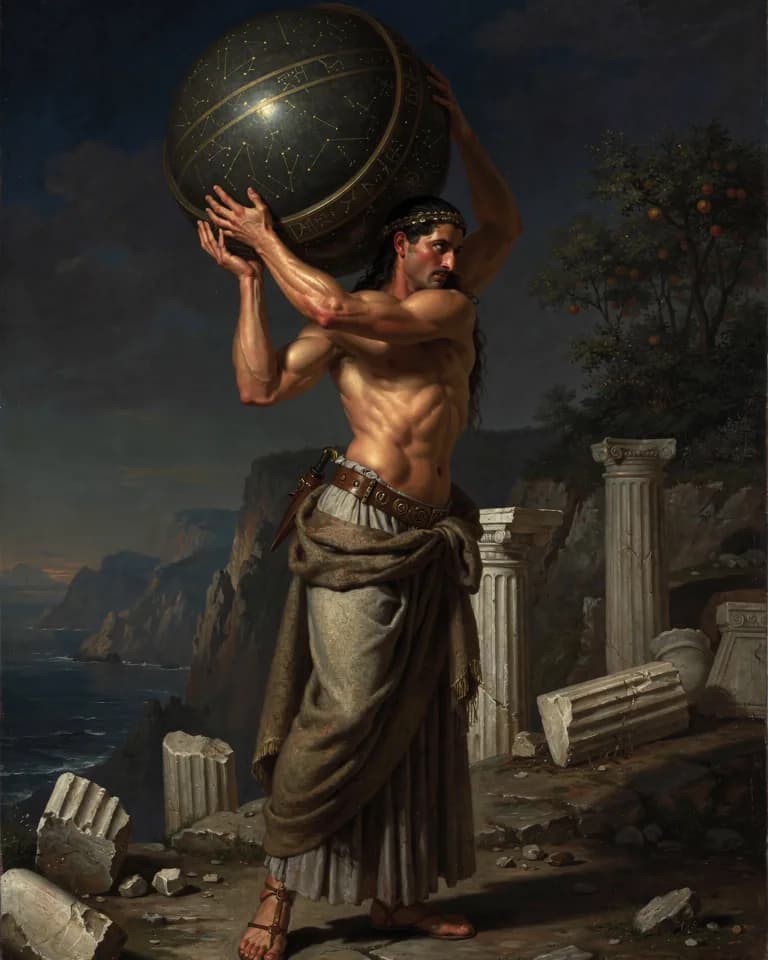
Atlas
AtlasGreek
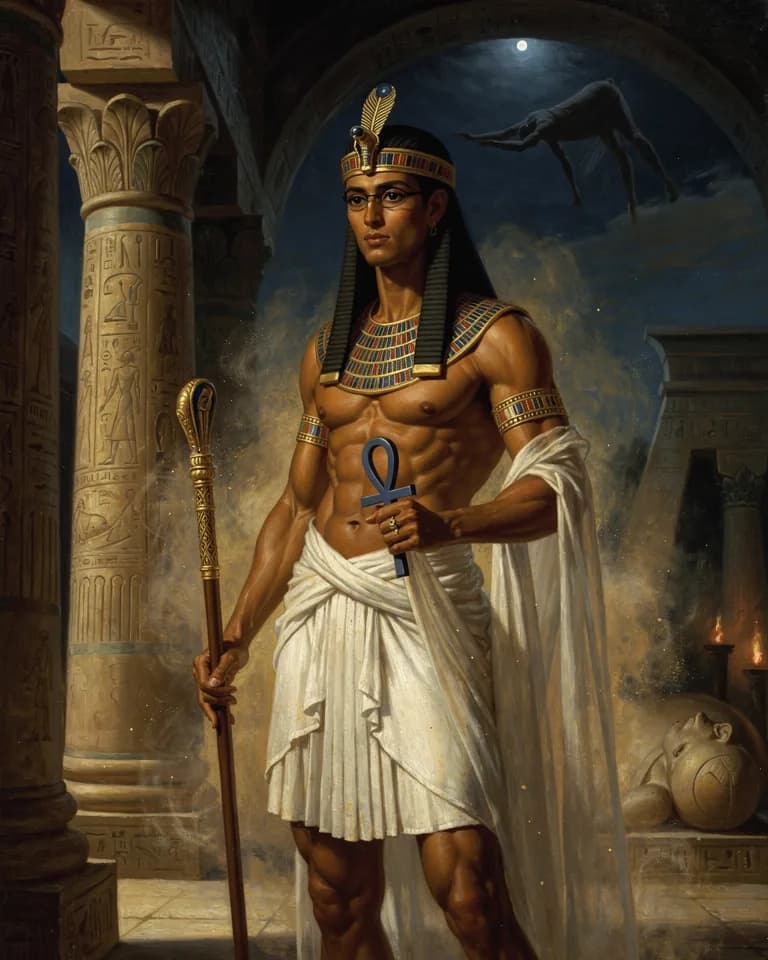
Shu
ShuEgyptian

Both hold the sky apart from the earth, though Shu is the air that separates Nut from Geb while Atlas bears the sky as the lot Zeus assigned him.

At a glance

Atlas and Shu compared
AtlasShu
TraditionGreek PantheonEgyptian Pantheon
Domainsendurance, the heavensair, the space between sky and earth, sunlight, dryness
Symbolsthe sky borne on his shoulders, the western edge of the worldostrich feather, raised arms (holding up the sky)
Also calledNone recordedNone recorded

Where they meet

The atlas records no domain or symbol that Atlas and Shu share.

They are compared for the part each plays in their own tradition rather than for any attribute in common.

Where they part

Only Atlas

Associated with endurance and the heavens.

Only Shu

Associated with air, the space between sky and earth, sunlight, and dryness.

How each was worshipped

Atlas

No cult sites or festivals are recorded in the atlas.

Shu

Cult sites
Cult center at Leontopolis, where he was worshipped alongside Tefnut in lion form

Shu and Tefnut were worshipped in leonine form at Leontopolis in the Nile Delta. Elsewhere, Shu's presence was felt chiefly through his role in the cosmological iconography of sky and earth rather than through a widespread independent cult.

The two figures

Greek Pantheon

Atlas

The Titan son of Iapetus whom Zeus set to hold up the sky at the western edge of the world, near the garden of the Hesperides. Brother of Prometheus and father of Maia and Calypso, he appears in Heracles' quest for the golden apples, and in Ovid is turned to stone as the Atlas mountains.

Atlas is the son of the Titan Iapetus and the Oceanid Clymene, and the brother of Menoetius, Prometheus and Epimetheus (Hesiod, Theogony 507-514). His task of holding up the sky is the lot Zeus assigned him.

Hesiod makes Atlas one of the four sons of the Titan Iapetus and the Oceanid Clymene, with Menoetius, Prometheus and Epimetheus. Zeus deals with each of them, and Atlas's lot is to stand at the ends of the earth, before the clear-voiced Hesperides, holding up the wide sky with his head and arms. The *Theogony* presents this as an assignment by Zeus, not as the aftermath of any single battle.

Read the full Atlas entry

Egyptian Pantheon

Shu

God of the air and dry space, a member of the Ennead. Shu was produced by Atum and, with his twin sister and consort Tefnut, fathered Geb (Earth) and Nut (Sky), whom he is famously depicted physically separating and holding apart.

Shu was produced by the creator god Atum at the very beginning of creation, spat out or sneezed into being along with his twin sister Tefnut. Together they fathered Geb and Nut, and Shu is remembered above all for physically separating his two children, sky and earth, holding them apart to allow the ordered world to exist between them.

Shu is the personification of air and the dry, light-filled space that separates sky from earth. In the Heliopolitan cosmogony recorded in the Pyramid Texts, he was produced by the creator god Atum, who is said to have sneezed or spat him out along with his twin sister Tefnut, goddess of moisture, at the very beginning of creation.

Read the full Shu entry
About this comparison

Comparisons pair figures that play a similar role across traditions, or that the myths connect within one. A shared role does not, by itself, establish a shared origin.