Side by sideParallel across traditions

Freyja vs Xi Wangmu

Freyja
FreyjaNorse
Xi Wangmu
Xi WangmuChinese

Both are associated with immortality/afterlife and rule over certain classes of divine beings.

At a glance

Freyja and Xi Wangmu compared
FreyjaXi Wangmu
TraditionNorse PantheonChinese Pantheon
Domainslove, beauty, fertility, war, death, magicimmortality, peaches, the west, female immortals
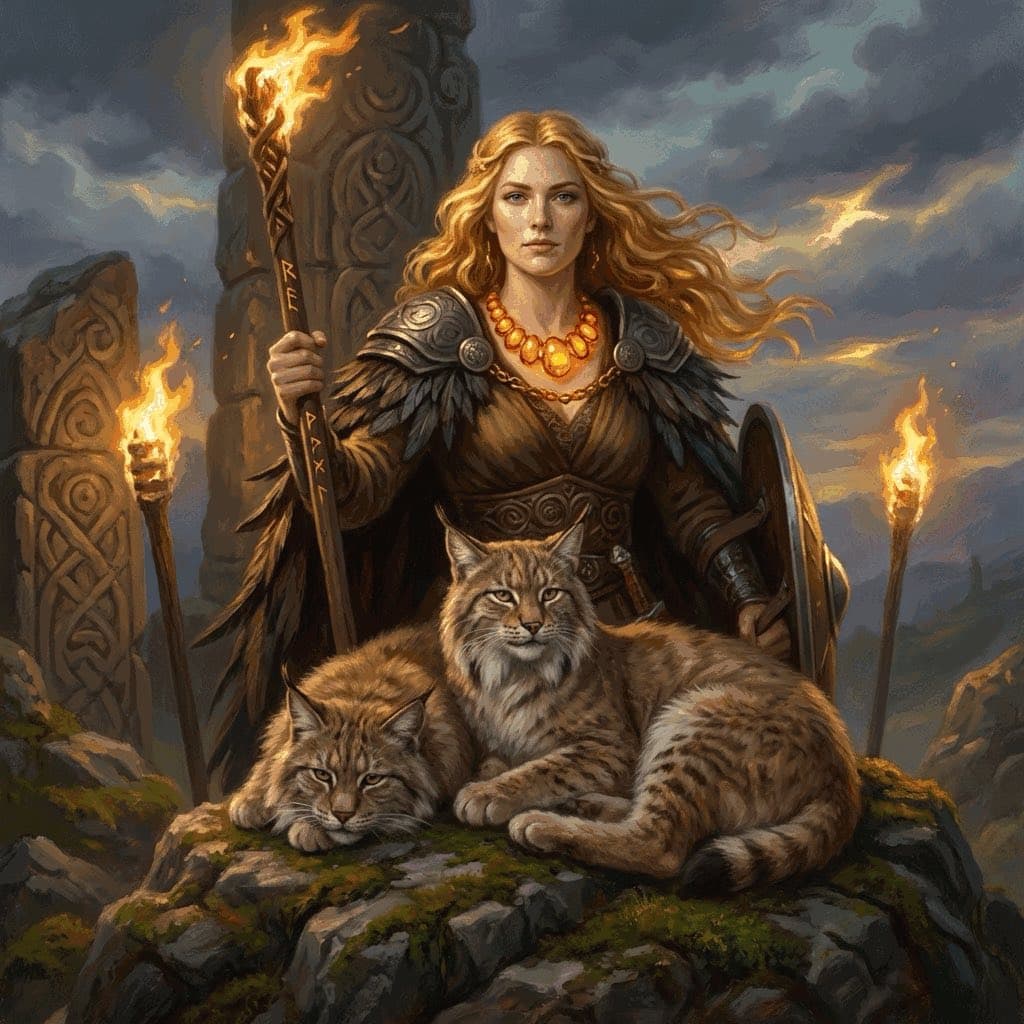
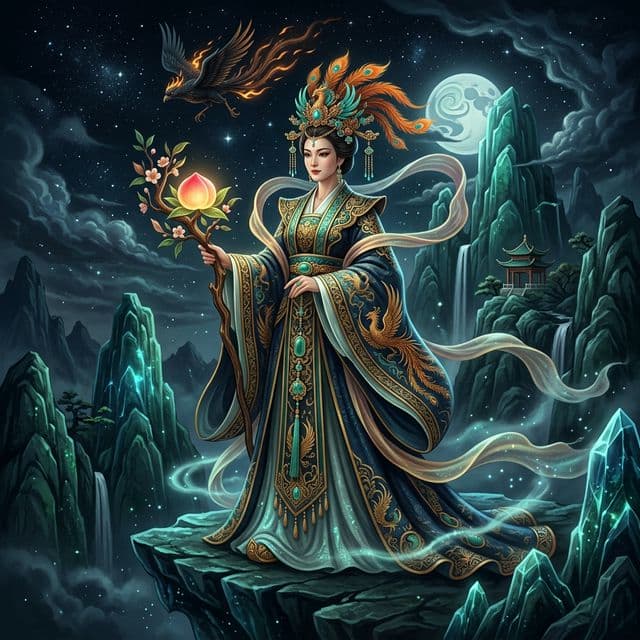
Symbolsnecklace Brisingamen, falcon feather cloak, chariot pulled by cats, boar Hildisvinipeaches of immortality, phoenix headdress, jade mountain, three-legged crow
Also calledFreya, Lady, VanadisQueen Mother of the West, Lady Queen Mother, Golden Mother of the Shining Lake

Where they meet

The atlas records no domain or symbol that Freyja and Xi Wangmu share.

They are compared for the part each plays in their own tradition rather than for any attribute in common.

Where they part

Only Freyja

Associated with love, beauty, fertility, war, death, and magic.

Only Xi Wangmu

Associated with immortality, peaches, the west, and female immortals.

How each was worshipped

Freyja

Cult sites
No standing temple identified; seiðr and rich graves are the nearer evidence
Festivals
Disablót (disir, overlapping); Friday in later naming

Love, gold, and the slain she shares with Odin. Cats, boar, and seiðr. Snorri says she taught the Aesir witchcraft. Cult is inferred from the Vanir peace, from women's graves, and from the stubborn popularity of her name.

Xi Wangmu

Cult sites
Shrines of the Queen Mother of the West; Kunlun in myth; Han-period cult visible on tomb bronze and later popular temples
Festivals
Peach-festival imagery at the new year and mid-autumn in later folk practice

Peaches of immortality, tigers, and a western paradise. Han cult was stronger than many later readers expect. She grants long life and receives the dead; the banquet on Kunlun is a picture of that office.

The two figures

Norse Pantheon

Freyja

Most renowned of the Vanir, goddess of love, beauty, and fertility, but also associated with war and death. She receives half of those who die in battle in her hall Folkvangr.

Freyja is the daughter of the sea god Njord and an unnamed mother, possibly the earth goddess Nerthus or a sister of Njord from the Vanir. She came to Asgard as a hostage after the Aesir-Vanir War, along with her father and twin brother Freyr. In exchange, the Aesir sent Hoenir and Mimir to the Vanir. The Vanir, feeling cheated, beheaded Mimir, but the exchange brought lasting peace. Freyja taught the Aesir the magic of seidr, a form of shamanic sorcery previously unknown to them. She became so beloved among the gods that she was granted her own hall, Sessrumnir, in the field of Folkvangr.

Freyja is the goddess of love, beauty, gold, and magic (*seidr*). She drives a chariot pulled by giant cats and wears the necklace Brisingamen.

Read the full Freyja entry

Chinese Pantheon

Xi Wangmu

The supreme goddess of immortality who rules from her paradise on Mount Kunlun. She grows the Peaches of Immortality that ripen once every 3,000 years and hosts the legendary banquet of the gods.

Xi Wangmu is a primordial goddess who has existed since the beginning of time. She established her paradise on Mount Kunlun in the far west and planted the orchards of immortal peaches that grant eternal life to the gods.

Xi Wangmu (Queen Mother of the West) is one of the oldest and most important goddesses in Chinese religion, predating even Taoism. She rules over the western paradise on Mount Kunlun and controls access to immortality through her sacred peaches.

Read the full Xi Wangmu entry
About this comparison

Comparisons pair figures that play a similar role across traditions, or that the myths connect within one. A shared role does not, by itself, establish a shared origin.