Mythos Atlas

Side by sideParent and child

Gaia vs Tethys

Gaia
GaiaGreek
Tethys
TethysGreek

Gaia and Tethys are recorded as parent and child in the Greek Pantheon.

At a glance

Gaia and Tethys compared
GaiaTethys
TraditionGreek PantheonGreek Pantheon
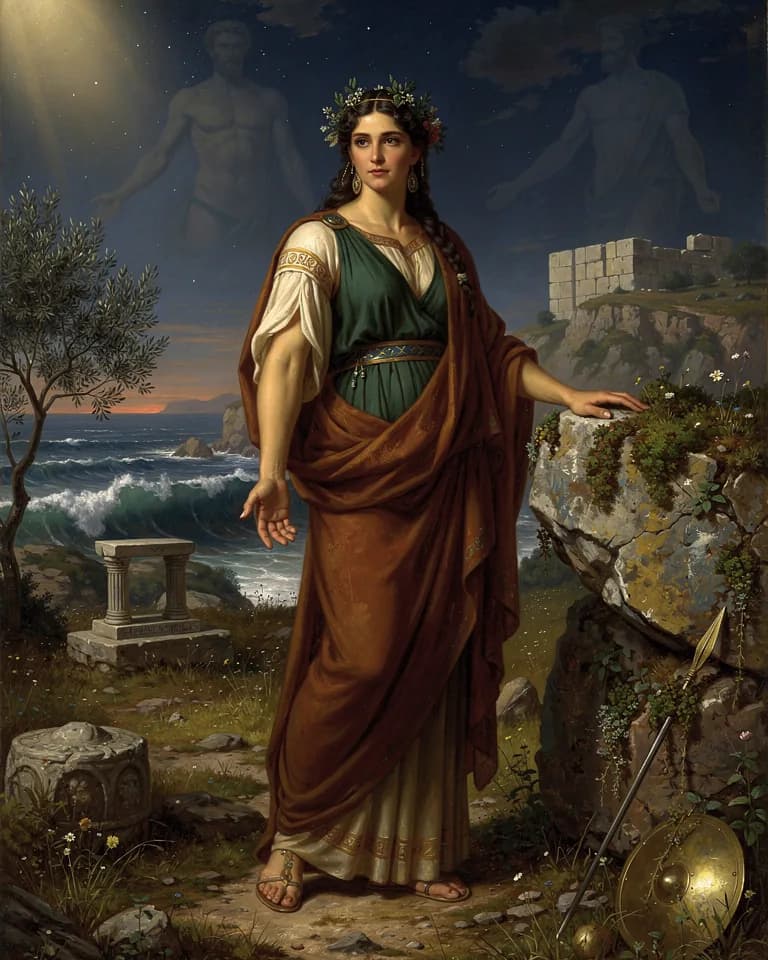
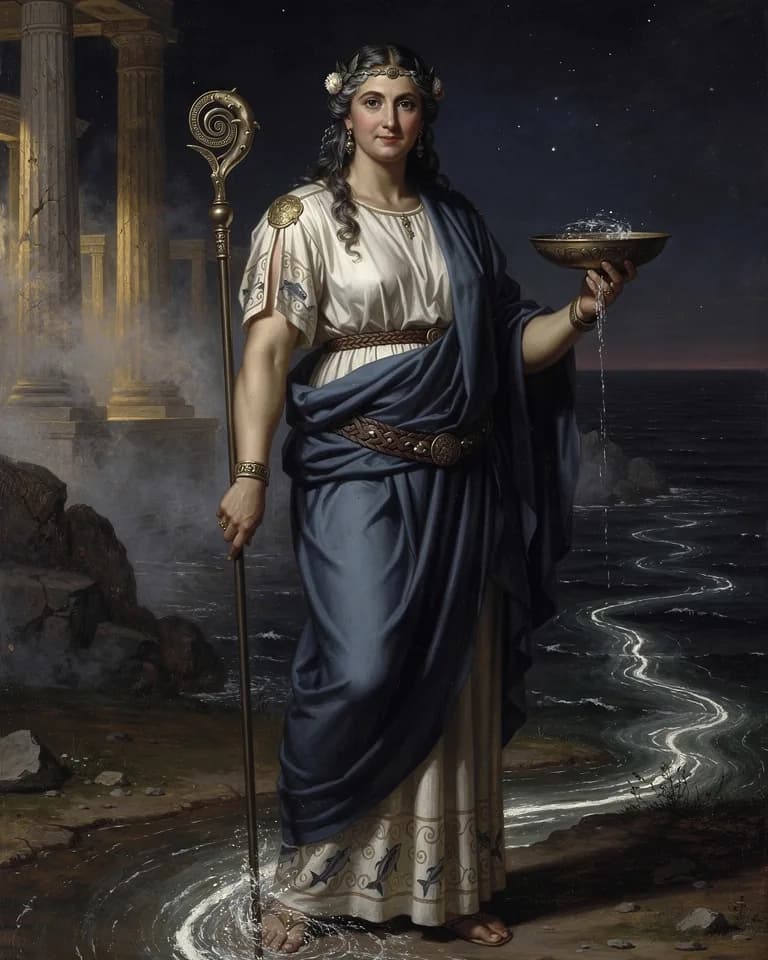
Domainsthe earth, primordial creation, motherhood of the Titans and Giantsfresh waters, rivers and springs, primordial motherhood
Symbolsthe earth itself, cornucopia (later art), serpents (in Gigantomachy imagery)winged brow (in Roman mosaics), water
Also calledGe, Gaea, Tellus (Roman)None recorded

Where they meet

The atlas records no domain or symbol that Gaia and Tethys share.

They are compared because of how the myths connect them, not because of what they rule.

Where they part

Only Gaia

Associated with the earth, primordial creation, and motherhood of the titans and giants.

Only Tethys

Associated with fresh waters, rivers and springs, and primordial motherhood.

How each was worshipped

Gaia

Cult sites
Shared sanctuary traditions at early Delphi (pre-Apolline oracle, per later Greek tradition); Altars at Athens and Olympia
Festivals
Invoked in solemn oaths alongside Uranus and the underworld rivers

Gaia's cult was diffuse rather than centered on grand temples: oaths, first-fruits offerings to the earth, and the tradition — reported by later Greek writers, not universally accepted by modern scholars — that Delphi's oracle originally belonged to her before passing to Themis and then Apollo.

Tethys

No cult sites or festivals are recorded in the atlas.

The two figures

Greek Pantheon

Gaia

Primordial goddess of the Earth, one of the first beings to emerge from Chaos. Gaia is the mother of the sky (Uranus), the sea (Pontus), the Titans, the Cyclopes, and, through the blood of Uranus, the Giants and the Furies.

Gaia emerged directly after Chaos as one of the first primordial beings. She alone brought forth Uranus (the Sky) and Pontus (the Sea), then united with Uranus to bear the Titans, Cyclopes, and Hecatoncheires, becoming the ancestral mother of nearly every subsequent generation of gods.

In Hesiod's *Theogony*, Gaia is among the very first entities to exist, arising after Chaos as "the ever-sure foundation of all." From herself alone she bore Uranus, the starry Sky, to cover her on every side, and Pontus, the sea. She then united with Uranus to bear the twelve Titans, the three one-eyed Cyclopes, and the three monstrous Hundred-Handed Ones (Hecatoncheires).

Read the full Gaia entry

Greek Pantheon

Tethys

A Titaness, daughter of Gaia and Uranus and wife of her brother Oceanus. Hesiod makes her mother of the world's rivers and of the three thousand Oceanid nymphs; in the Iliad Hera calls her 'mother Tethys' and recalls being raised in her house.

Tethys was among the children Gaia bore to Uranus, the generation of Titans that preceded the Olympians. She married her brother Oceanus and bore him the rivers and the Oceanid nymphs.

Tethys is one of the twelve Titans born to Gaia and Uranus. Paired with her brother Oceanus, the great river that encircles the earth, she becomes in Hesiod's *Theogony* the mother of all rivers (Nile, Alpheus, Scamander, and many more) and of the Oceanids, the three thousand nymphs of springs and streams.

Read the full Tethys entry
About this comparison

Comparisons pair figures that play a similar role across traditions, or that the myths connect within one. A shared role does not, by itself, establish a shared origin.