Side by sideParallel across traditions

Guan Yu vs Hachiman

Guan Yu
Guan YuChinese
Hachiman
HachimanJapanese

Both are patron gods of warriors, honored for loyalty, protection, and martial virtue.

At a glance

Guan Yu and Hachiman compared
Guan YuHachiman
TraditionChinese PantheonJapanese Pantheon
Domainswar, loyalty, righteousness, brotherhood, protectionwar, archery, protection, samurai
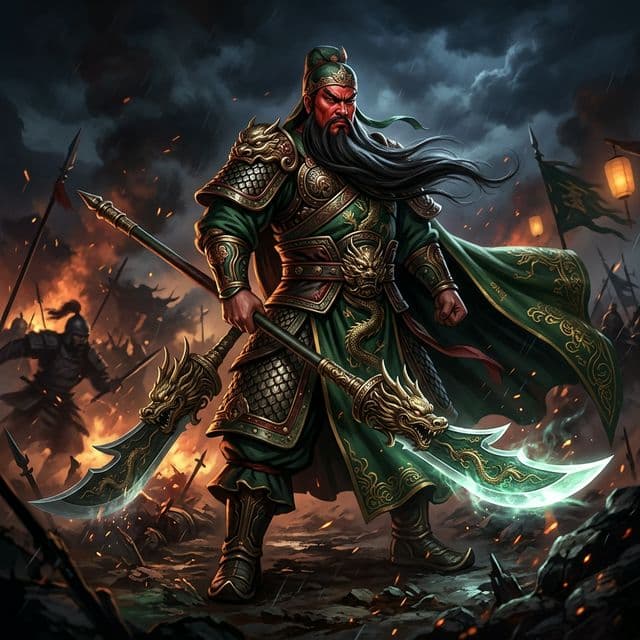
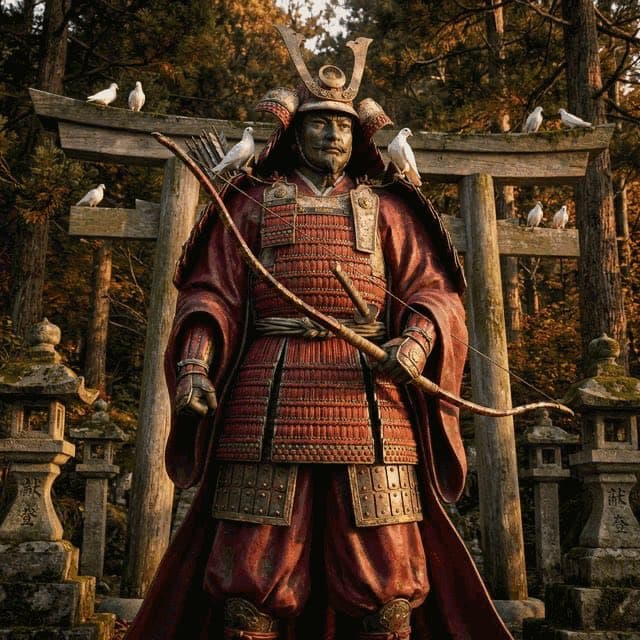
SymbolsGreen Dragon Crescent Blade (guandao), red face, long black beard, green robebow, dove, torii gate
Also calledLord Guan, Guan Di, God of War, Guan GongHachiman-jin, Yawata

Where they meet

Both are associated with war and protection.

Where they part

Only Guan Yu

Associated with loyalty, righteousness, and brotherhood.

Only Hachiman

Associated with archery and samurai.

How each was worshipped

Guan Yu

Cult sites
Guandi temples across the Chinese world; Joss houses in diaspora Chinatowns
Festivals
Guan Yu's birthday; Oath days for guilds and police

Loyalty as a job. Soldiers, pawnbrokers, and triads have all used him. The face is red; the cult is sworn brotherhood.

Hachiman

Cult sites
Usa Jingu in Kyushu, the oldest great Hachiman seat; Iwashimizu Hachimangu southwest of Kyoto; Tsurugaoka Hachimangu in Kamakura, raised by the Minamoto
Festivals
Hachiman matsuri; Yabusame (mounted archery); Hōjō-e at Usa

Oracles at Usa could speak for the court. Warrior houses carried his name on banners. Doves are his messengers. He is addressed as kami and as Hachiman Daibosatsu, a bodhisattva guardian of temples, without the cult treating those as two different gods.

The two figures

Chinese Pantheon

Guan Yu

A deified historical general from the Three Kingdoms period, worshipped as the God of War and patron of righteousness, loyalty, and brotherhood. His red face symbolizes his intense devotion to honor.

Guan Yu (160-220 CE) was a general during the Three Kingdoms period who served the warlord Liu Bei with legendary loyalty. After his death in battle, his spirit was gradually elevated through Buddhist, Taoist, and imperial recognition until he became one of China's most widely worshipped gods.

Guan Yu is the rare deity who was once a historical person. A general during the turbulent Three Kingdoms period (220-280 CE), his extraordinary loyalty and martial prowess led to his deification. Today he is worshipped across Chinese culture as the god of war, loyalty, and righteousness.

Read the full Guan Yu entry

Japanese Pantheon

Hachiman

Syncretic god of war, archery, and protector of Japan and warriors. Originally Emperor Ojin deified. Patron of the samurai clans.

Originally Emperor Ojin, deified as Hachiman. Over time, led to becoming protector of Buddhism in Japan and guardian deity of warriors.

Hachiman is a war god, an archery god, and a protector of Japan who began as a deified emperor. Tradition identifies him with **Emperor Ojin**. The great shrine at Usa in Kyushu is his oldest major seat. From there his cult spread with the Minamoto and other warrior houses, until samurai banners carried his name into battle.

Read the full Hachiman entry
About this comparison

Comparisons pair figures that play a similar role across traditions, or that the myths connect within one. A shared role does not, by itself, establish a shared origin.