Side by sideParallel across traditions

Hachiman vs Nezha

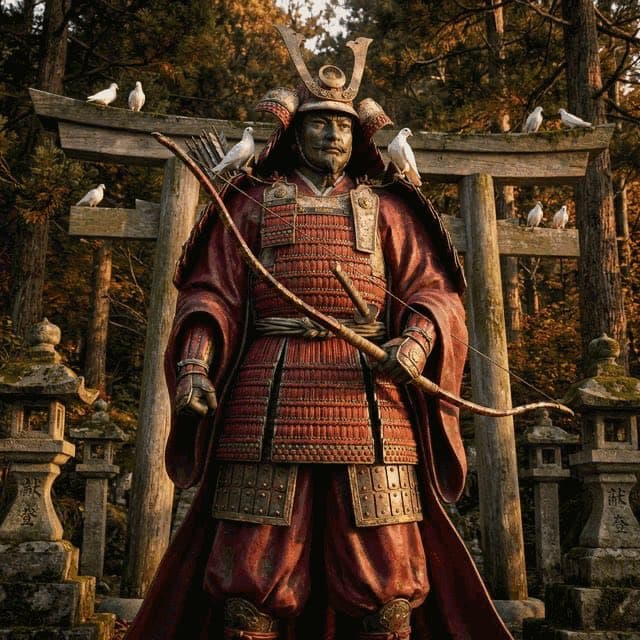
Hachiman
HachimanJapanese
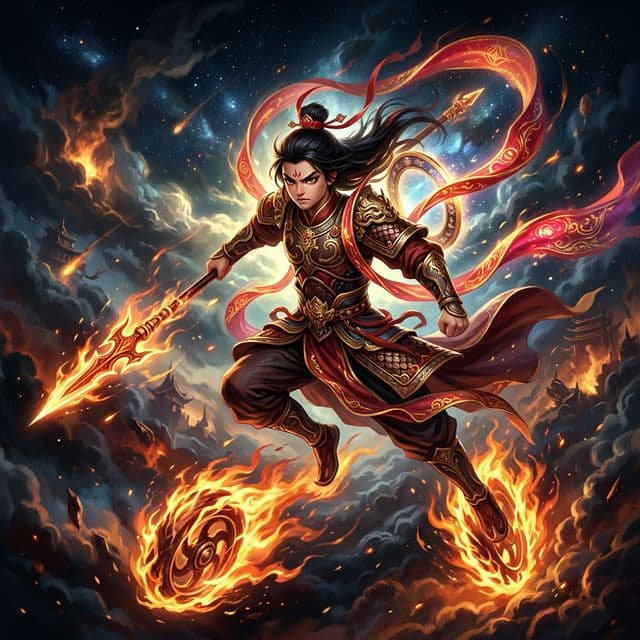
Nezha
NezhaChinese

Both are youthful, fiercely protective war deities associated with martial prowess and defense.

At a glance

Hachiman and Nezha compared
HachimanNezha
TraditionJapanese PantheonChinese Pantheon
Domainswar, archery, protection, samuraiwar, protection, youth, filial defiance
Symbolsbow, dove, torii gateUniverse Ring, Wind Fire Wheels, Red Armillary Sash, Fire-Tipped Spear
Also calledHachiman-jin, YawataNa Zha, Third Lotus Prince, Marshal of the Central Altar

Where they meet

Both are associated with war and protection.

Where they part

Only Hachiman

Associated with archery and samurai.

Only Nezha

Associated with youth and filial defiance.

How each was worshipped

Hachiman

Cult sites
Usa Jingu in Kyushu, the oldest great Hachiman seat; Iwashimizu Hachimangu southwest of Kyoto; Tsurugaoka Hachimangu in Kamakura, raised by the Minamoto
Festivals
Hachiman matsuri; Yabusame (mounted archery); Hōjō-e at Usa

Oracles at Usa could speak for the court. Warrior houses carried his name on banners. Doves are his messengers. He is addressed as kami and as Hachiman Daibosatsu, a bodhisattva guardian of temples, without the cult treating those as two different gods.

Nezha

Cult sites
Nezha temples in Tianjin and Taiwan; Temple-procession cults along the coast
Festivals
Nezha's birthday in the lunar calendar

The lotus child with the fire-tipped spear. Street processions, child protection, and a temper. Popular novel first, then the temple.

The two figures

Japanese Pantheon

Hachiman

Syncretic god of war, archery, and protector of Japan and warriors. Originally Emperor Ojin deified. Patron of the samurai clans.

Originally Emperor Ojin, deified as Hachiman. Over time, led to becoming protector of Buddhism in Japan and guardian deity of warriors.

Hachiman is a war god, an archery god, and a protector of Japan who began as a deified emperor. Tradition identifies him with **Emperor Ojin**. The great shrine at Usa in Kyushu is his oldest major seat. From there his cult spread with the Minamoto and other warrior houses, until samurai banners carried his name into battle.

Read the full Hachiman entry

Chinese Pantheon

Nezha

A fierce child warrior deity born after three years and six months of pregnancy. He killed a dragon prince, defied his father, and was reborn from lotus flowers to become one of Heaven's greatest warriors.

Lady Yin was pregnant for three years and six months before giving birth to a ball of flesh. When her husband Li Jing struck it with his sword, a boy emerged wearing golden bracelets and a red sash - divine gifts marking him as no ordinary child.

Nezha is one of Chinese mythology's most compelling figures: a child warrior whose story encompasses birth, filial rebellion, suicide, resurrection, and ultimate redemption. He represents both the terrifying power of youthful defiance and its eventual reconciliation with cosmic order.

Read the full Nezha entry
About this comparison

Comparisons pair figures that play a similar role across traditions, or that the myths connect within one. A shared role does not, by itself, establish a shared origin.