Mythos Atlas

Side by sideParallel across traditions

Kartikeya vs Nezha

Kartikeya
KartikeyaHindu
Nezha
NezhaChinese

Both are young warrior gods who command divine armies.

At a glance

Kartikeya and Nezha compared
KartikeyaNezha
TraditionHindu PantheonChinese Pantheon
Domainswar, leadership of the divine army, youth, victorywar, protection, youth, filial defiance
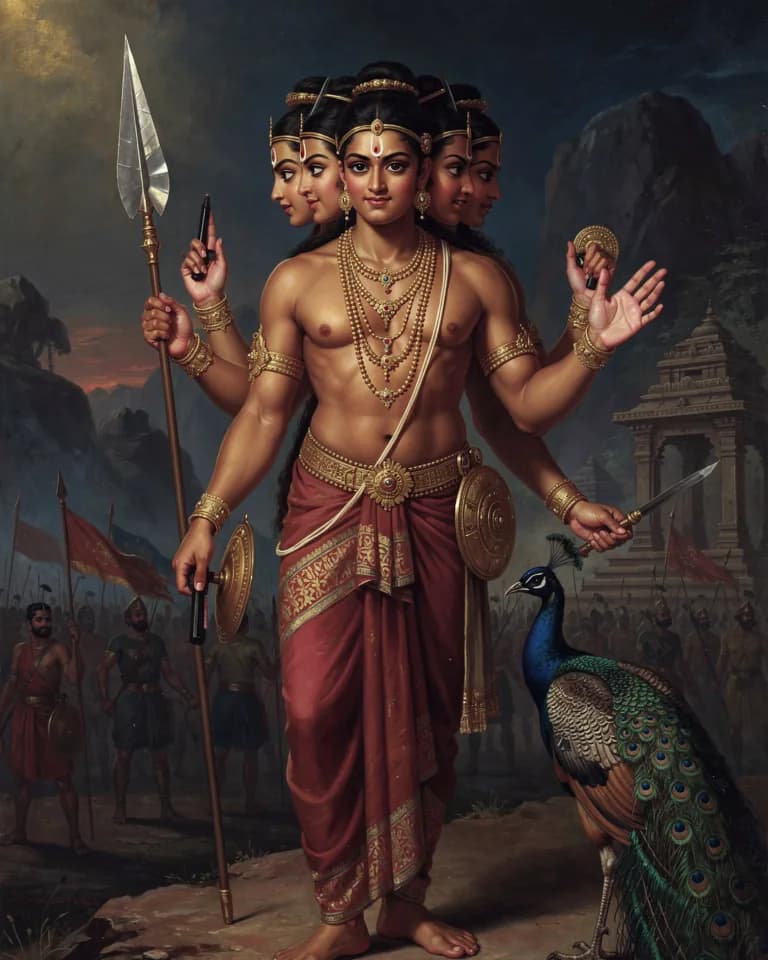
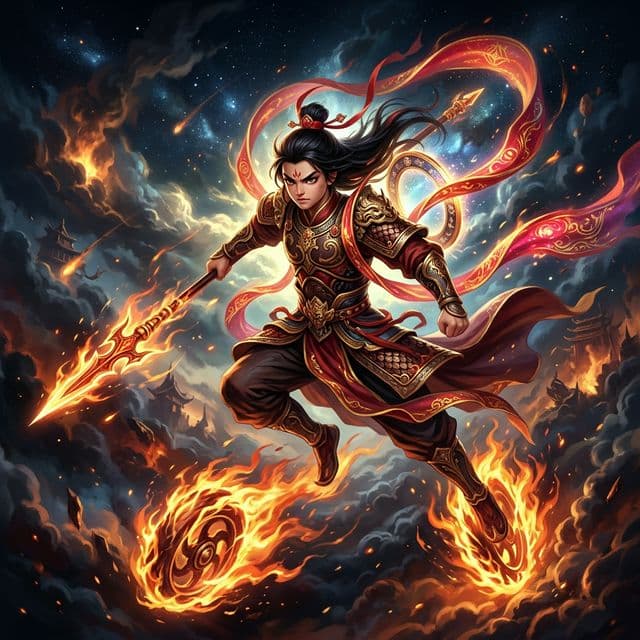
Symbolsspear (vel or shakti), peacock mount, rooster banner, six facesUniverse Ring, Wind Fire Wheels, Red Armillary Sash, Fire-Tipped Spear
Also calledSkanda, Murugan, Subrahmanya, Kumara, ShanmukhaNa Zha, Third Lotus Prince, Marshal of the Central Altar

Where they meet

Both are associated with war and youth.

Where they part

Only Kartikeya

Associated with leadership of the divine army and victory.

Only Nezha

Associated with protection and filial defiance.

How each was worshipped

Kartikeya

Cult sites
Palani Murugan Temple, Tamil Nadu; Tiruchendur Murugan Temple, Tamil Nadu; Batu Caves, Malaysia
Festivals
Thaipusam; Skanda Shashti

Devotees carry kavadi (decorated burdens) in fulfillment of vows, especially at Thaipusam, and fast and recite his victories over the demons during Skanda Shashti.

Nezha

Cult sites
Nezha temples in Tianjin and Taiwan; Temple-procession cults along the coast
Festivals
Nezha's birthday in the lunar calendar

The lotus child with the fire-tipped spear. Street processions, child protection, and a temper. Popular novel first, then the temple.

The two figures

Hindu Pantheon

Kartikeya

The god of war and commander of the gods' army, son of Shiva, born to destroy the demon Taraka. Raised by the six Krittikas (the Pleiades), he is often shown with six faces; in the Tamil south he is worshipped as Murugan, one of the most beloved gods of the region.

Born to end the demon Taraka, Kartikeya arose from the seed of Shiva, carried by Agni and the river Ganga, and was nursed by the six Krittikas. Parvati accepted him as her son, and the gods made him general of their army.

The gods, oppressed by the demon Taraka, learned that only a son of Shiva could destroy him. Tellings of the birth vary widely across the *Mahabharata*, the *Ramayana*, the Puranas, and Kalidasa's poem *Kumarasambhava*: Shiva's fiery seed passes through Agni and the river Ganga before the child is born in a bed of reeds and nursed by the six Krittikas, the stars of the Pleiades. From them he takes the name Kartikeya, and from nursing all six at once, his six faces.

Read the full Kartikeya entry

Chinese Pantheon

Nezha

A fierce child warrior deity born after three years and six months of pregnancy. He killed a dragon prince, defied his father, and was reborn from lotus flowers to become one of Heaven's greatest warriors.

Lady Yin was pregnant for three years and six months before giving birth to a ball of flesh. When her husband Li Jing struck it with his sword, a boy emerged wearing golden bracelets and a red sash - divine gifts marking him as no ordinary child.

Nezha is one of Chinese mythology's most compelling figures: a child warrior whose story encompasses birth, filial rebellion, suicide, resurrection, and ultimate redemption. He represents both the terrifying power of youthful defiance and its eventual reconciliation with cosmic order.

Read the full Nezha entry
About this comparison

Comparisons pair figures that play a similar role across traditions, or that the myths connect within one. A shared role does not, by itself, establish a shared origin.