Mythos Atlas

Side by sideParent and child

Kartikeya vs Parvati

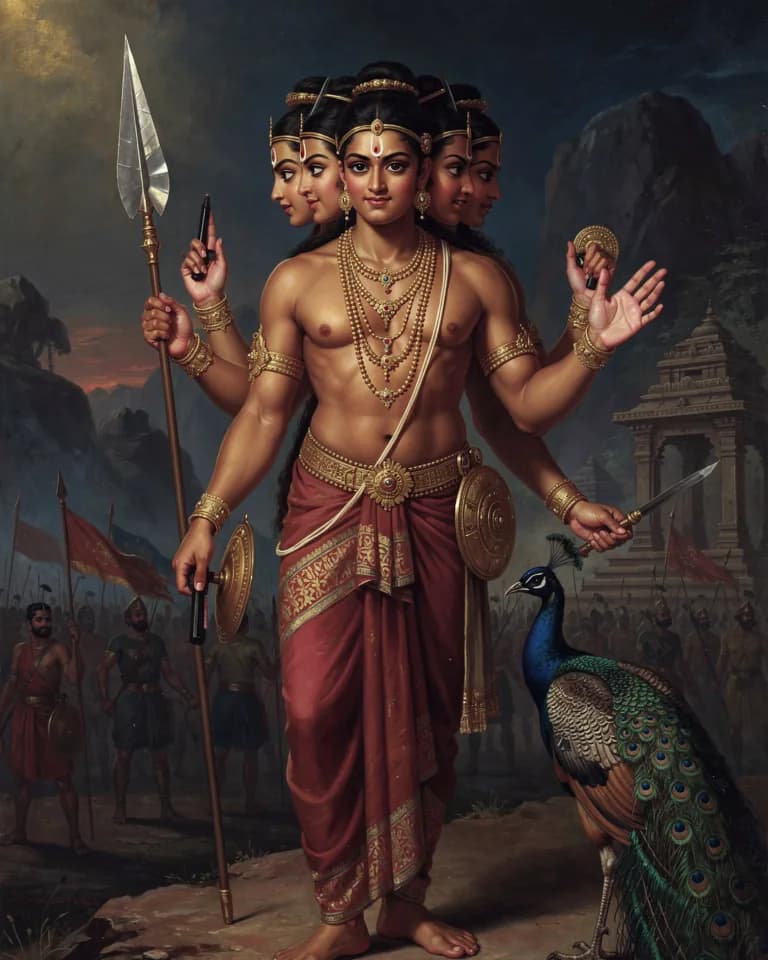
Kartikeya
KartikeyaHindu
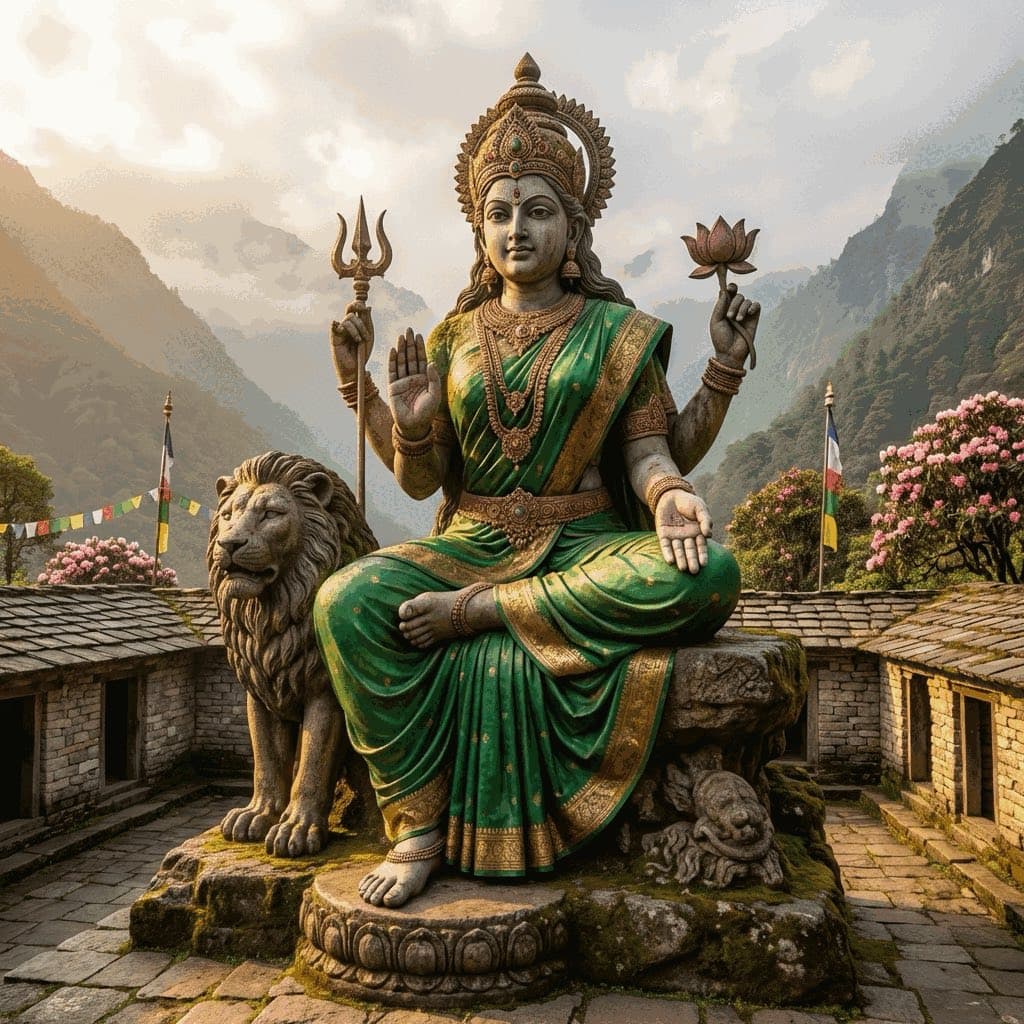
Parvati
ParvatiHindu

Kartikeya and Parvati are recorded as parent and child in the Hindu Pantheon.

At a glance

Kartikeya and Parvati compared
KartikeyaParvati
TraditionHindu PantheonHindu Pantheon
Domainswar, leadership of the divine army, youth, victorypower, fertility, love, devotion, divine energy
Symbolsspear (vel or shakti), peacock mount, rooster banner, six faceslion, lotus, trident
Also calledSkanda, Murugan, Subrahmanya, Kumara, ShanmukhaUma, Gauri, Shakti

Where they meet

The atlas records no domain or symbol that Kartikeya and Parvati share.

They are compared because of how the myths connect them, not because of what they rule.

Where they part

Only Kartikeya

Associated with war, leadership of the divine army, youth, and victory.

Only Parvati

Associated with power, fertility, love, devotion, and divine energy.

How each was worshipped

Kartikeya

Cult sites
Palani Murugan Temple, Tamil Nadu; Tiruchendur Murugan Temple, Tamil Nadu; Batu Caves, Malaysia
Festivals
Thaipusam; Skanda Shashti

Devotees carry kavadi (decorated burdens) in fulfillment of vows, especially at Thaipusam, and fast and recite his victories over the demons during Skanda Shashti.

Parvati

Cult sites
Meenakshi at Madurai; Kamakhya in Assam; Household shrines with Shiva as Uma-Maheshvara
Festivals
Teej; Gauri Puja; Navaratri

Wife, mother, and mountain. Married women keep fasts for her; Shaiva temples seat her as half of the pair. The cult is domestic as much as processional.

The two figures

Hindu Pantheon

Kartikeya

The god of war and commander of the gods' army, son of Shiva, born to destroy the demon Taraka. Raised by the six Krittikas (the Pleiades), he is often shown with six faces; in the Tamil south he is worshipped as Murugan, one of the most beloved gods of the region.

Born to end the demon Taraka, Kartikeya arose from the seed of Shiva, carried by Agni and the river Ganga, and was nursed by the six Krittikas. Parvati accepted him as her son, and the gods made him general of their army.

The gods, oppressed by the demon Taraka, learned that only a son of Shiva could destroy him. Tellings of the birth vary widely across the *Mahabharata*, the *Ramayana*, the Puranas, and Kalidasa's poem *Kumarasambhava*: Shiva's fiery seed passes through Agni and the river Ganga before the child is born in a bed of reeds and nursed by the six Krittikas, the stars of the Pleiades. From them he takes the name Kartikeya, and from nursing all six at once, his six faces.

Read the full Kartikeya entry

Hindu Pantheon

Parvati

Goddess of power, fertility, love, and devotion. Consort of Shiva and mother of Ganesha and Kartikeya. Represents Shakti, the divine feminine creative power.

Parvati is the reincarnation of Sati, who immolated herself when her father insulted Shiva. Born as the daughter of the mountain king Himavan, she performed severe penance to win Shiva's love.

Parvati is the goddess of **power**, fertility, love, and devotion. She is the consort of **Shiva** and mother of **Ganesha** and **Kartikeya**. As the embodiment of **Shakti** (divine feminine energy), she represents the active, creative power of the universe.

Read the full Parvati entry
About this comparison

Comparisons pair figures that play a similar role across traditions, or that the myths connect within one. A shared role does not, by itself, establish a shared origin.