Side by sideParent and child

Hel vs Loki

Hel
HelNorse
Loki
LokiNorse

Hel and Loki are recorded as parent and child in the Norse Pantheon.

At a glance

Hel and Loki compared
HelLoki
TraditionNorse PantheonNorse Pantheon
Domainsdeath, underworld, diseasemischief, trickery, chaos, fire, transformation
Symbolshalf living/half dead appearance, realm Niflheimflames, serpent, salmon, fly
Also calledHelaLopt, Trickster, Shape-Shifter

Where they meet

The atlas records no domain or symbol that Hel and Loki share.

They are compared because of how the myths connect them, not because of what they rule.

Where they part

Only Hel

Associated with death, underworld, and disease.

Only Loki

Associated with mischief, trickery, chaos, fire, and transformation.

How each was worshipped

Hel

Cult sites
No temple; the grave and the road to Hel are the 'precinct'

Not worshipped as a blessing-goddess in the surviving record. She receives the dead who do not go to Odin or Freyja. Offerings to the dead are not the same as a Hel-cult, and the texts do not invent one.

Loki

Cult sites
No attested temple; place-names are scarce and disputed

There is no working Loki cult in the sources. He is bound, blamed, and needed in the stories. The honest note is absence: a mythic catalyst without a priesthood.

The two figures

Norse Pantheon

Hel

Goddess and ruler of the underworld realm of the dead (also called Hel or Helheim). Daughter of Loki. Her realm receives those who die of sickness or old age.

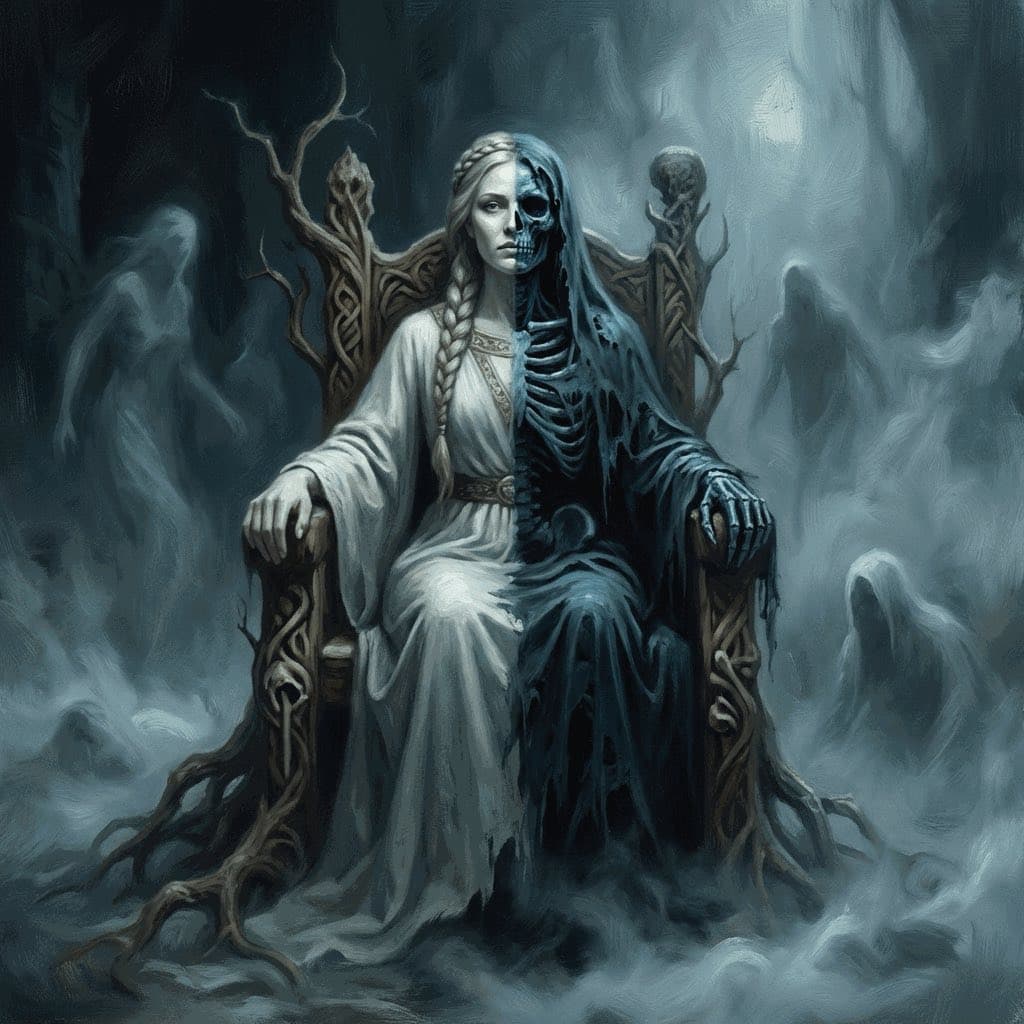
Hel was born to Loki and the giantess Angrboda in the iron forests of Jotunheim, alongside her brothers Fenrir and Jormungandr. From birth, she was marked as different - half of her body was that of a beautiful woman, while the other half was black and decaying like a corpse. When the gods brought Loki's monstrous children to Asgard, Odin cast Hel down into the primordial realm of Niflheim and gave her authority over all those who die of sickness or old age. There she built her hall Eljudnir and awaits the dead with her plate Hunger and her knife Famine. Her realm, also called Hel, became the final destination for the inglorious dead.

Hel is the ruler of **Helheim**, the realm of the dead (for those who did not die a warrior's death). She is half living flesh and half rotting corpse.

Read the full Hel entry

Norse Pantheon

Loki

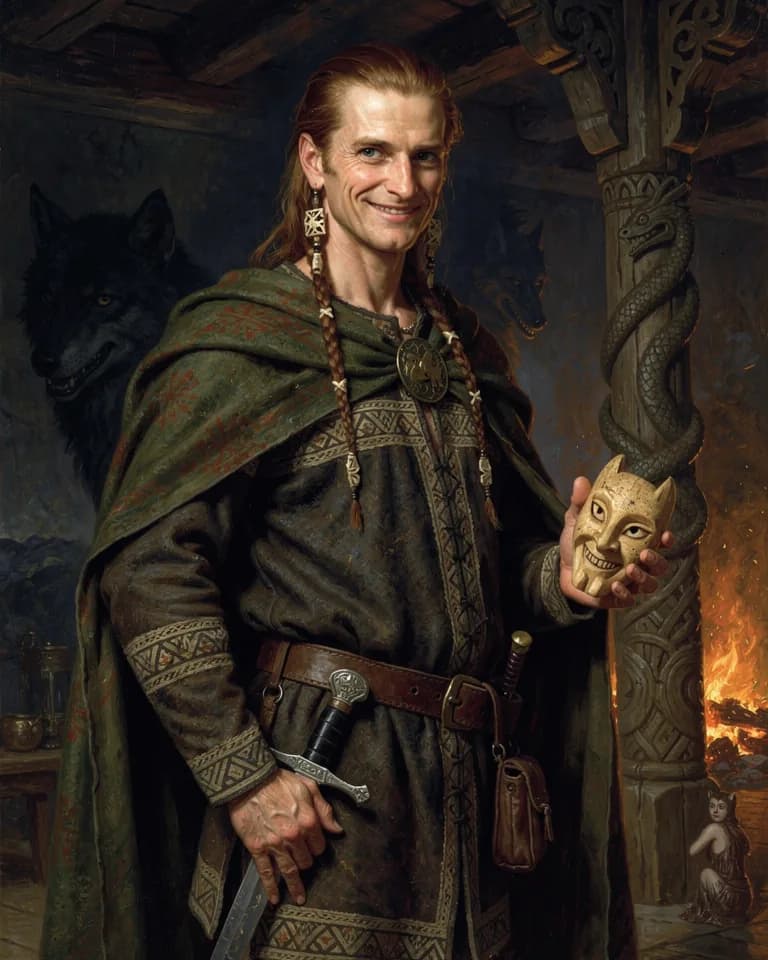
A complex figure, blood brother to Odin but frequently causing trouble for the gods. A shape-shifter and trickster who fathers monstrous children including Fenrir, Jormungandr, and Hel.

Loki is not one of the Aesir by birth but a giant, the son of the giant Farbauti and the giantess Laufey (or Nal). Despite his giant heritage, he was accepted among the Aesir after becoming blood brothers with Odin in ancient times. The details of this pact are lost, but it bound Odin to never drink unless Loki was also offered a cup. Loki married the goddess Sigyn, who bore him sons Narfi and Vali. With the giantess Angrboda, he fathered three monstrous children: Fenrir the wolf, Jormungandr the World Serpent, and Hel, ruler of the dead.

Loki is a shape-shifter and the catalyst for most Norse myths. Sometimes a helpful ally, often a malicious nuisance, his actions drive the plot of the gods' lives.

Read the full Loki entry
About this comparison

Comparisons pair figures that play a similar role across traditions, or that the myths connect within one. A shared role does not, by itself, establish a shared origin.