Side by sideParallel across traditions

Marduk vs Zeus

Marduk
MardukMesopotamian
Zeus
ZeusGreek

Both become king of gods through victory over primordial chaos forces.

At a glance

Marduk and Zeus compared
MardukZeus
TraditionMesopotamian PantheonGreek Pantheon
Domainscreation, kingship, magic, judgment, ordersky, thunder, lightning, law, order
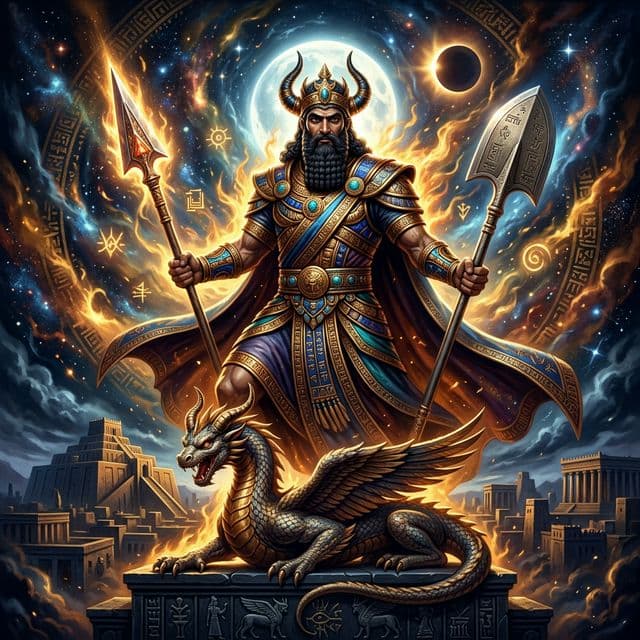
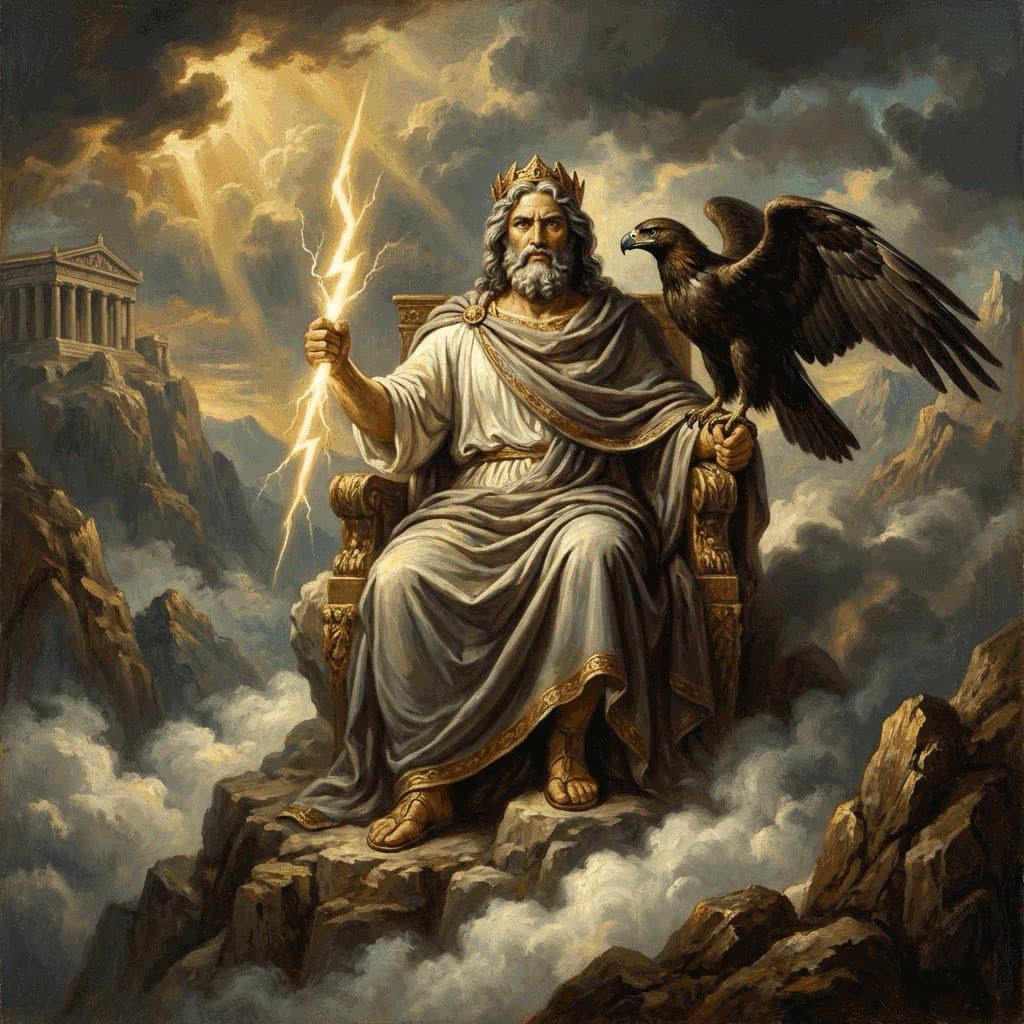
Symbolsspade, dragon (mushussu), triangular-headed spearthunderbolt, eagle, oak tree, bull
Also calledBel, AsalluhiJupiter, Jove

Where they meet

Both are associated with order.

Where they part

Only Marduk

Associated with creation, kingship, magic, and judgment.

Only Zeus

Associated with sky, thunder, lightning, and law.

How each was worshipped

Marduk

Cult sites
Esagila and the Etemenanki ziggurat in Babylon
Festivals
Akitu, the Babylonian New Year

Fifty names, the Enuma Elish recited, the statue taken out and brought home. Kingship of Babylon is his cult. Tiamat's defeat is liturgy. When the statue was stolen, the New Year broke.

Zeus

Cult sites
Temple of Zeus at Olympia; Oracle of Zeus at Dodona; Nemean sanctuary
Festivals
Olympic Games; Diasia; Dipolieia

White bulls and the thunderbolt belong to him. Olympic contest was a sacrifice as much as a race. Dodona spoke through oak and doves. Civic oaths called Zeus Horkios; a perjurer feared the sky more than the court.

The two figures

Mesopotamian Pantheon

Marduk

Chief god of Babylon and slayer of Tiamat. Marduk rose from a minor deity to supreme god of the Babylonian pantheon after defeating the primordial chaos dragon and creating the world from her body.

Marduk was born to Enki/Ea and the goddess Damkina in the chambers of the Abzu. Born full-grown and radiant with divine fire, he was the most glorious of the gods from his first moment. When Tiamat raised an army of monsters to destroy the gods, young Marduk volunteered to be their champion on condition of receiving supreme authority if victorious.

Marduk represents one of the most dramatic theological shifts in ancient religion. Originally a minor god of thunderstorms in Babylon, he rose to supreme power when Babylon became the dominant Mesopotamian empire. The Enuma Elish, Babylon's creation epic, reframes cosmic history to place Marduk at its center, absorbing the powers and titles of older gods.

Read the full Marduk entry

Greek Pantheon

Zeus

King of the gods and ruler of Mount Olympus. God of the sky, thunder, and justice. Zeus overthrew his father Cronus to become the supreme deity of the Greek pantheon.

Zeus was the youngest son of the Titans Cronus and Rhea. Cronus, fearing a prophecy that he would be overthrown by his children, swallowed each child at birth. Rhea hid Zeus and gave Cronus a stone wrapped in swaddling clothes instead. Zeus was raised in secret and later forced Cronus to regurgitate his siblings, leading the rebellion against the Titans.

Zeus is the supreme ruler of the gods, the lord of the sky, and the wielder of the thunderbolt. His power is greater than that of all the other gods combined. He presides over the oaths of men and the laws of the universe, ensuring justice and order.

Read the full Zeus entry
About this comparison

Comparisons pair figures that play a similar role across traditions, or that the myths connect within one. A shared role does not, by itself, establish a shared origin.