Side by sideParallel across traditions

Mazu vs Poseidon

Mazu
MazuChinese
Poseidon
PoseidonGreek

Both are deities who control the seas and protect (or endanger) sailors, though Mazu is more benevolent.

At a glance

Mazu and Poseidon compared
MazuPoseidon
TraditionChinese PantheonGreek Pantheon
Domainssea, sailors, fishermen, protection, stormssea, earthquakes, horses, storms
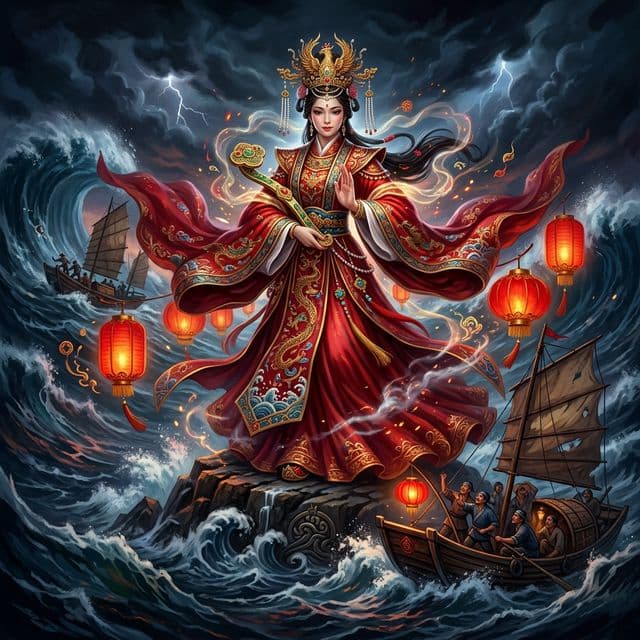
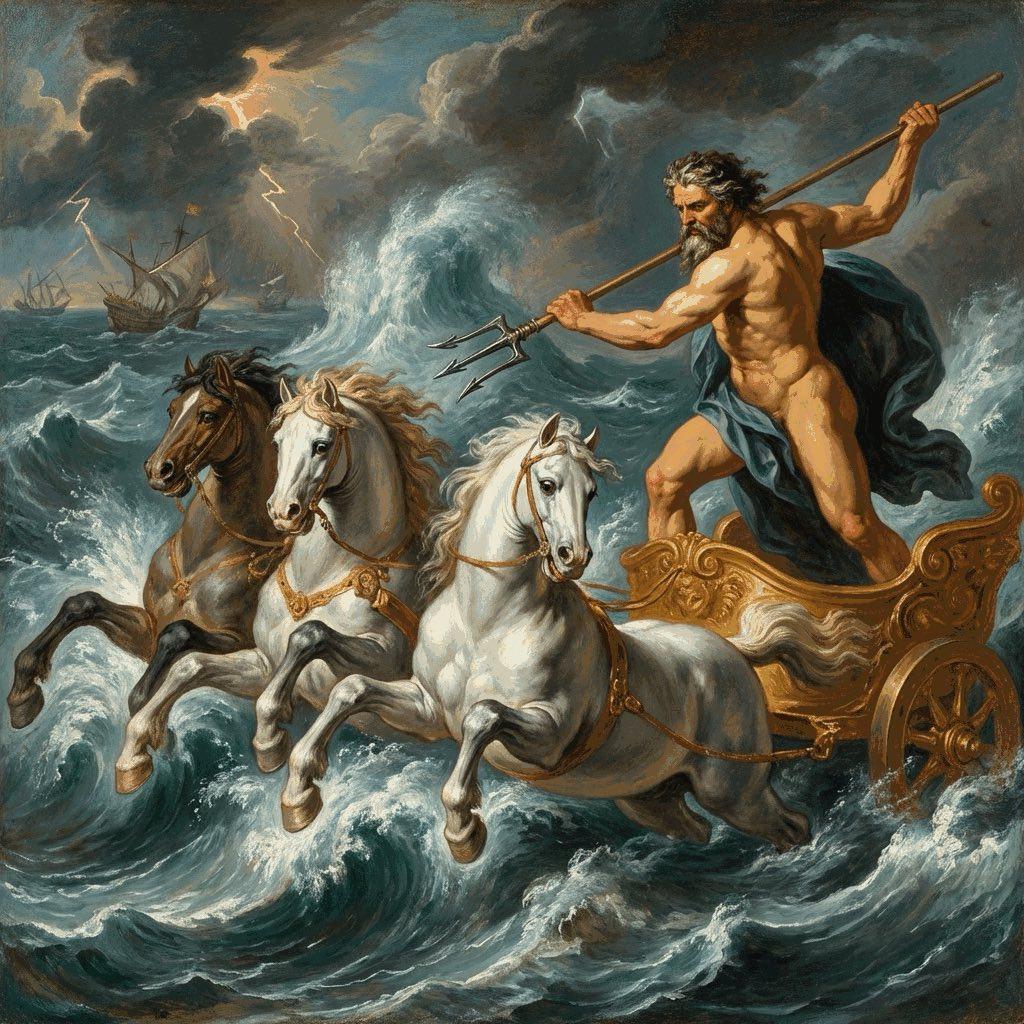
Symbolsred robes, imperial crown, sea, red lanternstrident, horse, dolphin, bull
Also calledTianhou, Empress of Heaven, Lin Moniang, Goddess of the SeaNeptune

Where they meet

Both are associated with sea and storms.

Where they part

Only Mazu

Associated with sailors, fishermen, and protection.

Only Poseidon

Associated with earthquakes and horses.

How each was worshipped

Mazu

Cult sites
Chaotian Temple at Beigang; Tianhou temples on every Fujian and Taiwan waterfront
Festivals
Mazu's birthday pilgrimage; Dajia procession

The girl who did not come back from the sea. Fishermen, crews, and a palanquin that runs. This is a living maritime cult, not a museum label.

Poseidon

Cult sites
Sanctuary of Poseidon at Isthmia; Temple of Poseidon at Sounion; Onchestos in Boeotia
Festivals
Isthmian Games; Posideia

Horses, earthquakes, and the drowned coast are his working signs. Isthmia held games under his name. A bull often went to the sea. Inland Boeotia kept him as a horse god, not only a sailor's patron.

The two figures

Chinese Pantheon

Mazu

The goddess of the sea and protector of sailors, fishermen, and all who travel by water. Originally a human girl from Fujian Province with miraculous powers, she was deified after her death.

Lin Moniang was born on Meizhou Island in 960 CE and displayed miraculous powers from childhood. After saving many sailors from storms through spiritual intervention, she ascended to heaven and was deified as Mazu, protector of all who travel by sea.

Mazu is the most important sea goddess in Chinese coastal religion, worshipped by millions of fishermen, sailors, and coastal communities across East and Southeast Asia. Her origins as a historical woman from Fujian Province make her one of the most relatable deities in the Chinese pantheon.

Read the full Mazu entry

Greek Pantheon

Poseidon

God of the sea, earthquakes, and horses. Brother of Zeus and Hades, ruler of the oceans and all waters.

Poseidon rules the vast oceans, earthquakes ("Earth-Shaker"), and horses. He is a moody and tempestuous god, much like the sea itself. Sailors prayed to him for safe passage, often sacrificing horses or bulls to appease his wrath.

Read the full Poseidon entry
About this comparison

Comparisons pair figures that play a similar role across traditions, or that the myths connect within one. A shared role does not, by itself, establish a shared origin.