Side by sideParallel across traditions

Nuada Airgetlám vs Tyr

Nuada Airgetlám
Nuada AirgetlámCeltic
Tyr
TyrNorse

Both are sovereign gods of war and justice who sacrifice/lose a hand in a myth central to their claim to rightful kingship.

At a glance

Nuada Airgetlám and Tyr compared
Nuada AirgetlámTyr
TraditionCeltic PantheonNorse Pantheon
Domainskingship, war, justice, sovereigntywar, justice, law, courage, oaths
Symbolssilver hand, sword, Claiomh Solaissword, one hand, rune Tiwaz
Also calledNuada of the Silver Hand, Nuadu, NodensTiw, Ziu

Where they meet

Both are associated with war and justice.

They share a symbol: sword.

  • sword

Where they part

Only Nuada Airgetlám

Associated with kingship and sovereignty.

Only Tyr

Associated with law, courage, and oaths.

Why they are compared

Both are sovereign gods of war and justice who sacrifice/lose a hand in a myth central to their claim to rightful kingship (Nuada's silver hand vs. Tyr and the wolf Fenrir).

How each was worshipped

Nuada Airgetlám

Cult sites
No identified temple; kingship of Tara in the literature

Silver hand, the sword, and the rule that a blemished king cannot reign. Cult is the story of kingship tests, not a surviving fane. Airgetlám is a legal-mythic figure.

Tyr

Cult sites
Place-names in Denmark and England more than standing temples
Festivals
Thing-assemblies under his name in reconstruction

Tuesday is his. One-handed keeper of the thing and of the wolf's binding. Cult evidence is linguistic and onomastic. He looks older than Odin in the weekday layer, then recedes in the written myths.

The two figures

Celtic Pantheon

Nuada Airgetlám

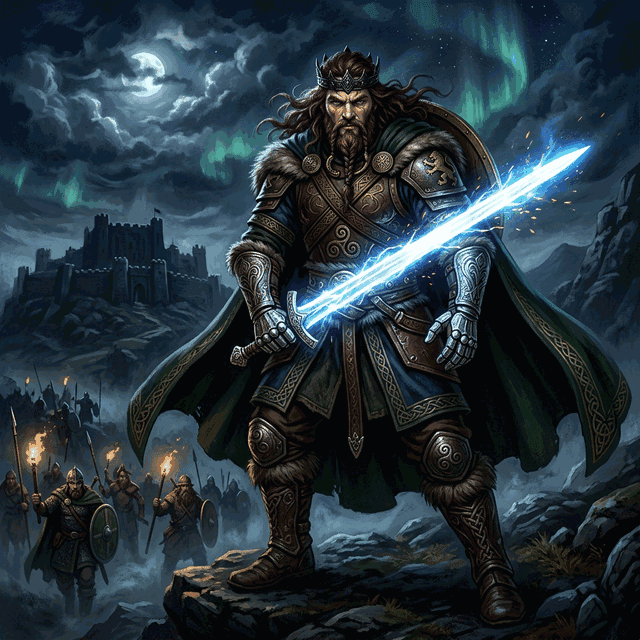
The first king of the Tuatha Dé Danann, who lost his arm in battle and his throne with it, until Dian Cécht forged him a working hand of silver.

Nuada led the **Tuatha Dé Danann** when they invaded Ireland and fought the First Battle of Mag Tuired against the **Fir Bolg**. Though his people won, Nuada lost his right arm to the Fir Bolg champion Sreng. Because a king must be physically perfect, Nuada was forced to abdicate in favor of **Bres**, a half-Fomorian whose reign proved tyrannical. The physician god **Dian Cécht** fashioned Nuada a working arm of silver, earning him the epithet Airgetlám ("Silver Hand"). Later, Dian Cécht's son Miach replaced the silver with one of flesh, and Nuada reclaimed his throne, only to fall in the Second Battle of Mag Tuired against **Balor of the Evil Eye**.

Nuada Airgetlám is the archetypal king of Irish mythology, embodying both the glory and the limitations of sovereignty. His story illustrates the Celtic belief that a king's physical wholeness reflects the health of the land itself, a concept central to Irish sacral kingship.

Read the full Nuada Airgetlám entry

Norse Pantheon

Tyr

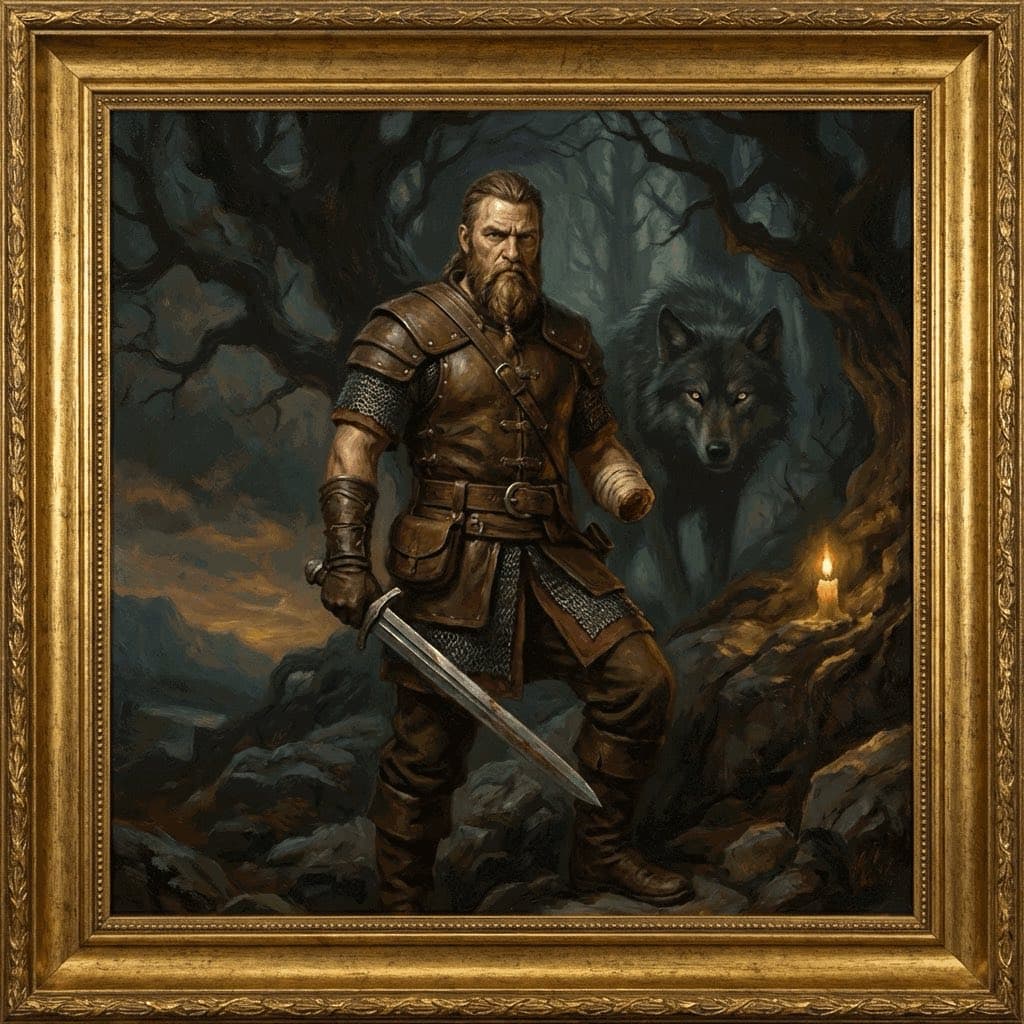
God of war, justice, and law. Bravest of the gods. Sacrificed his right hand to bind the wolf Fenrir, demonstrating his courage and willingness to uphold cosmic order.

Tyr's origins are mysterious and debated among scholars of the myths. Some accounts name him as a son of Odin, while others claim he is the son of the giant Hymir, making him older than the Aesir themselves. Indeed, linguistic evidence suggests Tyr may have once been the chief sky god of the Germanic peoples before Odin rose to prominence. The rune Tiwaz, which bears his name, is among the oldest of the runic alphabet. Regardless of his parentage, Tyr became the god whom warriors invoked before battle and to whom oaths were sworn, embodying the sacred bond between valor and honor.

Tyr is the ancient god of war and the guarantor of justice and oaths, linked to the *thing*, the assembly where Germanic peoples settled disputes. While Thor represents the physical strength of a warrior, Tyr represents the legal and moral principles of war.

Read the full Tyr entry
About this comparison

Comparisons pair figures that play a similar role across traditions, or that the myths connect within one. A shared role does not, by itself, establish a shared origin.