
Side by sideParallel across traditions

Persephone vs Xipe Totec

Persephone
PersephoneGreek
Xipe Totec
Xipe TotecMesoamerican

Both are associated with agricultural cycles and death-rebirth patterns.

At a glance

Persephone and Xipe Totec compared
PersephoneXipe Totec
TraditionGreek PantheonMesoamerican Pantheon
Domainsunderworld, spring, vegetation, deathspring, renewal, agriculture, goldsmiths
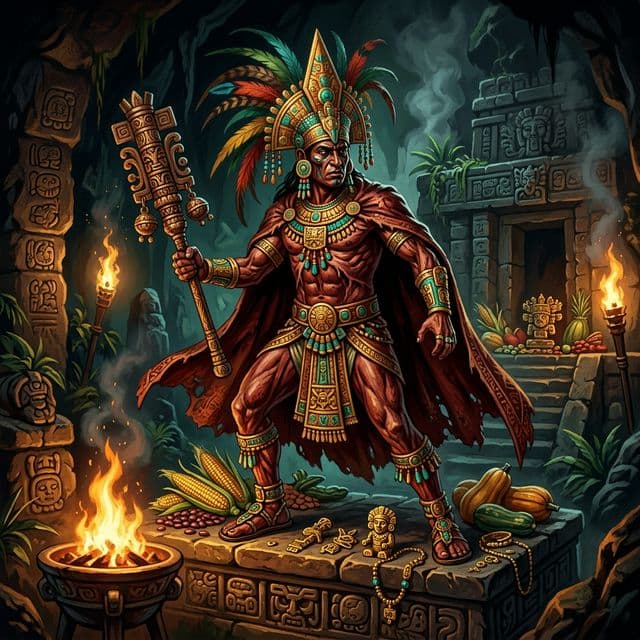
Symbolspomegranate, torch, seeds, flowers, deerflayed skin, pointed cap, rattle staff
Also calledProserpina, Kore, The Maiden, Queen of the UnderworldOur Lord the Flayed One, Red Tezcatlipoca

Where they meet

Both are associated with spring.

Where they part

Only Persephone

Associated with underworld, vegetation, and death.

Only Xipe Totec

Associated with renewal, agriculture, and goldsmiths.

How each was worshipped

Persephone

Cult sites
Eleusis, with Demeter; Locri in Italy, where she is a sovereign queen; Sites in Sicily claimed for her descent
Festivals
Eleusinian Mysteries; Thesmophoria; Koreia

Kore is the girl taken; Persephone is the queen who receives. Eleusis keeps both names in one rite. Locri gave her a queen's cult that does not wait for Demeter's permission. Pomegranate and the dead belong to her even when the hymn pretends she is only a daughter.

Xipe Totec

Cult sites
Calbecac and related precincts in Tenochtitlan
Festivals
Tlacaxipehualiztli

Our Lord the Flayed One. Priests wore the skin. Spring, goldsmiths, and a rite that is easy to sensationalize and hard to pretty up. State the flaying; do not linger for shock.

The two figures

Greek Pantheon

Persephone

Queen of the Underworld and goddess of spring growth. Daughter of Zeus and Demeter, wife of Hades. Her annual return from the underworld brings spring; her descent brings winter.

**Persephone** was gathering flowers in a meadow when the earth opened and **Hades** abducted her to be his queen. Her mother **Demeter** searched the earth in grief, causing famine. Zeus intervened, but because Persephone had eaten pomegranate seeds in the underworld, she was bound to return there for part of each year.

**Persephone** embodies a fundamental duality: she is both the **Kore** ("maiden"), innocent goddess of spring flowers, and the dread **Queen of the Dead**, ruling beside Hades over the shades of the departed. Her myth, preserved most fully in the *Homeric Hymn to Demeter*, explains the cycle of seasons and was central to the **Eleusinian Mysteries**.

Read the full Persephone entry

Mesoamerican Pantheon

Xipe Totec

The Aztec god of spring, renewal, and new vegetation. Xipe Totec represents the cycle of death and rebirth in nature. Priests wore the flayed skins of sacrificial victims, symbolizing the earth's new covering of vegetation.

Xipe Totec was one of the four creator gods. As the Red Tezcatlipoca, he governs the eastern direction. In one myth, he flayed himself to provide food for humanity.

Xipe Totec presents one of the most visceral images in Aztec religion. His name means "Our Lord the Flayed One," and his worship involved priests wearing **flayed skins** of sacrificial victims for twenty days.

Read the full Xipe Totec entry
About this comparison

Comparisons pair figures that play a similar role across traditions, or that the myths connect within one. A shared role does not, by itself, establish a shared origin.