
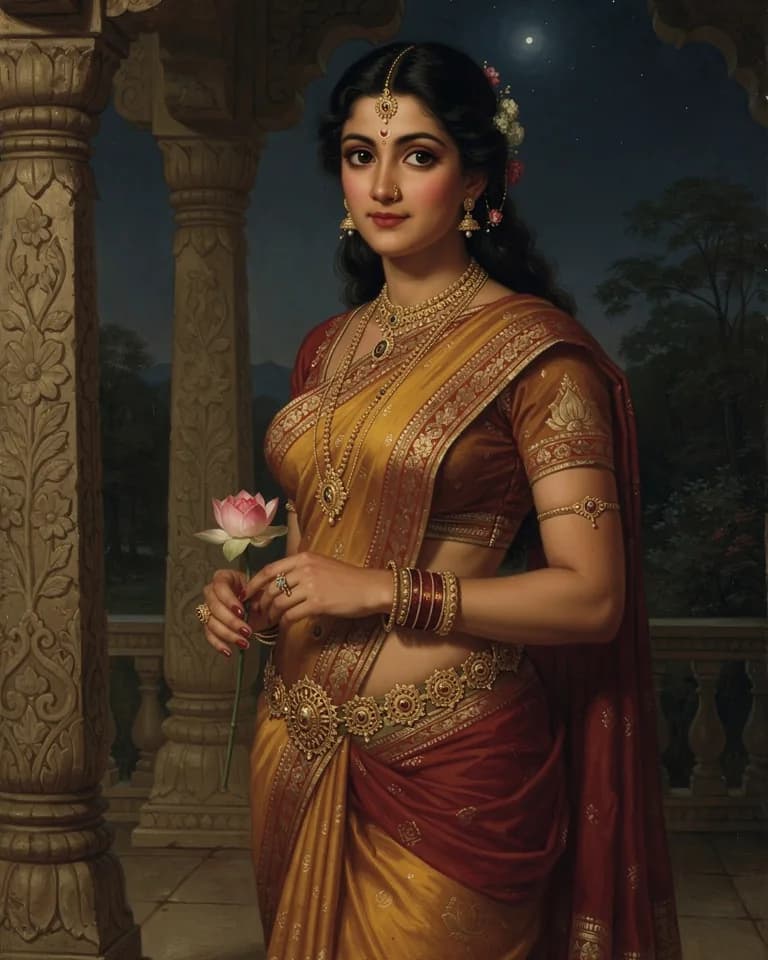
Side by sideParallel across traditions

Persephone vs Sita

Persephone
PersephoneGreek
Sita
SitaHindu

Both are abducted heroines whose captivity and eventual reunion with those who love them structure a central mythic cycle.

At a glance

Persephone and Sita compared
PersephoneSita
TraditionGreek PantheonHindu Pantheon
Domainsunderworld, spring, vegetation, deathdevotion, chastity, steadfastness, the earth (later identification)
Symbolspomegranate, torch, seeds, flowers, deerthe lotus, the furrow, fire (agni pariksha)
Also calledProserpina, Kore, The Maiden, Queen of the UnderworldJanaki, Vaidehi, Maithili

Where they meet

The atlas records no domain or symbol that Persephone and Sita share.

They are compared for the part each plays in their own tradition rather than for any attribute in common.

Where they part

Only Persephone

Associated with underworld, spring, vegetation, and death.

Only Sita

Associated with devotion, chastity, steadfastness, and the earth (later identification).

How each was worshipped

Persephone

Cult sites
Eleusis, with Demeter; Locri in Italy, where she is a sovereign queen; Sites in Sicily claimed for her descent
Festivals
Eleusinian Mysteries; Thesmophoria; Koreia

Kore is the girl taken; Persephone is the queen who receives. Eleusis keeps both names in one rite. Locri gave her a queen's cult that does not wait for Demeter's permission. Pomegranate and the dead belong to her even when the hymn pretends she is only a daughter.

Sita

Cult sites
Janaki Mandir at Janakpur, Nepal, her traditional birthplace; Worshipped jointly with Rama at Ram temples across India, including Ayodhya
Festivals
Sita Navami (her birth); Worshipped alongside Rama during Ram Navami and Diwali

Sita is almost always worshipped jointly with Rama, as the ideal devoted wife (Sita-Rama images and icons are paired), rather than through an independent cult of her own; Janakpur remains a major pilgrimage site specifically tied to her birth.

The two figures

Greek Pantheon

Persephone

Queen of the Underworld and goddess of spring growth. Daughter of Zeus and Demeter, wife of Hades. Her annual return from the underworld brings spring; her descent brings winter.

**Persephone** was gathering flowers in a meadow when the earth opened and **Hades** abducted her to be his queen. Her mother **Demeter** searched the earth in grief, causing famine. Zeus intervened, but because Persephone had eaten pomegranate seeds in the underworld, she was bound to return there for part of each year.

**Persephone** embodies a fundamental duality: she is both the **Kore** ("maiden"), innocent goddess of spring flowers, and the dread **Queen of the Dead**, ruling beside Hades over the shades of the departed. Her myth, preserved most fully in the *Homeric Hymn to Demeter*, explains the cycle of seasons and was central to the **Eleusinian Mysteries**.

Read the full Persephone entry

Hindu Pantheon

Sita

Wife of Rama and central heroine of the Ramayana. Found by King Janaka in a ploughed furrow, Sita is abducted by the demon king Ravana, endures captivity with unwavering fidelity, and is later identified in Puranic tradition as an avatar of the goddess Lakshmi.

Sita was discovered as an infant by King Janaka of Mithila while he ploughed a field, and was raised as his daughter. She married Rama after he alone succeeded in stringing Shiva's great bow at her swayamvara, and her subsequent abduction by Ravana sets the central conflict of the Ramayana in motion.

According to Valmiki's *Ramayana*, King Janaka of Mithila found the infant Sita while ploughing a field in preparation for a sacrifice, and raised her as his own daughter. Her name, meaning "furrow," preserves this origin. She won her hand in marriage through a *swayamvara* in which Rama, prince of Ayodhya, alone succeeded in stringing and breaking the great bow of Shiva that Janaka had set as the contest's test.

Read the full Sita entry
About this comparison

Comparisons pair figures that play a similar role across traditions, or that the myths connect within one. A shared role does not, by itself, establish a shared origin.