Mythos Atlas

Side by sideParent and child

Melinoë vs Persephone

Melinoë
MelinoëGreek
Persephone
PersephoneGreek

Melinoë and Persephone are recorded as parent and child in the Greek Pantheon.

At a glance

Melinoë and Persephone compared
MelinoëPersephone
TraditionGreek PantheonGreek Pantheon
Domainsghosts, night terrorsunderworld, spring, vegetation, death
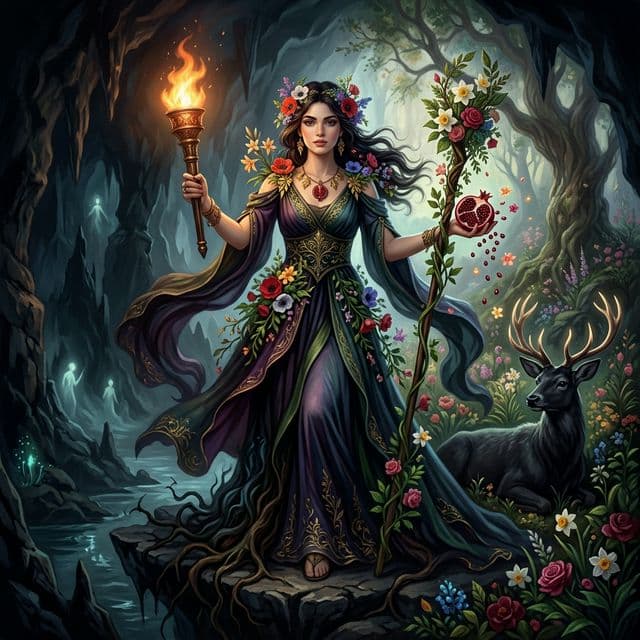
Symbolssaffron veilpomegranate, torch, seeds, flowers, deer
Also calledMelinoeProserpina, Kore, The Maiden, Queen of the Underworld

Where they meet

The atlas records no domain or symbol that Melinoë and Persephone share.

They are compared because of how the myths connect them, not because of what they rule.

Where they part

Only Melinoë

Associated with ghosts and night terrors.

Only Persephone

Associated with underworld, spring, vegetation, and death.

How each was worshipped

Melinoë

No cult sites or festivals are recorded in the atlas.

Persephone

Cult sites
Eleusis, with Demeter; Locri in Italy, where she is a sovereign queen; Sites in Sicily claimed for her descent
Festivals
Eleusinian Mysteries; Thesmophoria; Koreia

Kore is the girl taken; Persephone is the queen who receives. Eleusis keeps both names in one rite. Locri gave her a queen's cult that does not wait for Demeter's permission. Pomegranate and the dead belong to her even when the hymn pretends she is only a daughter.

The two figures

Greek Pantheon

Melinoë

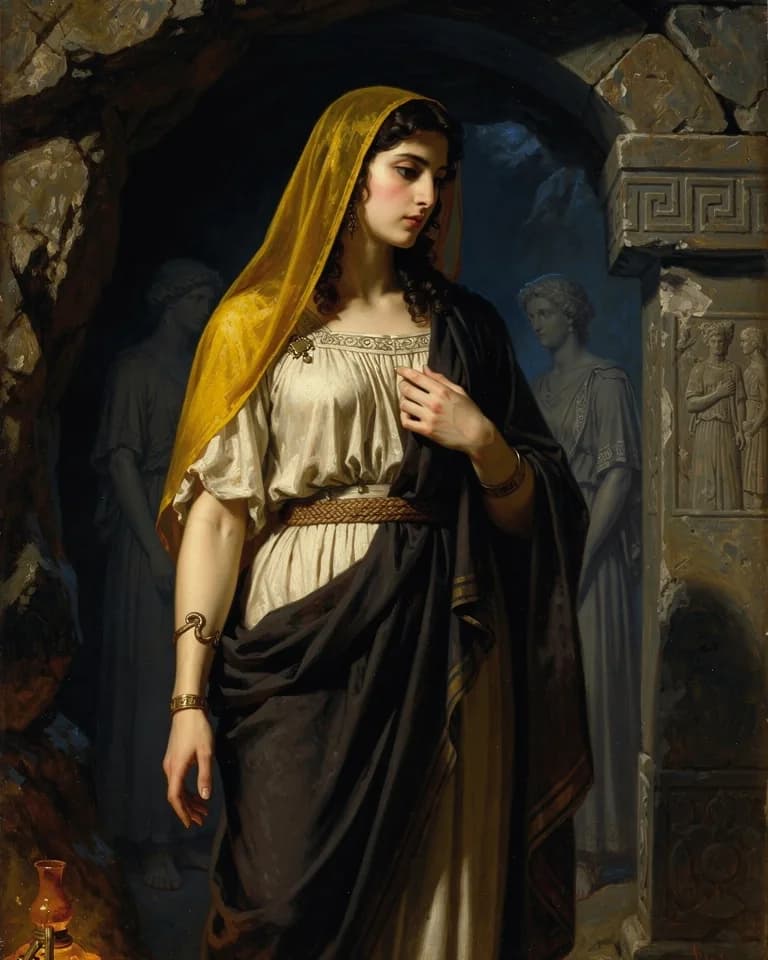
A chthonic goddess known from a single ancient text, Orphic Hymn 71: a saffron-veiled daughter of Persephone, fathered by Zeus in the guise of Plouton, who sends apparitions and night terrors to mortals. Almost nothing else is recorded of her.

Orphic Hymn 71 makes Melinoë the daughter of Persephone, born by the river Cocytus after Zeus lay with Persephone in the guise of Plouton.

Melinoë is known from one ancient poem, the seventy-first of the *Orphic Hymns*, a collection of cult hymns usually dated to the Roman imperial period. The hymn calls her saffron-veiled and of the earth, born beside the mouth of the river Cocytus to Persephone, who lay with Zeus while he took the form of Plouton. It asks her to turn away the frenzy she sends: she drives mortals mad with airy phantoms, appearing to them in strange shapes in the darkness of night.

Read the full Melinoë entry

Greek Pantheon

Persephone

Queen of the Underworld and goddess of spring growth. Daughter of Zeus and Demeter, wife of Hades. Her annual return from the underworld brings spring; her descent brings winter.

**Persephone** was gathering flowers in a meadow when the earth opened and **Hades** abducted her to be his queen. Her mother **Demeter** searched the earth in grief, causing famine. Zeus intervened, but because Persephone had eaten pomegranate seeds in the underworld, she was bound to return there for part of each year.

**Persephone** embodies a fundamental duality: she is both the **Kore** ("maiden"), innocent goddess of spring flowers, and the dread **Queen of the Dead**, ruling beside Hades over the shades of the departed. Her myth, preserved most fully in the *Homeric Hymn to Demeter*, explains the cycle of seasons and was central to the **Eleusinian Mysteries**.

Read the full Persephone entry
About this comparison

Comparisons pair figures that play a similar role across traditions, or that the myths connect within one. A shared role does not, by itself, establish a shared origin.