Mythos Atlas

Side by sideParent and child

Melinoë vs Zeus

Melinoë
MelinoëGreek
Zeus
ZeusGreek

Melinoë and Zeus are recorded as parent and child in the Greek Pantheon.

At a glance

Melinoë and Zeus compared
MelinoëZeus
TraditionGreek PantheonGreek Pantheon
Domainsghosts, night terrorssky, thunder, lightning, law, order
Symbolssaffron veilthunderbolt, eagle, oak tree, bull
Also calledMelinoeJupiter, Jove

Where they meet

The atlas records no domain or symbol that Melinoë and Zeus share.

They are compared because of how the myths connect them, not because of what they rule.

Where they part

Only Melinoë

Associated with ghosts and night terrors.

Only Zeus

Associated with sky, thunder, lightning, law, and order.

How each was worshipped

Melinoë

No cult sites or festivals are recorded in the atlas.

Zeus

Cult sites
Temple of Zeus at Olympia; Oracle of Zeus at Dodona; Nemean sanctuary
Festivals
Olympic Games; Diasia; Dipolieia

White bulls and the thunderbolt belong to him. Olympic contest was a sacrifice as much as a race. Dodona spoke through oak and doves. Civic oaths called Zeus Horkios; a perjurer feared the sky more than the court.

The two figures

Greek Pantheon

Melinoë

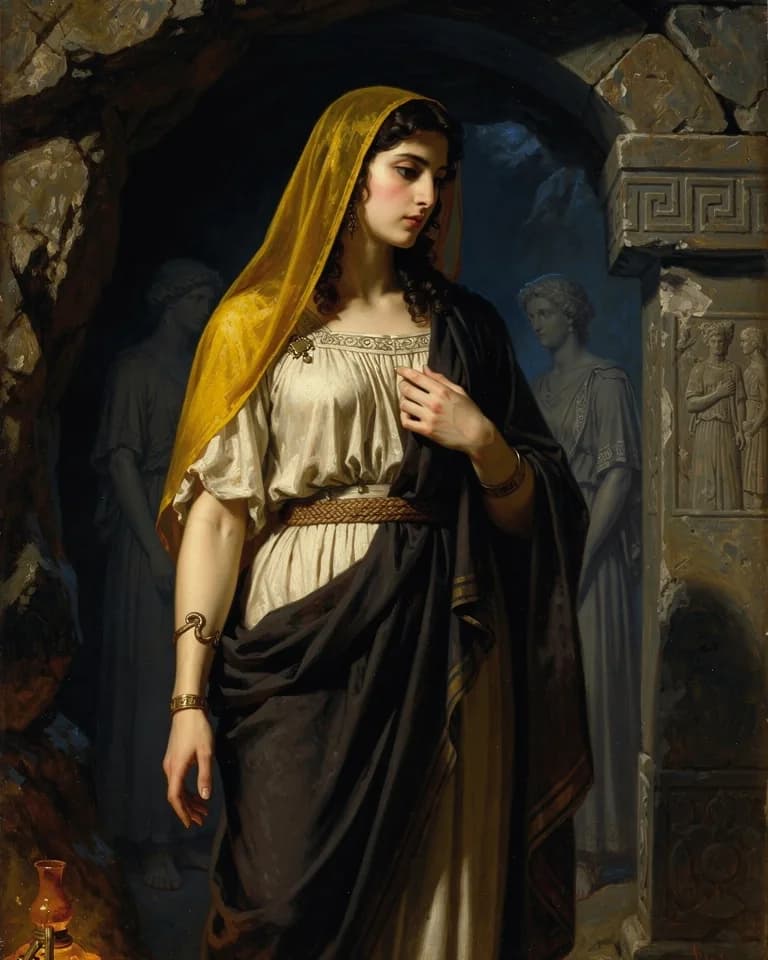
A chthonic goddess known from a single ancient text, Orphic Hymn 71: a saffron-veiled daughter of Persephone, fathered by Zeus in the guise of Plouton, who sends apparitions and night terrors to mortals. Almost nothing else is recorded of her.

Orphic Hymn 71 makes Melinoë the daughter of Persephone, born by the river Cocytus after Zeus lay with Persephone in the guise of Plouton.

Melinoë is known from one ancient poem, the seventy-first of the *Orphic Hymns*, a collection of cult hymns usually dated to the Roman imperial period. The hymn calls her saffron-veiled and of the earth, born beside the mouth of the river Cocytus to Persephone, who lay with Zeus while he took the form of Plouton. It asks her to turn away the frenzy she sends: she drives mortals mad with airy phantoms, appearing to them in strange shapes in the darkness of night.

Read the full Melinoë entry

Greek Pantheon

Zeus

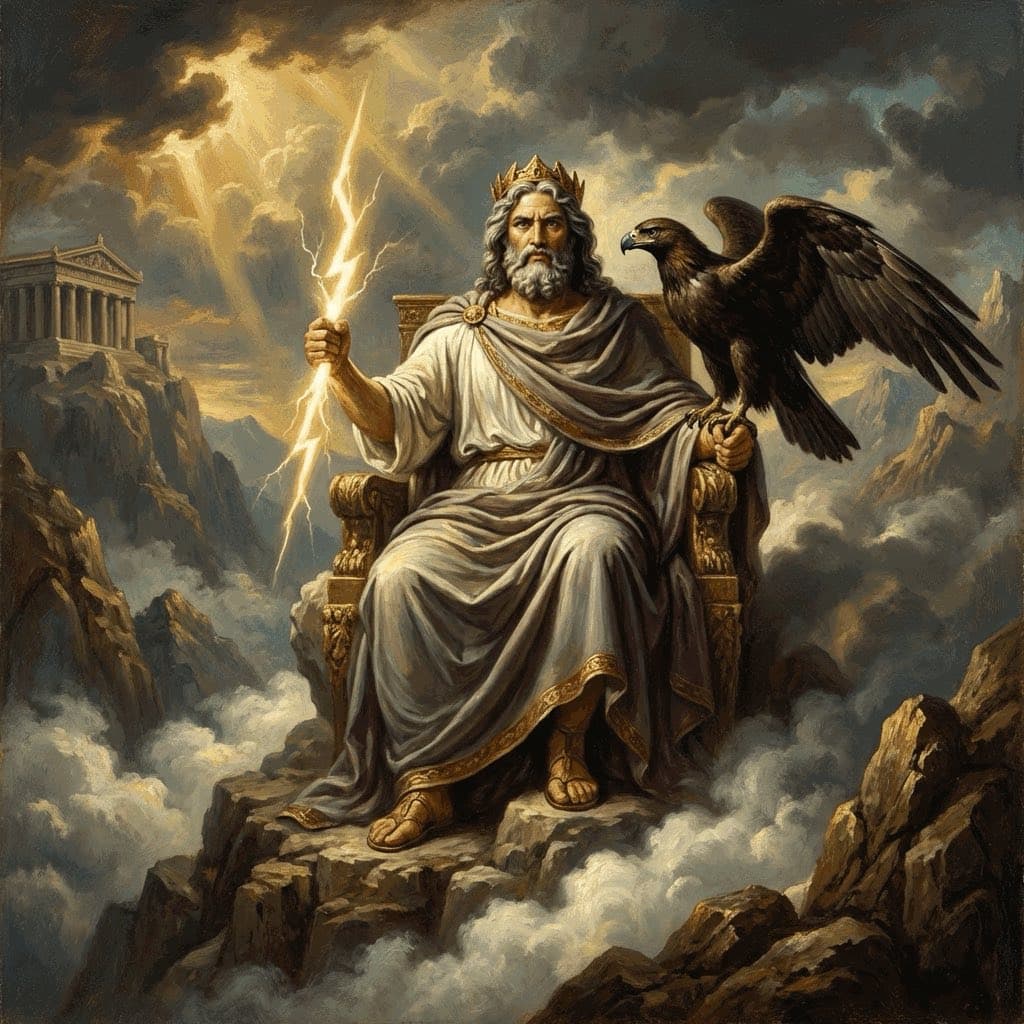
King of the gods and ruler of Mount Olympus. God of the sky, thunder, and justice. Zeus overthrew his father Cronus to become the supreme deity of the Greek pantheon.

Zeus was the youngest son of the Titans Cronus and Rhea. Cronus, fearing a prophecy that he would be overthrown by his children, swallowed each child at birth. Rhea hid Zeus and gave Cronus a stone wrapped in swaddling clothes instead. Zeus was raised in secret and later forced Cronus to regurgitate his siblings, leading the rebellion against the Titans.

Zeus is the supreme ruler of the gods, the lord of the sky, and the wielder of the thunderbolt. His power is greater than that of all the other gods combined. He presides over the oaths of men and the laws of the universe, ensuring justice and order.

Read the full Zeus entry
About this comparison

Comparisons pair figures that play a similar role across traditions, or that the myths connect within one. A shared role does not, by itself, establish a shared origin.