
Tano
The great river obosom of the Akan, identified with the Tano River of western Ghana and regarded in Asante as the foremost of the abosom; tellings make him a son of Nyame who tricked his brother Bia out of the fertile land.
Divine domains
14 deities from 14 traditions whose entries in this atlas list thunder among their domains, grouped by tradition.
The great river obosom of the Akan, identified with the Tano River of western Ghana and regarded in Asante as the foremost of the abosom; tellings make him a son of Nyame who tricked his brother Bia out of the fertile land.
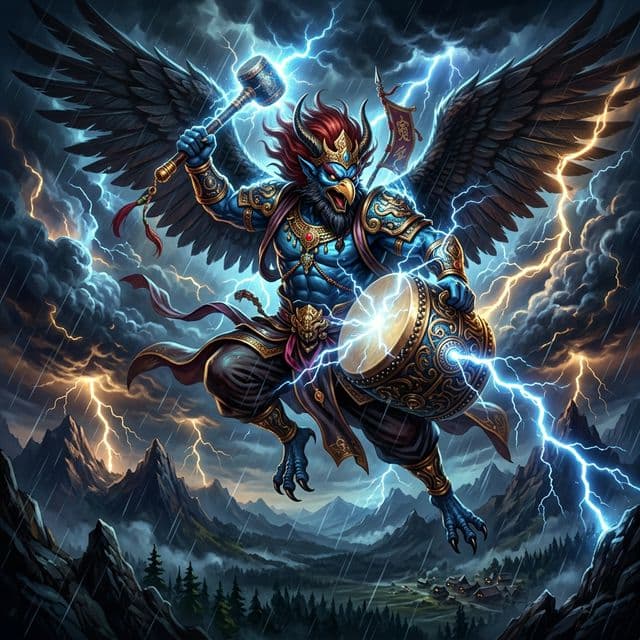
The god of thunder who punishes evildoers and hidden crimes with his thunderbolts. He appears as a fearsome creature with a bird's beak, claws, and blue skin, carrying drums that create thunder.
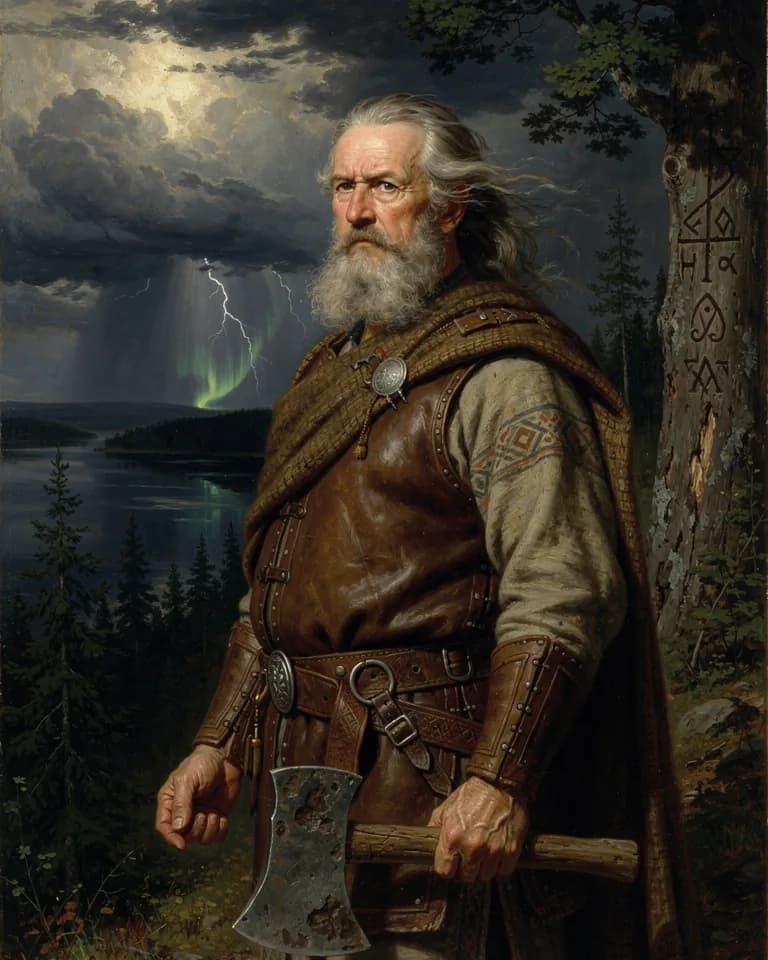
The sky and thunder god of Finnish and Karelian tradition, 'highest god' of the runo-songs, whose feast at the spring sowing Agricola condemned in 1551 and whom the Kalevala's heroes and Ilmatar call on in need.
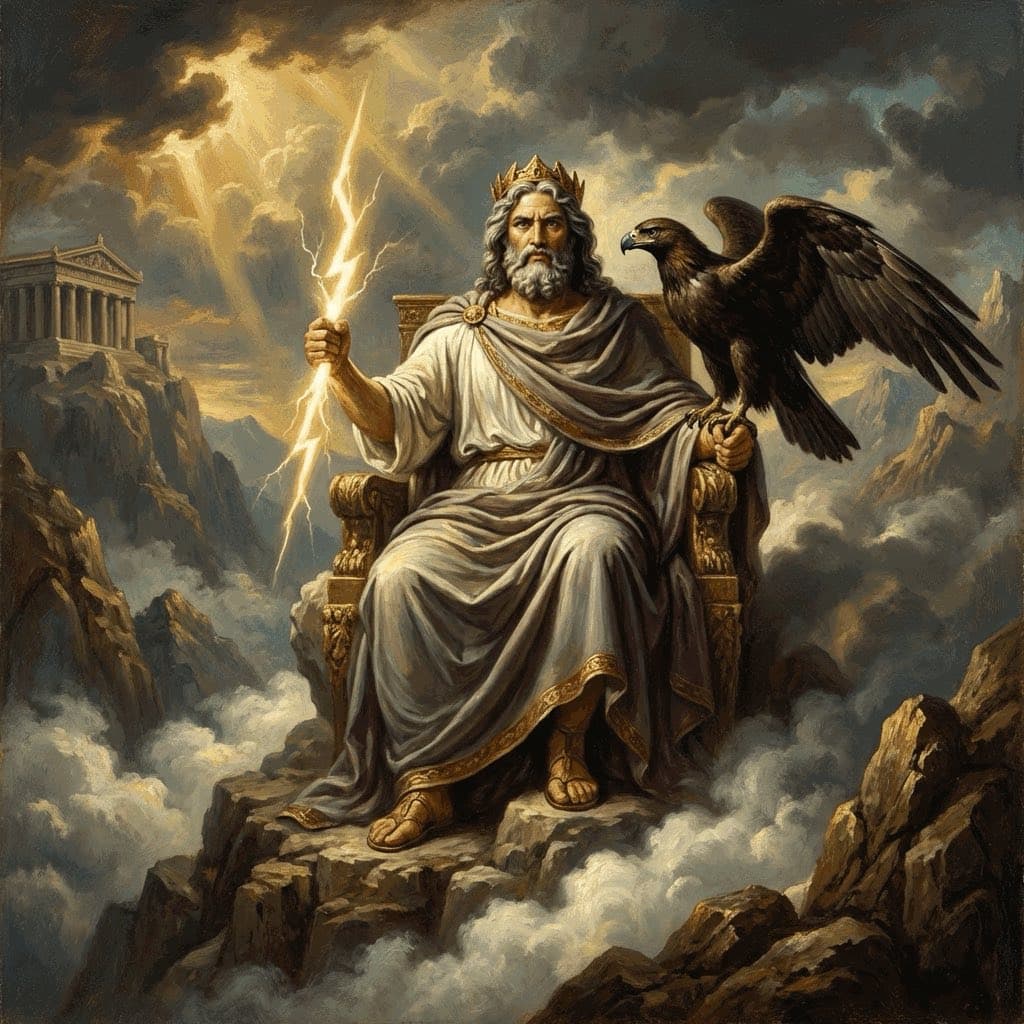
King of the gods and ruler of Mount Olympus. God of the sky, thunder, and justice. Zeus overthrew his father Cronus to become the supreme deity of the Greek pantheon.
The Thunderer of Seneca and wider Haudenosaunee tradition, maker of rains, who hunts the horned serpent and other malicious beings of the underworld with arrows of lightning.
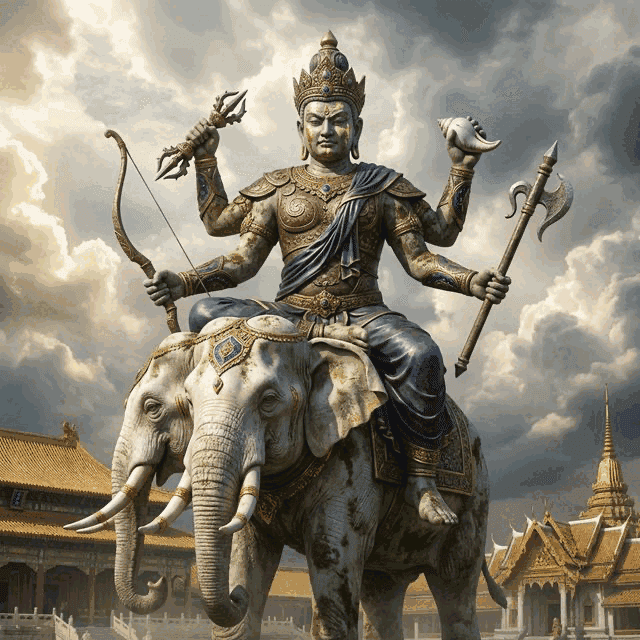
King of the gods (Devas) and lord of heaven (Svarga). God of thunder, rain, and war. Slayer of the dragon Vritra. Rides the white elephant Airavata.
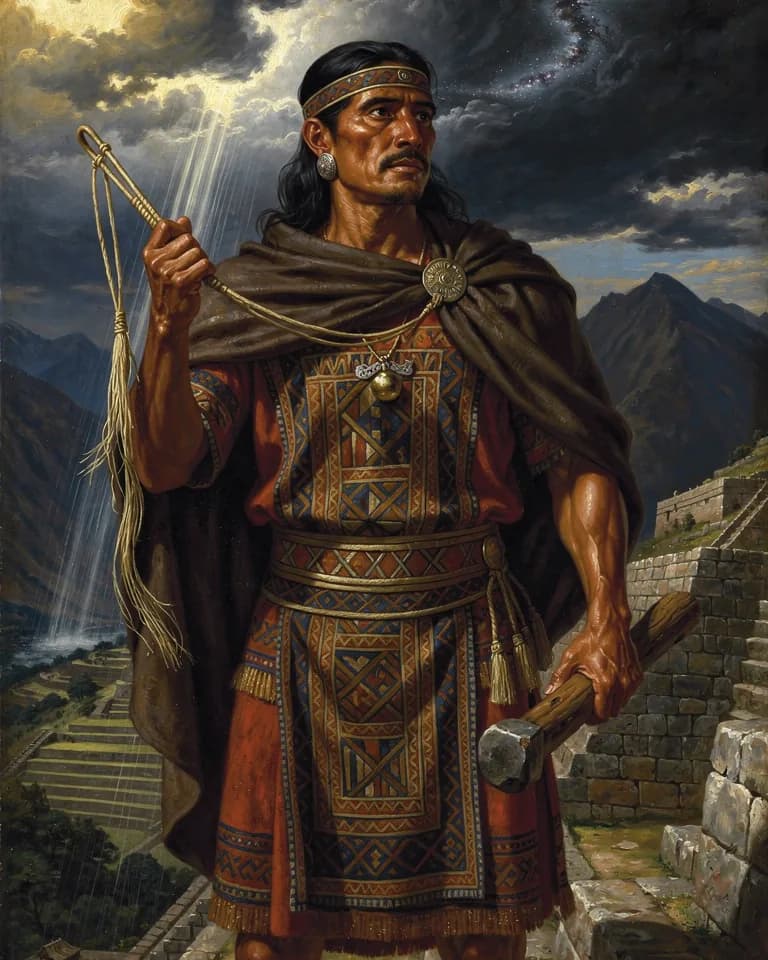
The Thunder of the Inca state cult, imagined as a man in the sky with a sling and club who draws rain from the heavenly river; after the conquest he was widely identified with Saint James (Santiago).
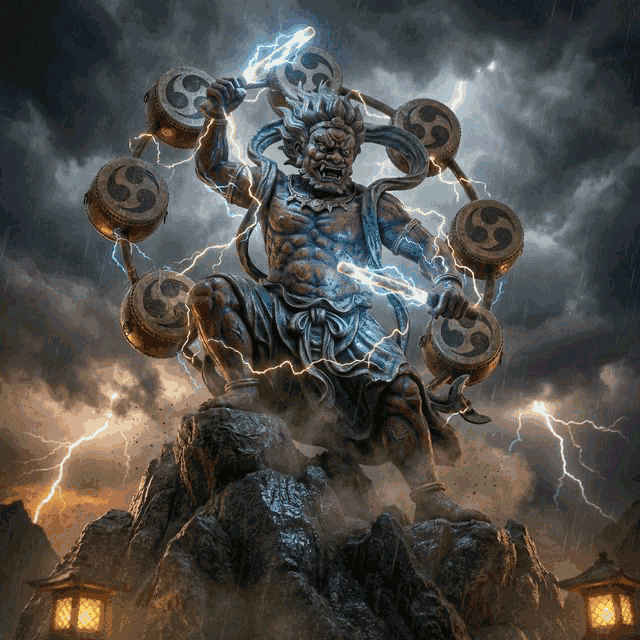
God of thunder, lightning, and storms. Depicted as a demon beating drums to create thunder. Works with Fujin (wind god).
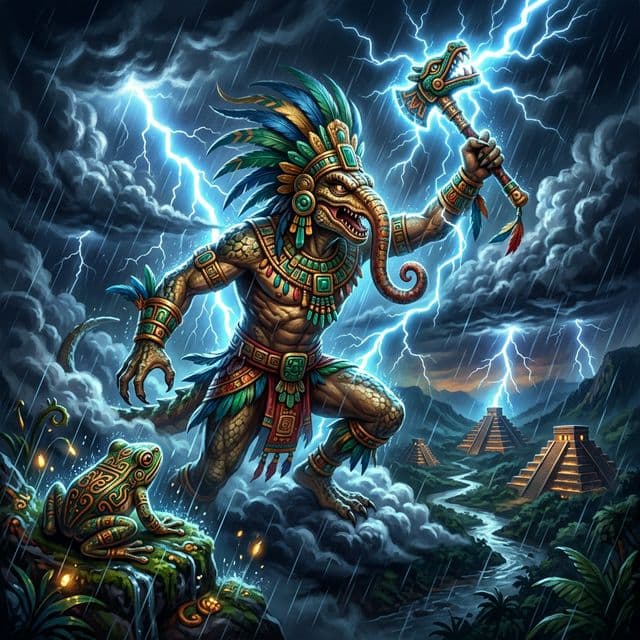
The Maya god of rain, lightning, and thunder. Chaac wields his lightning axe to split the clouds and bring life-giving rain to the maize fields. One of the most widely worshipped Maya deities.
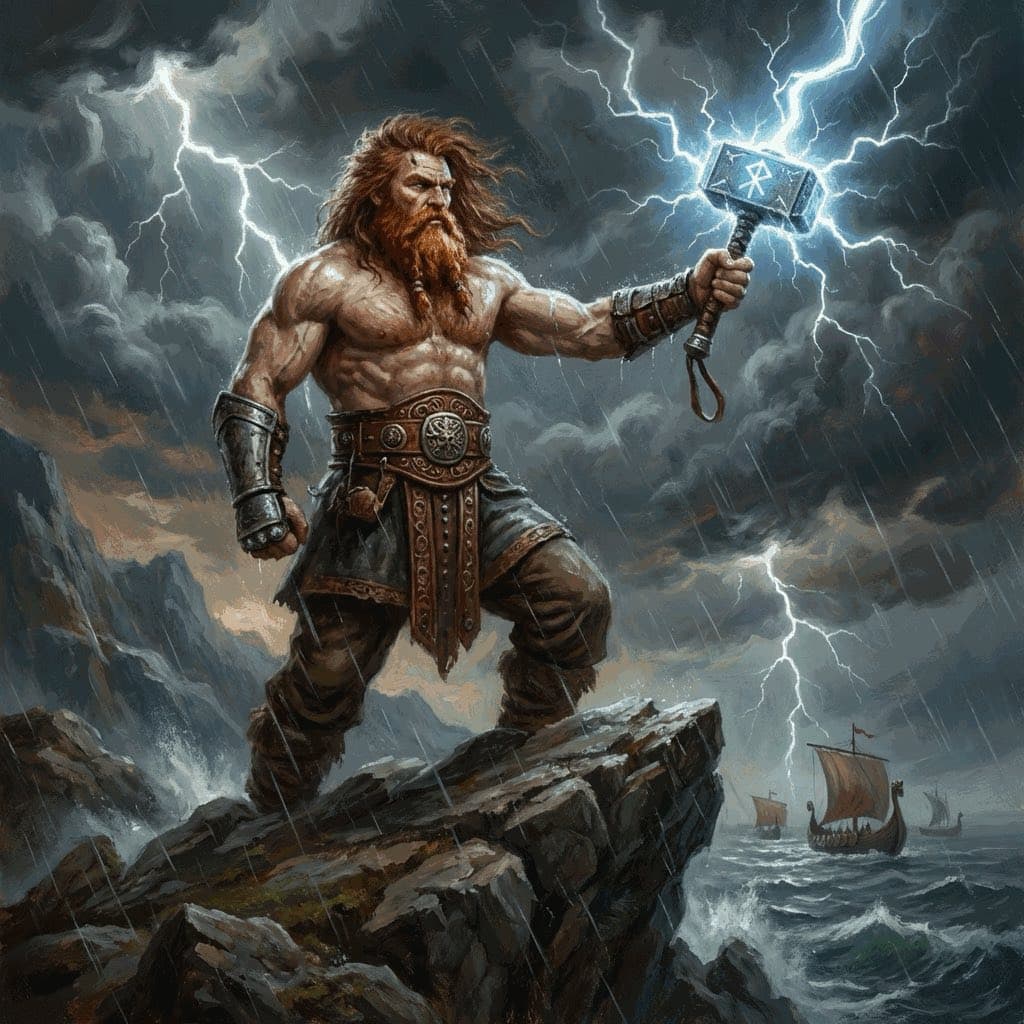
Son of Odin and the earth goddess Jord. God of thunder, lightning, and storms. Protector of mankind and the gods, wielding the mighty hammer Mjolnir.
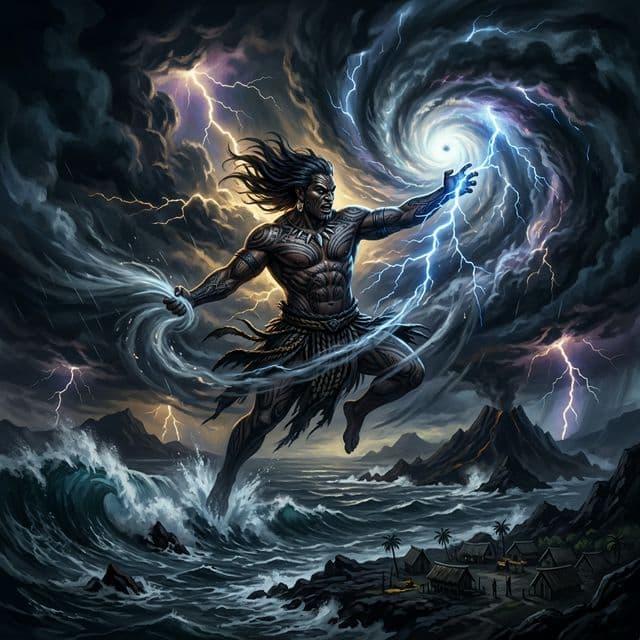
The Maori god of weather, winds, and storms. Tawhirimatea was the only one of Rangi and Papa's children to oppose their separation, and he still attacks his brothers with storms in revenge.
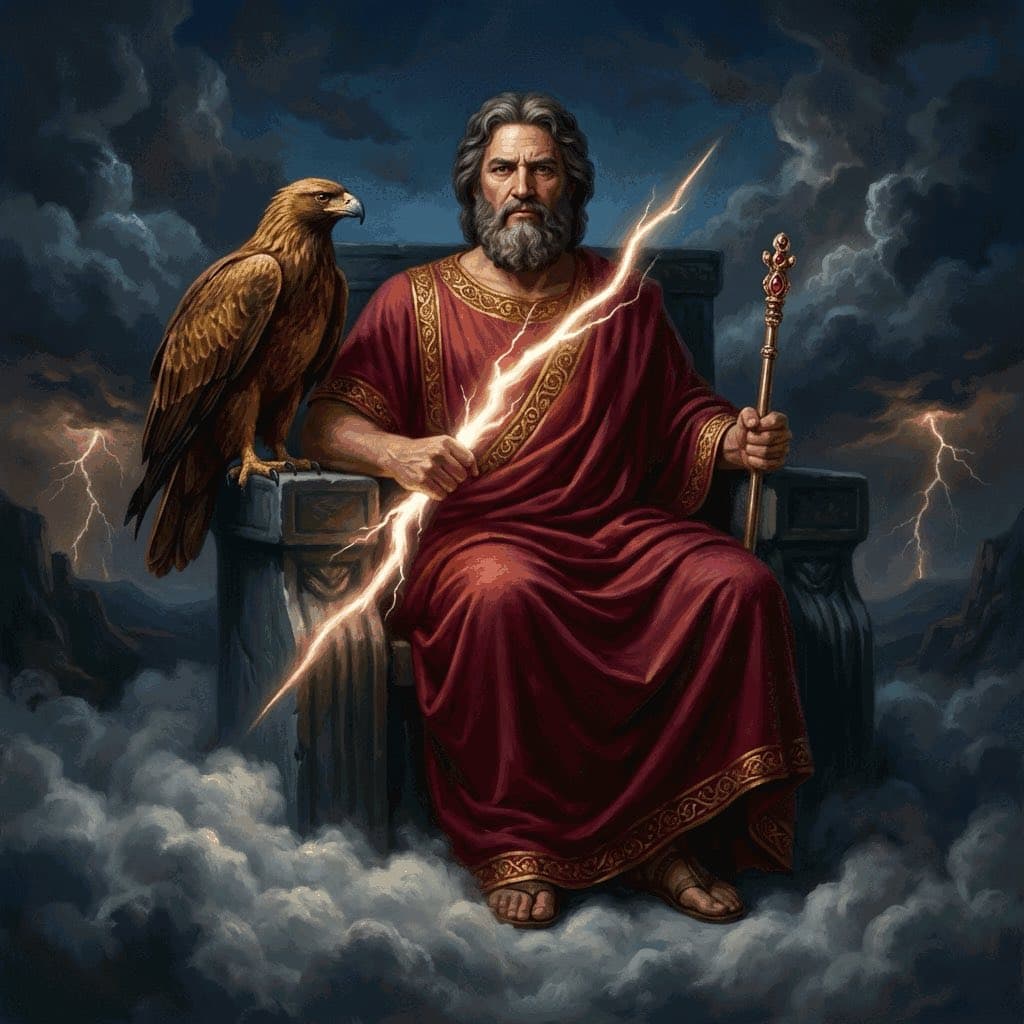
King of the gods and god of sky, lightning, and thunder. Supreme deity of the Roman state religion, protector of Rome and source of divine authority for Roman emperors.
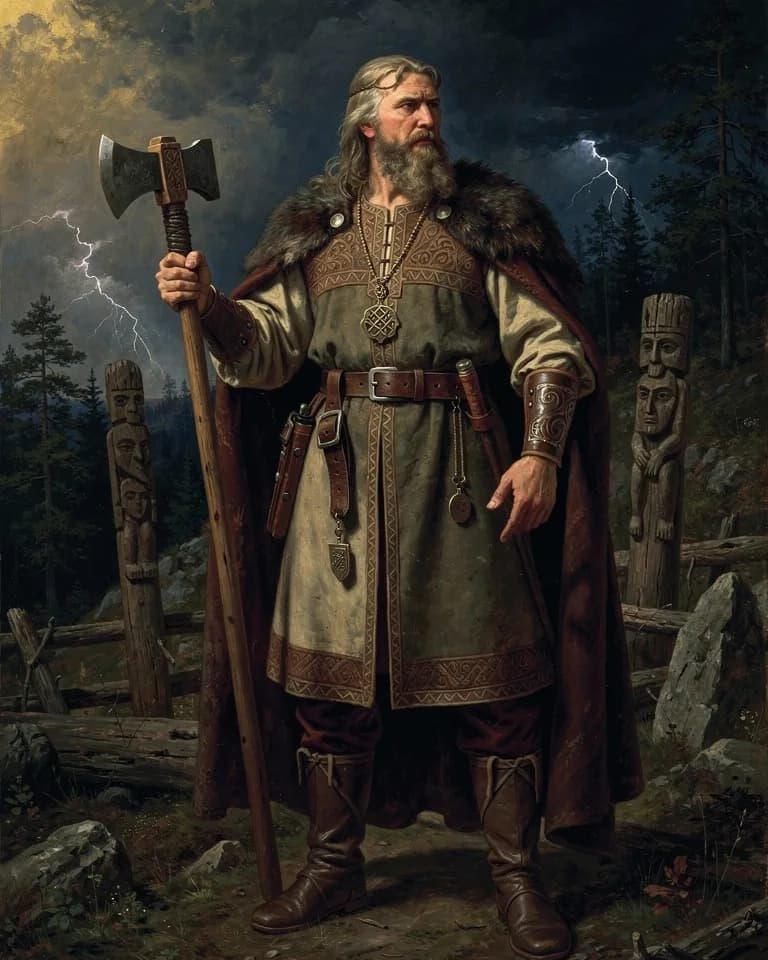
The thunder god of the Kievan Rus', sworn by in treaties and installed at the head of Prince Vladimir's official pantheon in 980 before Vladimir himself had his idol destroyed in 988.
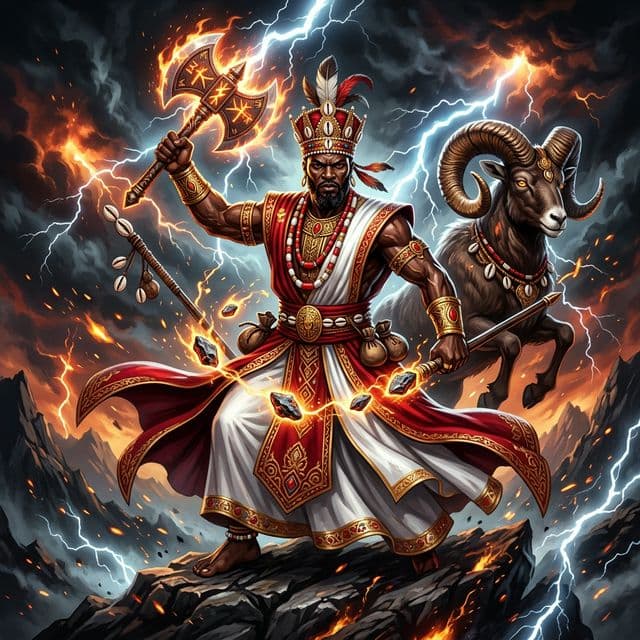
The Orisha of thunder, lightning, and fire. Shango was once a mortal king of Oyo who became deified after death.
Editorial comparisons recorded on these entries; a shared role does not establish a shared origin.
Zeus (Greek) and Jupiter (Roman)
Jupiter is the direct Roman equivalent, sharing Zeus's role as sky father and king of gods
Compare Zeus and JupiterZeus (Greek) and Indra (Hindu)
Both are thunder and sky gods who serve as kings of the gods in their respective traditions
Compare Zeus and IndraThor (Norse) and Indra (Hindu)
Both are thunder gods who wield a signature weapon (hammer/vajra) against chaos-monsters, part of the widespread Indo-European thunder-god motif
Compare Thor and IndraThor (Norse) and Raijin (Japanese)
Both are hammer/drum-wielding thunder gods depicted as fearsome, muscular warriors who cause storms
Compare Thor and RaijinThor (Norse) and Lei Gong (Chinese)
Lei Gong already lists Thor; both are thunder gods who punish wrongdoing with lightning
Compare Thor and Lei GongRaijin (Japanese) and Lei Gong (Chinese)
Both are drum-wielding thunder gods who punish wrongdoing with lightning
Compare Raijin and Lei GongLei Gong (Chinese) and Zeus (Greek)
Both wield thunderbolts as instruments of divine justice
Compare Lei Gong and ZeusChaac (Mesoamerican) and Zeus (Greek)
Both are thunder gods who wield divine weapons to produce storms
Compare Chaac and ZeusTawhirimatea (Polynesian) and Zeus (Greek)
Both are associated with storms and control of the weather
Compare Tawhirimatea and ZeusTawhirimatea (Polynesian) and Thor (Norse)
Both command storms and thunder
Compare Tawhirimatea and ThorShango (Yoruba) and Zeus (Greek)
Both are thunder gods and kings associated with divine justice
Compare Shango and ZeusShango (Yoruba) and Thor (Norse)
Both wield thunder and lightning as weapons
Compare Shango and ThorPerun (Slavic) and Thor (Norse)
Both are hammer/axe-wielding thunder gods invoked in oaths, part of the wider Indo-European storm-god pattern; Perun's name is directly cognate with Baltic Perkūnas, Thor's closest attested parallel outside Scandinavia.
Compare Perun and ThorPerun (Slavic) and Indra (Hindu)
Ivanov and Toporov's reconstruction of a Perun-vs-serpent combat draws its structure from the Vedic Indra-vs-Vritra myth, part of the comparative case for a shared Indo-European storm-god-versus-serpent motif.
Compare Perun and IndraUkko (Finnish) and Thor (Norse)
Both are thunder gods associated with a hurled weapon and with farming and rain; Finnish 'torstai' (Thursday) is borrowed from the Scandinavian name of Thor's day, a sign of long contact.
Compare Ukko and ThorUkko (Finnish) and Perun (Slavic)
Both are sky-and-thunder gods of the wider Indo-European and Baltic-Finnic region; the Finnish curse word 'perkele' derives from the Baltic thunder god Perkūnas, Perun's cognate.
Compare Ukko and PerunBuilt from each deity's catalog entry. See every domain side by side on Divine Domains, or browse every cross-pantheon parallel.