Mythos Atlas

Side by sideParallel across traditions

Perun vs Ukko

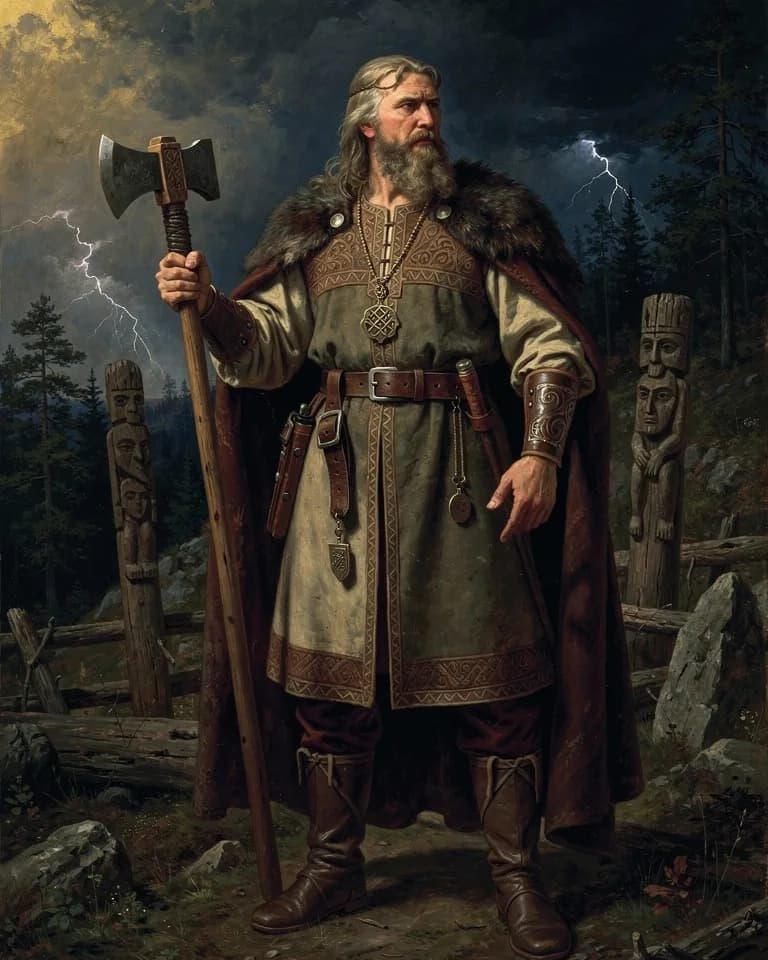
Perun
PerunSlavic
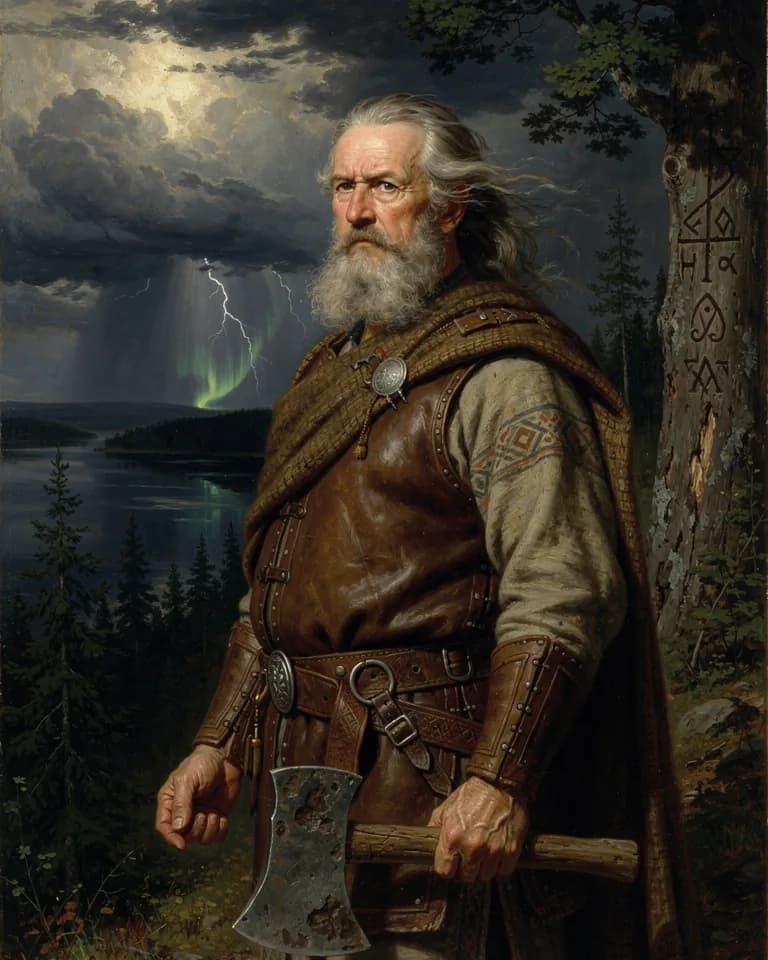
Ukko
UkkoFinnish Tradition (Kalevala)

Both are sky-and-thunder gods of the wider Indo-European and Baltic-Finnic region; the Finnish curse word 'perkele' derives from the Baltic thunder god Perkūnas, Perun's cognate.

At a glance

Perun and Ukko compared
PerunUkko
TraditionSlavic PantheonFinnish Tradition (Kalevala)
Domainsthunder, lightning, war, oathsthe sky, thunder, rain, the harvest
Symbolsaxe, oak tree, thunderboltthe thunderbolt, stone axes (ukonvaaja), Ukko's bowl
Also calledPerunŭUkko ylijumala, Isäinen (the Father)

Where they meet

Both are associated with thunder.

Where they part

Only Perun

Associated with lightning, war, and oaths.

Only Ukko

Associated with the sky, rain, and the harvest.

How each was worshipped

Perun

Cult sites
No enclosed temple building is attested for Perun among the East Slavs; worship was in the open air. An excavated horseshoe-shaped ditch and central post-pit at Peryn, near Novgorod, is widely interpreted by archaeologists as a Perun sanctuary, matching the First Novgorod Chronicle's report that Bishop Akim had Perun's idol thrown into the Volkhov there in 989.

Oaths of state were sworn on Perun's name alongside weapons (907, 945, 971 treaties). Procopius describes cattle and other animals sacrificed to the Slavs' supreme thunder-god in general terms. In later East Slavic folklore, Perun's thunder role and his midsummer date were partly absorbed into the feast of the prophet Elijah (Ilyin Den) — a post-Christian folk continuation, not a pagan-era practice.

Ukko

Festivals
Ukko's feast at the spring sowing, when 'Ukko's bowl' was drunk, as condemned by Agricola in 1551.

Prayers and charms for rain and against thunder and hail; stone axes found in the fields were kept as thunderbolts and used in folk healing and protection.

The two figures

Slavic Pantheon

Perun

The thunder god of the Kievan Rus', sworn by in treaties and installed at the head of Prince Vladimir's official pantheon in 980 before Vladimir himself had his idol destroyed in 988.

Perun is the best-attested of the Rus' gods. The *Russian Primary Chronicle* has the Rus' swear by him and by their weapons in the treaties of 907 and 945, and again in 971; under 980 he stands first among the six idols Vladimir raises on the hill outside his Kiev palace, with a head of silver and a moustache of gold. Procopius, writing in the 550s, describes the early Slavs sacrificing cattle to an unnamed god who alone is "master of all" and "the maker of lightning" — not a named source for Perun, but read by most historians as the same figure centuries earlier.

Read the full Perun entry

Finnish Tradition (Kalevala)

Ukko

The sky and thunder god of Finnish and Karelian tradition, 'highest god' of the runo-songs, whose feast at the spring sowing Agricola condemned in 1551 and whom the Kalevala's heroes and Ilmatar call on in need.

No birth or origin is told; Ukko is the old man of the sky, above all.

Mikael Agricola's list of 1551 includes Ukko, and describes a spring rite: when the sowing was done, Ukko's bowl (*Ukon malja*) was drunk, and Agricola complains of the drunkenness and shameful conduct that went with it. Folk poetry calls him *ylijumala*, the highest god, and addresses him in charms and prayers for rain and against storms; a thunderstorm is still *ukonilma*, 'Ukko's weather', in Finnish. Neolithic stone axes turned up by the plough were called *ukonvaaja* or *ukonkirves*, 'Ukko's wedge' or 'axe', and were believed to be thunderbolts he had hurled.

Read the full Ukko entry
About this comparison

Comparisons pair figures that play a similar role across traditions, or that the myths connect within one. A shared role does not, by itself, establish a shared origin.