Side by sideParent and child

Perseus vs Zeus

Perseus
PerseusGreek
Zeus
ZeusGreek

Perseus and Zeus are recorded as parent and child in the Greek Pantheon.

At a glance

Perseus and Zeus compared
PerseusZeus
TraditionGreek PantheonGreek Pantheon
Domainsheroism, monster-slaying, divine favorsky, thunder, lightning, law, order
Symbolswinged sandals, cap of invisibility, kibisis, Medusa's headthunderbolt, eagle, oak tree, bull
Also calledSlayer of Medusa, Son of the Golden RainJupiter, Jove

Where they meet

The atlas records no domain or symbol that Perseus and Zeus share.

They are compared because of how the myths connect them, not because of what they rule.

Where they part

Only Perseus

Associated with heroism, monster-slaying, and divine favor.

Only Zeus

Associated with sky, thunder, lightning, law, and order.

How each was worshipped

Perseus

Cult sites
Hero shrine at Argos; Seriphos and Mycenae in the Perseus cycle
Festivals
Hero offerings at Argos

A hero cult, not an Olympian's. Argives showed his tomb and claimed the Gorgoneion. He is the city-founder's sword, visited with bloodless or animal offerings the way other dead kings are visited.

Zeus

Cult sites
Temple of Zeus at Olympia; Oracle of Zeus at Dodona; Nemean sanctuary
Festivals
Olympic Games; Diasia; Dipolieia

White bulls and the thunderbolt belong to him. Olympic contest was a sacrifice as much as a race. Dodona spoke through oak and doves. Civic oaths called Zeus Horkios; a perjurer feared the sky more than the court.

The two figures

Greek Pantheon

Perseus

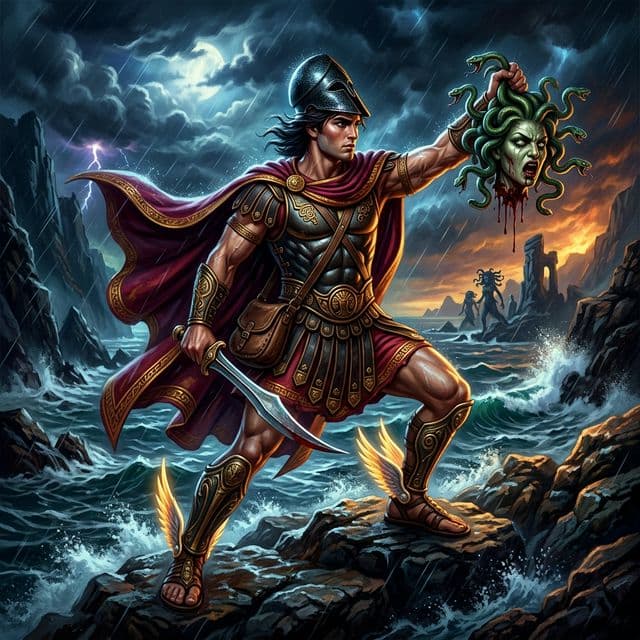
Hero who slew the Gorgon Medusa and rescued Andromeda from a sea monster. Son of Zeus and Danae, conceived when Zeus visited her as a shower of golden rain.

**Danae** was imprisoned by her father **Acrisius**, king of Argos, after an oracle prophesied that her son would kill him. Zeus entered her bronze chamber as golden rain and fathered Perseus. Acrisius set mother and child adrift in a chest, but they survived and washed ashore on the island of Seriphos.

**Perseus** is among the greatest of the Greek heroes, predating Heracles and representing the archetypal monster-slayer favored by the gods. His myths are preserved in Apollodorus's *Bibliotheca*, Ovid's *Metamorphoses*, and fragments of earlier traditions.

Read the full Perseus entry

Greek Pantheon

Zeus

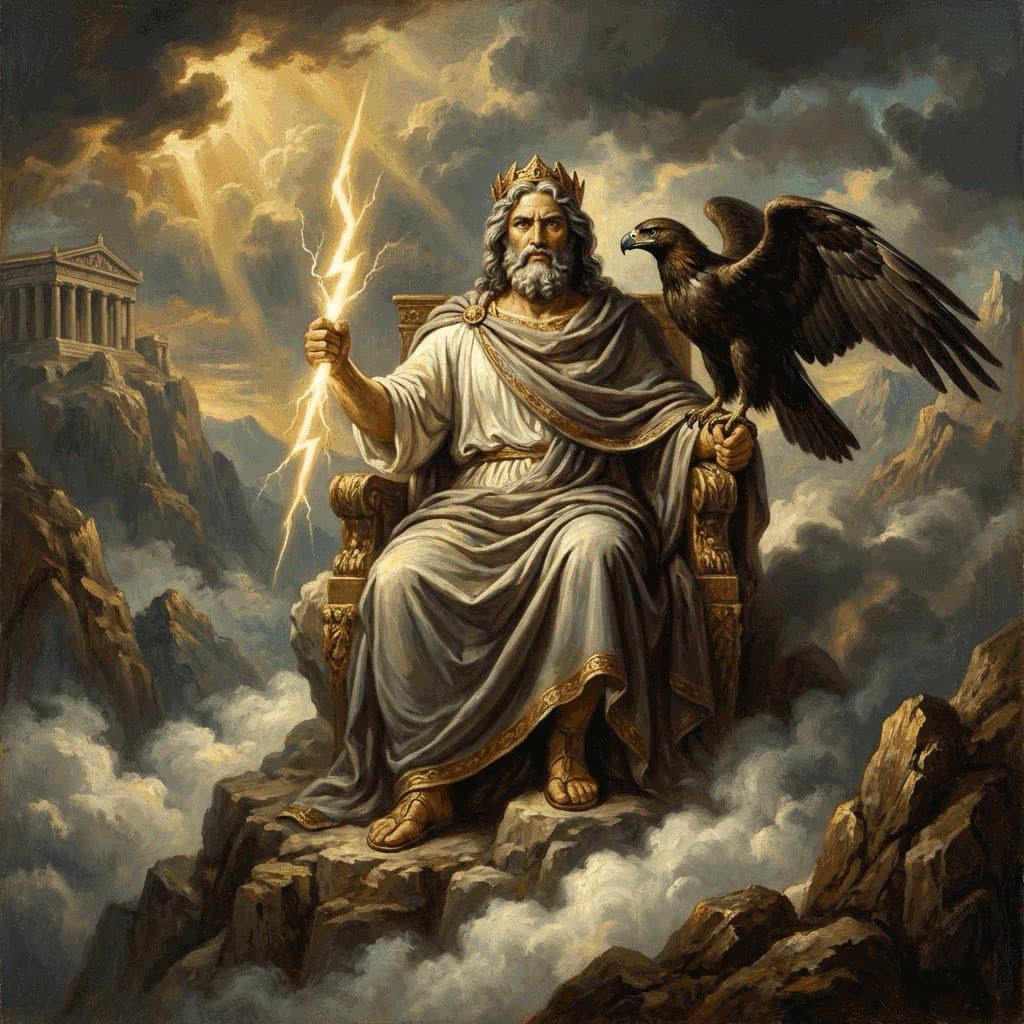
King of the gods and ruler of Mount Olympus. God of the sky, thunder, and justice. Zeus overthrew his father Cronus to become the supreme deity of the Greek pantheon.

Zeus was the youngest son of the Titans Cronus and Rhea. Cronus, fearing a prophecy that he would be overthrown by his children, swallowed each child at birth. Rhea hid Zeus and gave Cronus a stone wrapped in swaddling clothes instead. Zeus was raised in secret and later forced Cronus to regurgitate his siblings, leading the rebellion against the Titans.

Zeus is the supreme ruler of the gods, the lord of the sky, and the wielder of the thunderbolt. His power is greater than that of all the other gods combined. He presides over the oaths of men and the laws of the universe, ensuring justice and order.

Read the full Zeus entry
About this comparison

Comparisons pair figures that play a similar role across traditions, or that the myths connect within one. A shared role does not, by itself, establish a shared origin.