Celtic PantheonCreature
Each-uisge
- Shapeshifting
- Adhesive Skin
- Underwater Speed
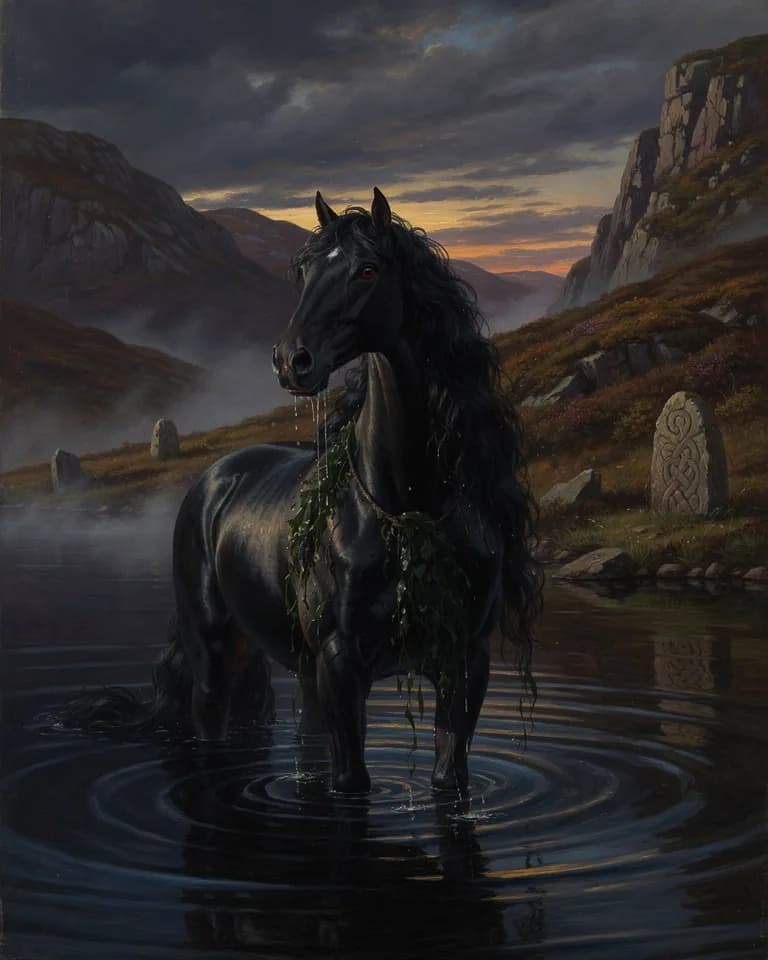
A malevolent water horse of Scottish lochs and seas, far more dangerous than the kelpie. It appears as a beautiful horse but carries victims into the water to devour them, leaving only the liver behind.
About Each-uisge
The Salt-Water Horse
The each-uisge of the Highlands is the vicious cousin of the inland kelpie: a handsome horse by the loch or sea that, once mounted, adheres and dives. Survivors' tales (Campbell, later collectors) leave a liver on the shore. It can also appear as a handsome man.
Irish each uisce shares the water-horse job, but the Highland name and the sea-loch setting are distinct. The danger is coastal and lacustrine.
Recorded stories
Campbell's Superstitions of the Highlands and Islands of Scotland (1900) and other Gaelic collections tell of children climbing onto a strange horse by a loch, one after another, and being carried into the water, with a single boy escaping by cutting off the finger that stuck to its hide. Hebridean tales describe the each-uisge in human form courting a girl, who recognises it by the sand or waterweed in its hair.
Quick answers about Each-uisge
- What is Each-uisge?
- A malevolent water horse of Scottish lochs and seas, far more dangerous than the kelpie. It appears as a beautiful horse but carries victims into the water to devour them, leaving only the liver behind.
- Where does Each-uisge live?
- The atlas lists Each-uisge's habitat as Scottish Lochs and Coastal Waters.
- What abilities does Each-uisge have?
- The atlas lists these abilities for Each-uisge: Shapeshifting, Adhesive Skin, and Underwater Speed.
Sources and further reading
Source notes
These references are recorded in the catalog. Their passage wording and translation have not been checked, so quotations are not displayed here.
- Scottish Gaelic oral tradition (J. G. Campbell and later collectors)
About this entry
By Elizabeth Stein for Mythos Atlas. About the author. Editorial notes are grounded in the site's cited sources and can be challenged through the contact page.
The danger rating is an editorial shorthand for how the myths portray the creature, not a claim made by the sources.
Keep exploring
One myth a week, with its sources in a short email. The sign-up form is just below.