Finnish Tradition (Kalevala)
Tuoni
Tuoni
Also known as Tuonen herra (Lord of Tuoni), Mana
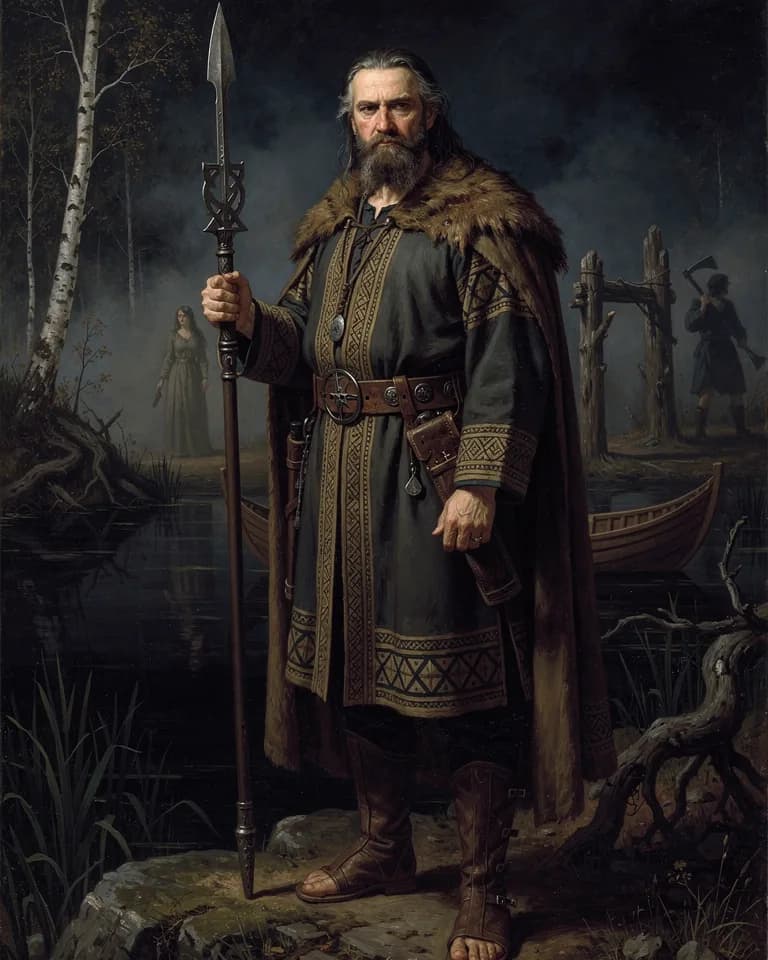
- death
- the underworld (Tuonela)
The lord of Tuonela, the land of the dead beyond a dark river, whose daughter ferries the dead, whose son hacks Lemminkäinen to pieces, and whose realm Väinämöinen escapes only by turning himself into a serpent.
About Tuoni
Tuonela and Manala
Finnish folk tradition places the dead in Tuonela, also called Manala ('the land under the earth'), reached by crossing a dark river. Its ruler, Tuoni, is a shadowy figure; his family is more vivid. The Kalevala names Tuoni's daughter (Tuonen tytti) as the ferrywoman, Tuonetar as the mistress of the house, and a son of Tuoni who is a killer.
Journeys to the dead
In the Kalevala Väinämöinen travels to Tuonela to seek three magic words he needs to finish his boat. Tuoni's daughter at first refuses to ferry a living man; once he is across, Tuonetar gives him beer full of frogs and worms and puts him to sleep, while Tuoni's son stretches iron nets across the river to keep him from leaving. Väinämöinen escapes by turning into a steel serpent and slipping through the mesh, and warns the young never to go to Tuonela. Lemminkäinen dies at Tuonela's river trying to shoot its swan, and Tuoni's son cuts his body into pieces.
Belief
Archaeology and folk custom show careful care for the dead among Finns and Karelians, including memorial meals and grave houses in Karelian Orthodox cemeteries; the dead were thought to continue their existence and to need offerings. How far Tuoni was a personal god rather than a personification of death is uncertain.
Origin story
No origin is told.
Across traditions
Parallel figures
Figures who play a role like Tuoni's in other traditions.
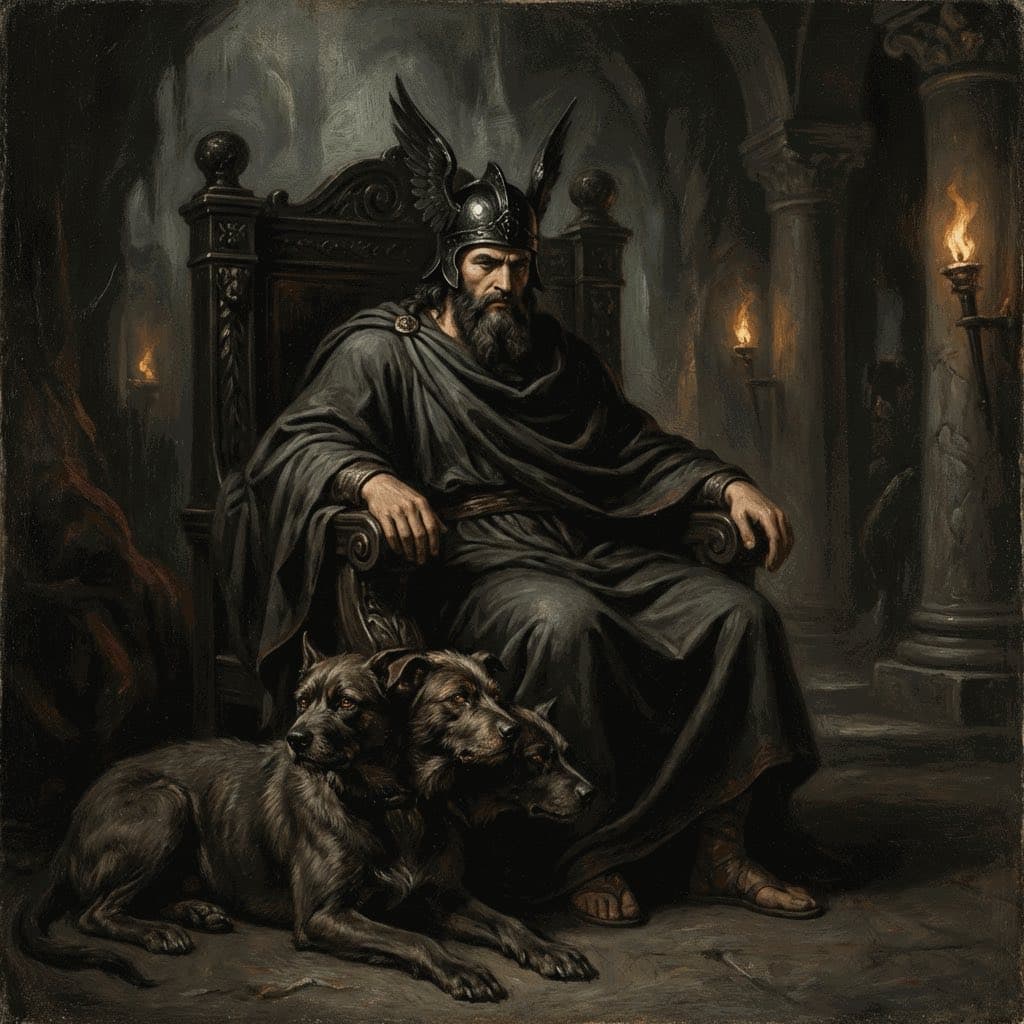 GreekHades
Both rule a land of the dead reached across a river with a ferryman (Tuoni's daughter, Charon), from which a living visitor returns only with difficulty.
Compare Tuoni and Hades side by side
Worship and cult
Temples, festivals, and practices recorded for Tuoni
Care for the dead through memorial meals and offerings at graves; charms to keep death and the dead in Tuonela.
Festivals
- Kekri, the traditional autumn harvest feast, when the spirits of the dead were believed to visit and were offered food (a festival of the dead in general, not of Tuoni himself).
In the atlas
Where Tuoni appears
Stories
Sources and further reading
Source notes
These references are recorded in the catalog. Their passage wording and translation have not been checked, so quotations are not displayed here.
- Kalevala, Rune 16 (paraphrase)
About this entry
By Elizabeth Stein for Mythos Atlas. About the author. Editorial notes are grounded in the site's cited sources and can be challenged through the contact page.
Parallels are editorial comparisons across traditions: a shared role does not, by itself, establish a shared origin.