Celtic PantheonTemple
Aquae Sulis (Bath)
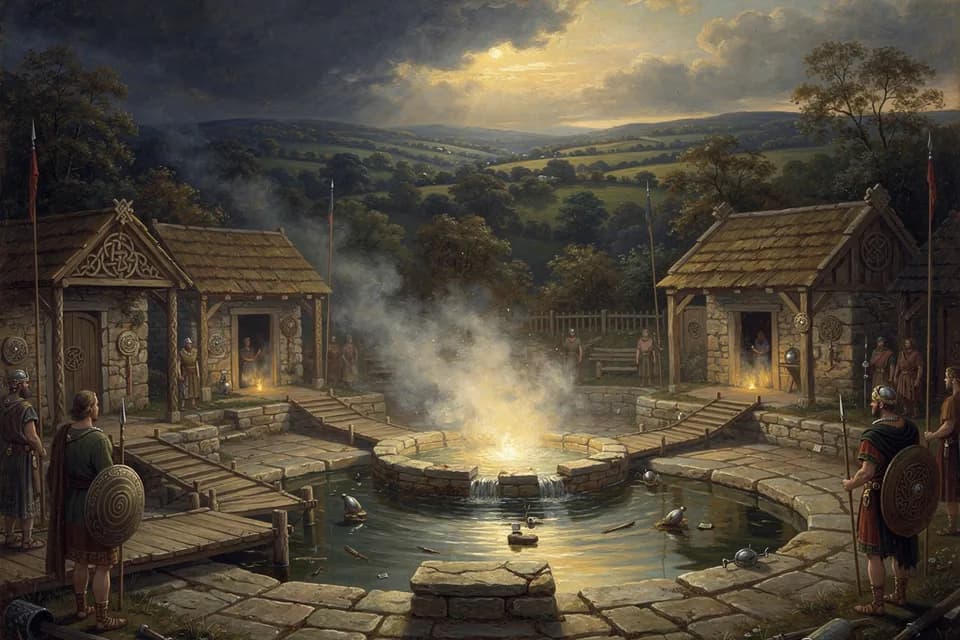
The hot springs at Bath in southwest England, sacred to the British goddess Sulis, whom the Romans identified with Minerva; worshippers cast curse tablets into the sacred spring asking her to punish thieves.
About Aquae Sulis (Bath)
Sulis Minerva
The only natural hot springs in Britain rise at Bath. The Romans built a temple and bathing complex here from the later 1st century CE and called the town Aquae Sulis, 'the waters of Sulis', keeping the name of the local goddess. In inscriptions she is Sulis or Sulis Minerva, the British deity paired with the Roman goddess of wisdom. The gilded bronze head of the cult statue survives, as does the temple pediment with its striking moustached Gorgon-like head.
Curses in the spring
More than 130 curse tablets (defixiones), sheets of lead or pewter inscribed and thrown into the sacred spring, have been recovered. Most ask Sulis to punish the thief of a cloak, gloves, or coins, often naming suspects and demanding that the culprit suffer until the goods are returned to the temple. They are among the most direct evidence for the everyday religion of Roman Britain, and some include a few words that may be British Celtic.
A perpetual fire
The 3rd-century writer Solinus describes Minerva's temple at the hot springs, where the fire on her altar never went out and burned not to ash but to stony lumps, probably a reference to coal.
On the map
Aquae Sulis (Bath) among other places of the Celtic Pantheon.
Sources and further reading
Source notes
These references are recorded in the catalog. Their passage wording and translation have not been checked, so quotations are not displayed here.
- R. S. O. Tomlin, Tabellae Sulis: Roman Inscribed Tablets of Tin and Lead from the Sacred Spring at Bath
- Solinus, Collectanea rerum memorabilium 22.10
About this entry
By Elizabeth Stein for Mythos Atlas. About the author. Editorial notes are grounded in the site's cited sources and can be challenged through the contact page.
Coordinates mark where the myths place a site, or where the tradition locates it today. Mythic realms are left off the map or marked as symbolic placements.