Mesopotamian PantheonCity
Babylon
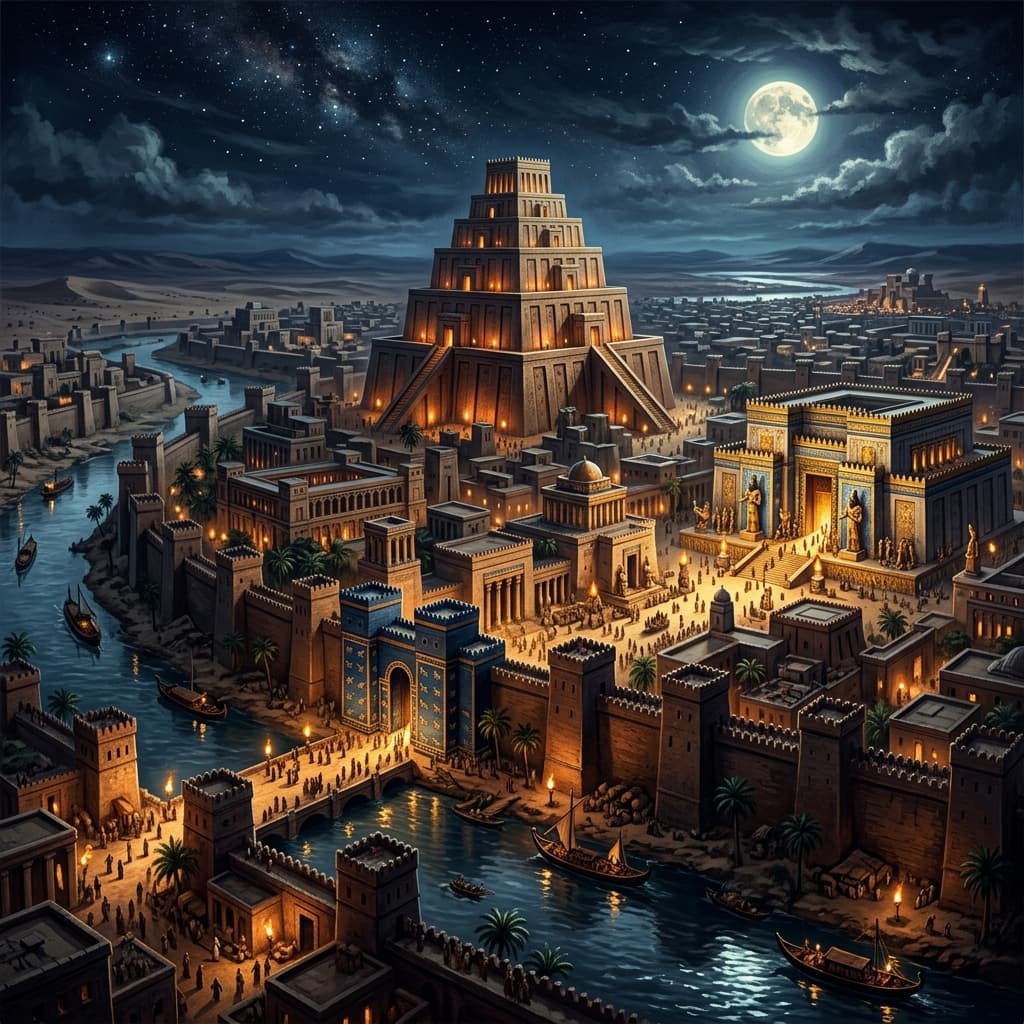
The great city of Marduk, center of the Babylonian Empire and home to the Esagila temple and the ziggurat Etemenanki. The name means 'Gate of the Gods' and the city was considered the axis mundi of the Mesopotamian cosmos.
About Babylon
Marduk's city, Enuma's stage
Babylon (Babili, "gate of the gods") is Marduk's city. The Enuma Elish is recited at Akitu: Marduk kills Tiamat, orders the cosmos, and takes kingship in Esagila, with Etemenanki as the ziggurat. It is a political theology for a late second-millennium and first-millennium capital, not a Sumerian first city (that claim belongs to Eridu). Herodotus later gapes at the walls. The myth explains why this city rules.
On the map
Babylon among other places of the Mesopotamian Pantheon.
Sources and further reading
Source notes
These references are recorded in the catalog. Their passage wording and translation have not been checked, so quotations are not displayed here.
- Enuma Elish, Tablet VI
About this entry
By Elizabeth Stein for Mythos Atlas. About the author. Editorial notes are grounded in the site's cited sources and can be challenged through the contact page.
Coordinates mark where the myths place a site, or where the tradition locates it today. Mythic realms are left off the map or marked as symbolic placements.
Keep exploring
One myth a week, with its sources in a short email. The sign-up form is just below.