Finnish Tradition (Kalevala)City
Kalevala (Uhtua)
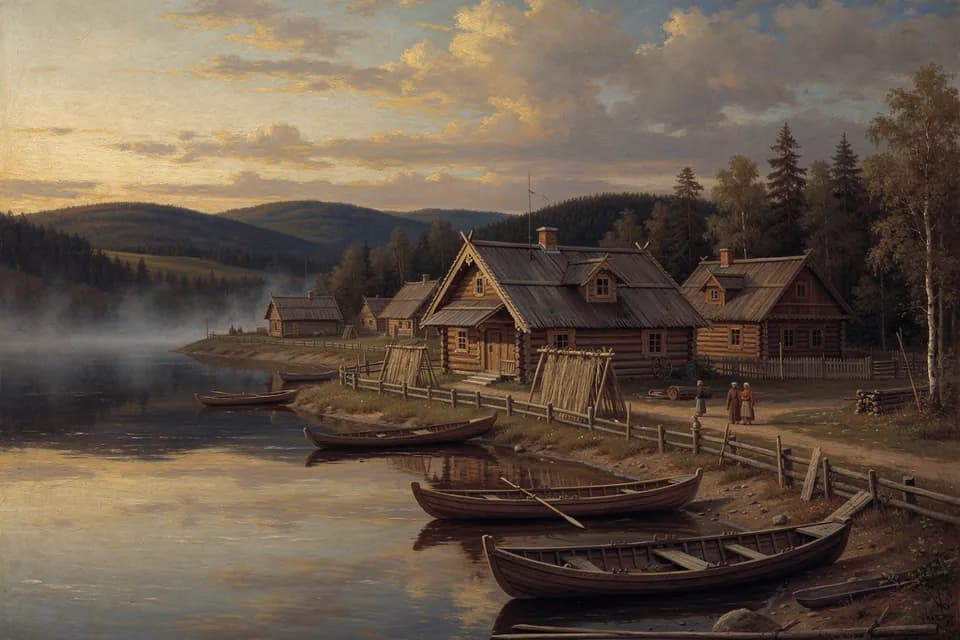
The Viena Karelian village formerly called Uhtua, visited by Lönnrot and other collectors of runo-song, and renamed Kalevala in 1963 in honor of the epic; now the center of the Kalevala district of the Republic of Karelia.
About Kalevala (Uhtua)
Uhtua
Uhtua (Russian Ukhta) is a village on the waterways of Viena Karelia, in the region where the runo-singing tradition behind the Kalevala was strongest. Lönnrot passed through it on his collecting journeys, and later folklorists recorded singers in the surrounding villages.
Renamed for the epic
In 1963 the Soviet authorities renamed Uhtua 'Kalevala' in honor of the Finnish epic, recognizing the region's role in its creation. The surrounding Uhtua district had already been renamed the Kalevala district in 1935, for the centenary of the first edition of the epic; when that district was merged into a larger one in 1963, the name passed to the village. The renaming reflects how the Kalevala came to be claimed as the heritage of Karelians on both sides of the border.
Distinct from the epic homeland
The town should not be confused with the mythic land of Kalevala in the epic, which has no location. It is included here as a real place tied to the tradition's recording.
On the map
Kalevala (Uhtua) among other places of the Finnish Tradition (Kalevala).
Sources and further reading
Source notes
These references are recorded in the catalog. Their passage wording and translation have not been checked, so quotations are not displayed here.
- Elias Lönnrot's travel notes, 1830s, as summarized in Suomen Kansan Vanhat Runot (paraphrase)
About this entry
By Elizabeth Stein for Mythos Atlas. About the author. Editorial notes are grounded in the site's cited sources and can be challenged through the contact page.
Coordinates mark where the myths place a site, or where the tradition locates it today. Mythic realms are left off the map or marked as symbolic placements.