Finnish Tradition (Kalevala)Realm
Pohjola
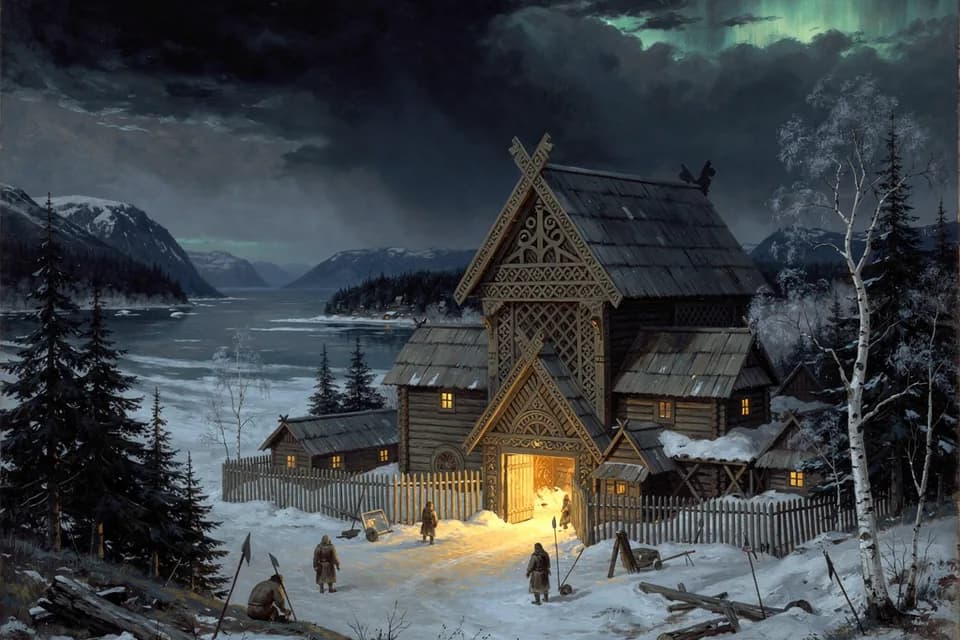
The dark, cold land of the North ruled by Louhi, home of the Sampo and of the maidens the Kalevala heroes seek as brides, a hostile and magical realm opposite the heroes' home of Kalevala.
About Pohjola
The North
Pohjola means 'the North' or 'the place at the bottom'. In Finnish folk poetry it is a cold, dark land of sorcerers and man-eaters, the source of diseases, frost, and wolves, and also a place of wealth and desirable brides. Its gate is guarded, its people are hostile, and its mistress, Louhi, is a powerful witch.
In the Kalevala
The Kalevala's plot turns on journeys between Kalevala (or Väinölä), the heroes' home, and Pohjola. Väinämöinen is stranded there; Ilmarinen forges the Sampo there and later marries Louhi's daughter there; Lemminkäinen performs his tasks and kills Pohjola's master there; and the heroes finally steal the Sampo from its mountain. Its prosperity comes from the Sampo, and its later poverty from the Sampo's loss.
Geography
Nineteenth-century readers often identified Pohjola with Lapland, and the Kalevala sometimes blends the two, but Pohjola is better understood as a mythic land of the north, and this site does not place it on the map. The identification of its people with the Sámi reflects historical Finnish attitudes that modern scholarship treats with caution.
Sources and further reading
Source notes
These references are recorded in the catalog. Their passage wording and translation have not been checked, so quotations are not displayed here.
- Kalevala, Runes 7 and 10 (paraphrase)
About this entry
By Elizabeth Stein for Mythos Atlas. About the author. Editorial notes are grounded in the site's cited sources and can be challenged through the contact page.
Coordinates mark where the myths place a site, or where the tradition locates it today. Mythic realms are left off the map or marked as symbolic placements.