Finnish Tradition (Kalevala)Eternal Singer
Väinämöinen
Väinämöinen
Also known as Väinö, Wainamoinen, Vanha Väinämöinen (Old Väinämöinen)
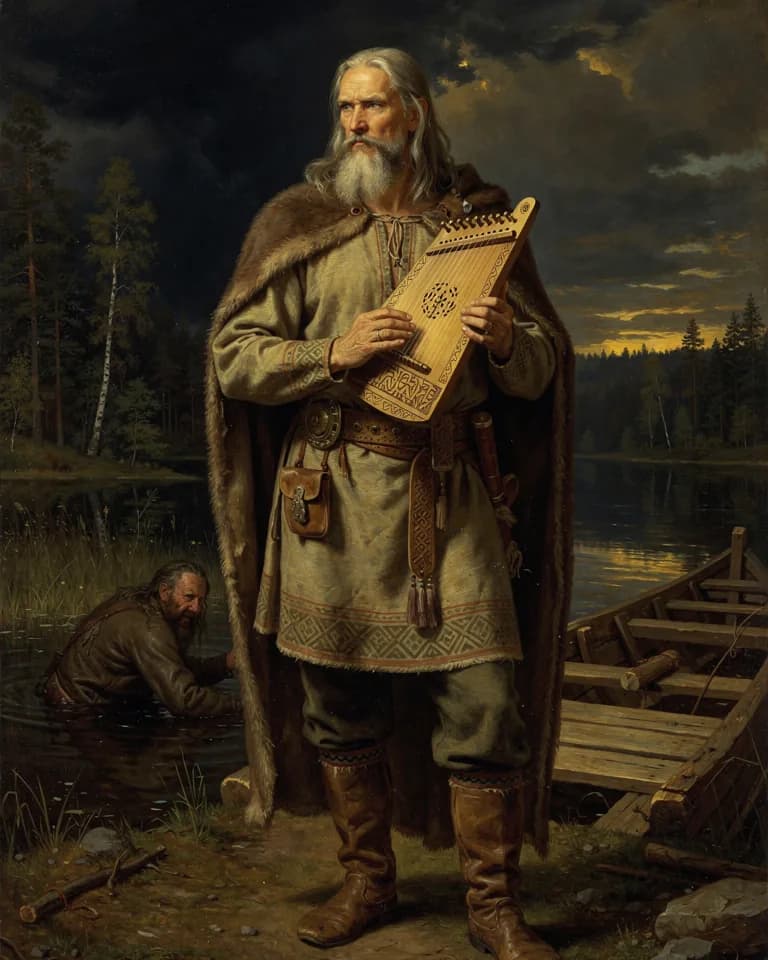
- song and poetry
- wisdom and magic
- the kantele
The 'steady old' singer and sage of Finnish runo-song, named by Agricola in 1551 as the maker of songs, who in the Kalevala is born of Ilmatar, sings his rival into a bog, builds the first kantele from a pike's jawbone, leads the theft of the Sampo, and finally sails away.
About Väinämöinen
Attestation
Agricola's list of 1551 says that Väinämöinen 'forged songs'. In folk poetry he is the eternal sage (tietäjä iänikuinen), a singer whose words have creative and magical force: he sings the world into order, sings rivals into the ground, and knows the 'origins' of things, the charms that give power over iron, fire, and wounds. In many folk variants he is himself the one on whose knee the world-egg is laid.
In the Kalevala
Lönnrot made him the epic's central figure. Born old from Ilmatar after centuries in the womb, he clears and sows the land, defeats the young Joukahainen in a singing contest by singing him into a swamp, and loses the promised bride Aino, who drowns herself rather than marry an old man. Stranded in Pohjola, he sends his brother-smith Ilmarinen to forge the Sampo. He builds a boat by singing, seeks lost words from the dead giant Antero Vipunen, makes the first kantele from the jawbone of a giant pike, and plays it so beautifully that every creature comes to listen and he weeps. He leads the raid that takes the Sampo from Louhi.
Departure
In the last rune, a virgin named Marjatta bears a son who is baptized king of Karelia over Väinämöinen's objection. The old sage sails away in a copper boat, leaving his kantele and songs to the people, a close echo of Christianity supplanting the old ways.
Origin story
Born of Ilmatar after thirty years in her womb on the primeval sea (Kalevala, Rune 1).
Across traditions
Parallel figures
Figures who play a role like Väinämöinen's in other traditions.
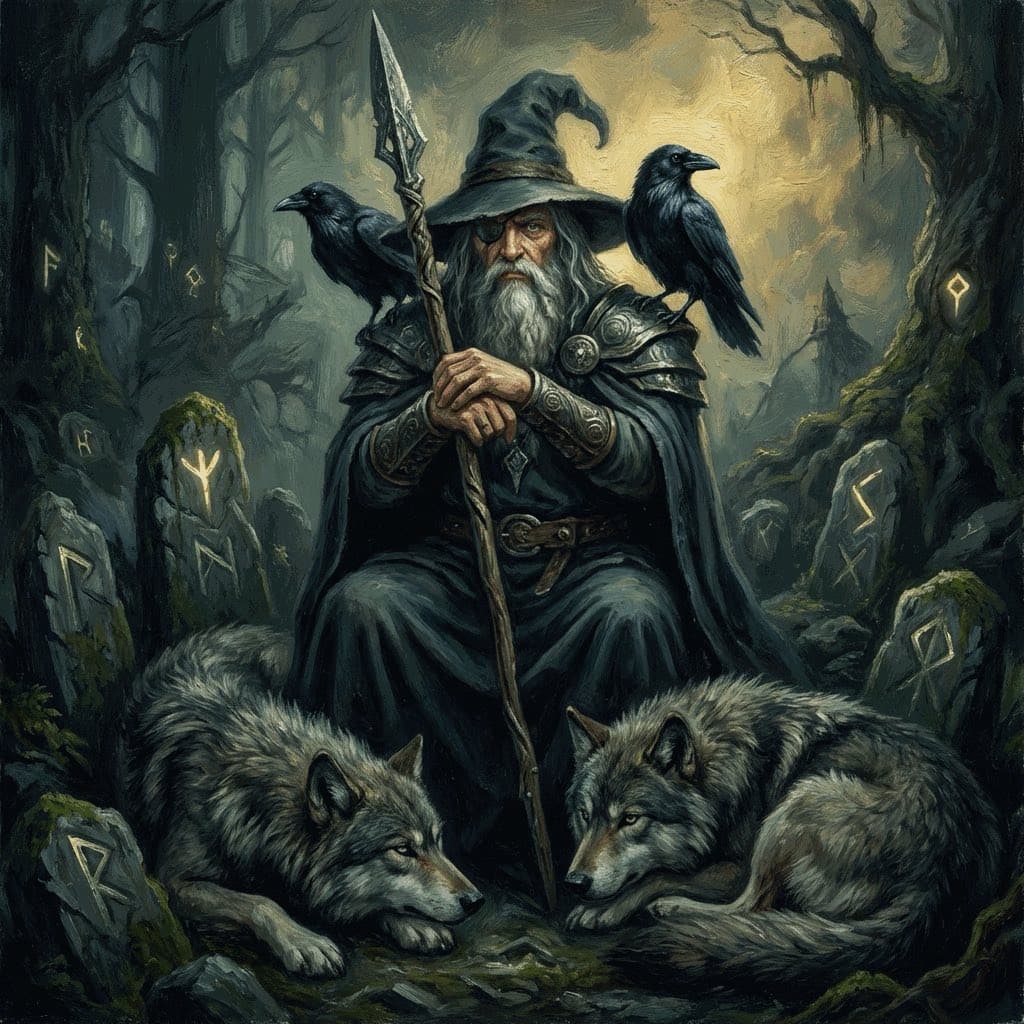 NorseOdin
Both are aged, wise masters of poetry and magical knowledge who win contests of wisdom; the resemblance is typological, not a borrowing.
Compare Väinämöinen and Odin side by side GreekOrpheus
Both are singers whose music enchants all living creatures, Väinämöinen with the pike-bone kantele (Kalevala, Runes 40-41), Orpheus with the lyre.
Worship and cult
Temples, festivals, and practices recorded for Väinämöinen
Invoked in folk charms as the first and greatest sage; tietäjät (folk healers and seers) claimed his knowledge of the 'origins' of things.
Festivals
- Kalevala Day (28 February), Finland's day of Finnish culture, marking the date Lönnrot signed the preface to the first Kalevala in 1835.
Family
In the atlas
Where Väinämöinen appears
Sources and further reading
Source notes
These references are recorded in the catalog. Their passage wording and translation have not been checked, so quotations are not displayed here.
- Mikael Agricola, preface to Dauidin Psaltari (paraphrase)
- Kalevala (trans. John Martin Crawford, 1888), Rune XLII
Appears in
Ancient and classical works featuring this figure.
the eternal singer and sage, central hero of the epic (Runes 1-50)
About this entry
By Elizabeth Stein for Mythos Atlas. About the author. Editorial notes are grounded in the site's cited sources and can be challenged through the contact page.
Parallels are editorial comparisons across traditions: a shared role does not, by itself, establish a shared origin.
Family relationships come from the atlas's kinship records. Ancient sources often disagree on divine genealogy.
Genealogy
Family tree
Väinämöinen's parents, consorts, children and rivals, as recorded in the atlas.