Mythos Atlas

Side by sideParallel across traditions

Odin vs Väinämöinen

Odin
OdinNorse
Väinämöinen
VäinämöinenFinnish Tradition (Kalevala)

Both are aged, wise masters of poetry and magical knowledge who win contests of wisdom; the resemblance is typological, not a borrowing.

At a glance

Odin and Väinämöinen compared
OdinVäinämöinen
TraditionNorse PantheonFinnish Tradition (Kalevala)
Domainswisdom, war, death, poetry, magic, knowledgesong and poetry, wisdom and magic, the kantele
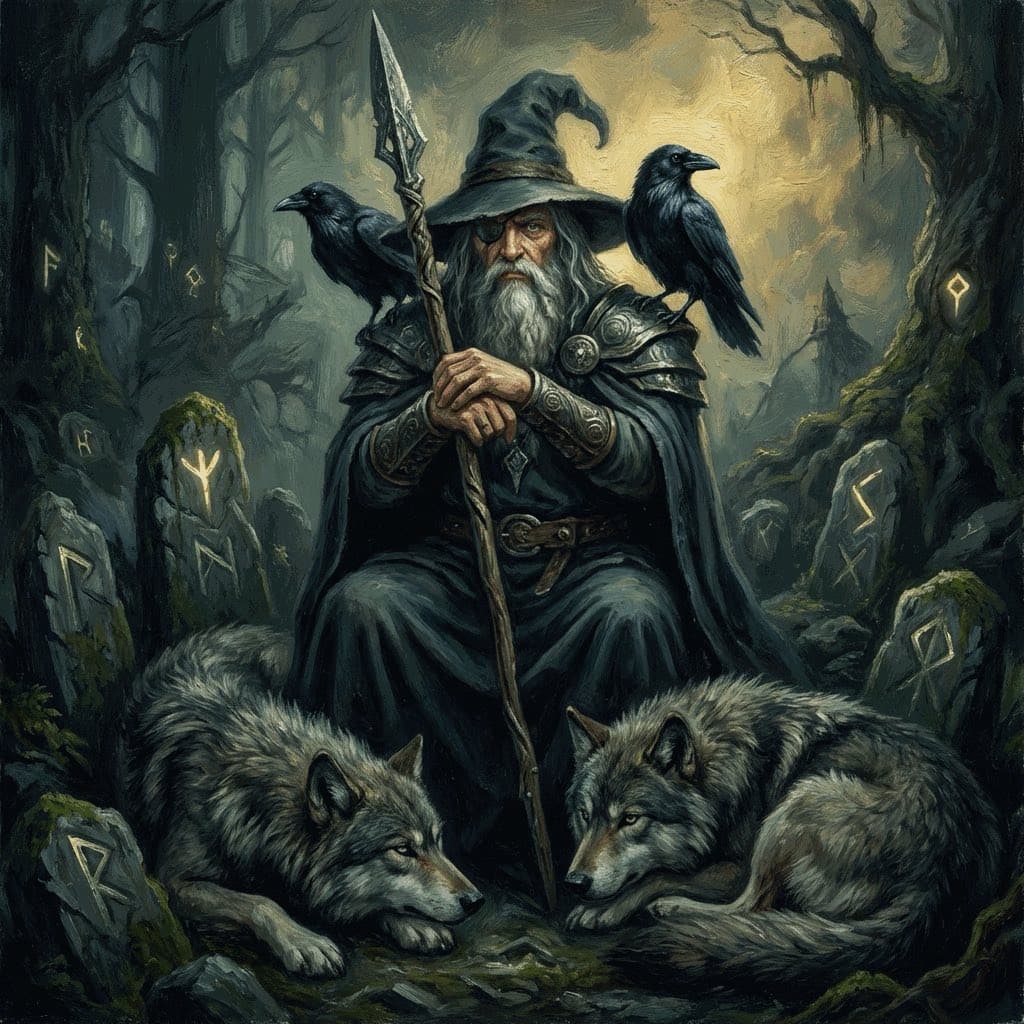
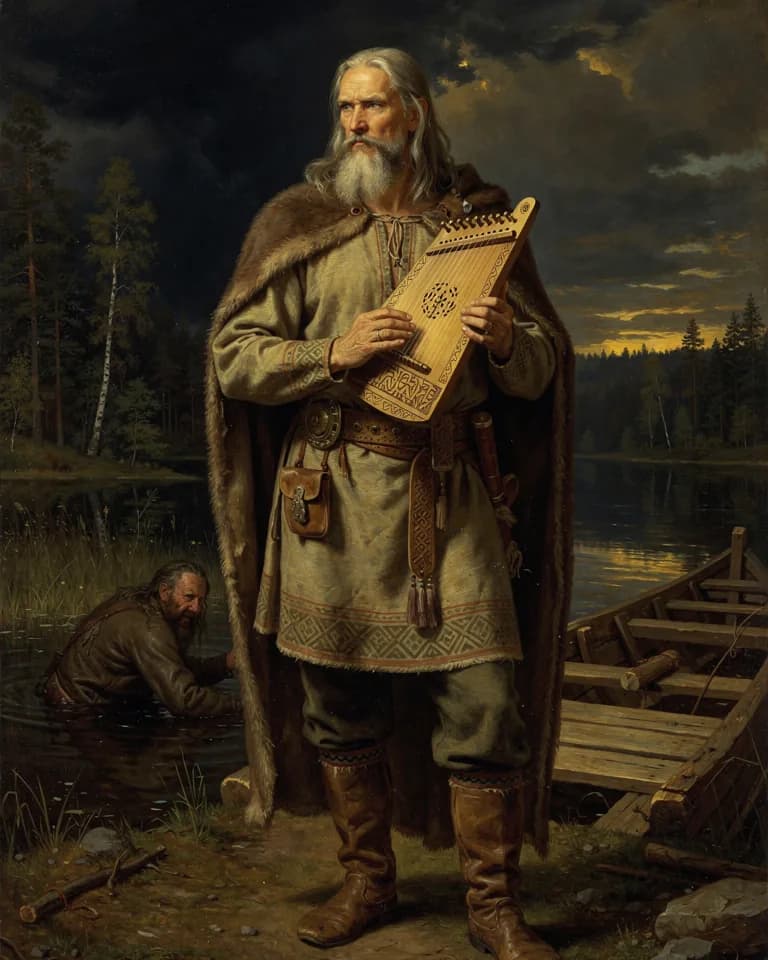
Symbolsspear Gungnir, ravens Huginn and Muninn, eight-legged horse Sleipnir, wolves Geri and Freki, one eyethe kantele, the boat, the Sampo
Also calledAllfather, Woden, Wotan, The WandererVäinö, Wainamoinen, Vanha Väinämöinen (Old Väinämöinen)

Where they meet

The atlas records no domain or symbol that Odin and Väinämöinen share.

They are compared for the part each plays in their own tradition rather than for any attribute in common.

Where they part

Only Odin

Associated with wisdom, war, death, poetry, magic, and knowledge.

Only Väinämöinen

Associated with song and poetry, wisdom and magic, and the kantele.

How each was worshipped

Odin

Cult sites
Temple at Uppsala (Adam of Bremen), with Thor and Freyr; No surviving named stave-church equivalent; mounds, trees, and halls
Festivals
Yule; Sacrifices for victory (sigurblót)

Hanged god, poetry, and the war-dead. Wednesday keeps his name. Uppsala tradition put him with Thor and Freyr. Spear, ravens, and the high seat are the cult signs; evidence is later and Christian-filtered, and should be read that way.

Väinämöinen

Festivals
Kalevala Day (28 February), Finland's day of Finnish culture, marking the date Lönnrot signed the preface to the first Kalevala in 1835.

Invoked in folk charms as the first and greatest sage; tietäjät (folk healers and seers) claimed his knowledge of the 'origins' of things.

The two figures

Norse Pantheon

Odin

King of the Aesir and god of wisdom, war, and death. Odin sacrificed his eye at Mimir's well for wisdom and hung himself on Yggdrasil for nine days to learn the runes.

Odin is the son of the primordial beings Borr and Bestla. Along with his brothers Vili and Ve, he slew the giant Ymir and created the world from his body.

Odin is the chief of the Aesir, a relentless seeker of wisdom. He sacrificed his eye to Mimir's Well for knowledge and hung himself from Yggdrasil for nine nights to discover the runes.

Read the full Odin entry

Finnish Tradition (Kalevala)

Väinämöinen

The 'steady old' singer and sage of Finnish runo-song, named by Agricola in 1551 as the maker of songs, who in the Kalevala is born of Ilmatar, sings his rival into a bog, builds the first kantele from a pike's jawbone, leads the theft of the Sampo, and finally sails away.

Born of Ilmatar after thirty years in her womb on the primeval sea (Kalevala, Rune 1).

Agricola's list of 1551 says that Väinämöinen 'forged songs'. In folk poetry he is the eternal sage (*tietäjä iänikuinen*), a singer whose words have creative and magical force: he sings the world into order, sings rivals into the ground, and knows the 'origins' of things, the charms that give power over iron, fire, and wounds. In many folk variants he is himself the one on whose knee the world-egg is laid.

Read the full Väinämöinen entry
About this comparison

Comparisons pair figures that play a similar role across traditions, or that the myths connect within one. A shared role does not, by itself, establish a shared origin.