Side by sideRivals

Fenrir vs Odin

Fenrir
FenrirNorse
Odin
OdinNorse

Fenrir and Odin are recorded as rivals in the Norse Pantheon.

At a glance

Fenrir and Odin compared
FenrirOdin
TraditionNorse PantheonNorse Pantheon
Domainsdestruction, chaos, fatewisdom, war, death, poetry, magic, knowledge
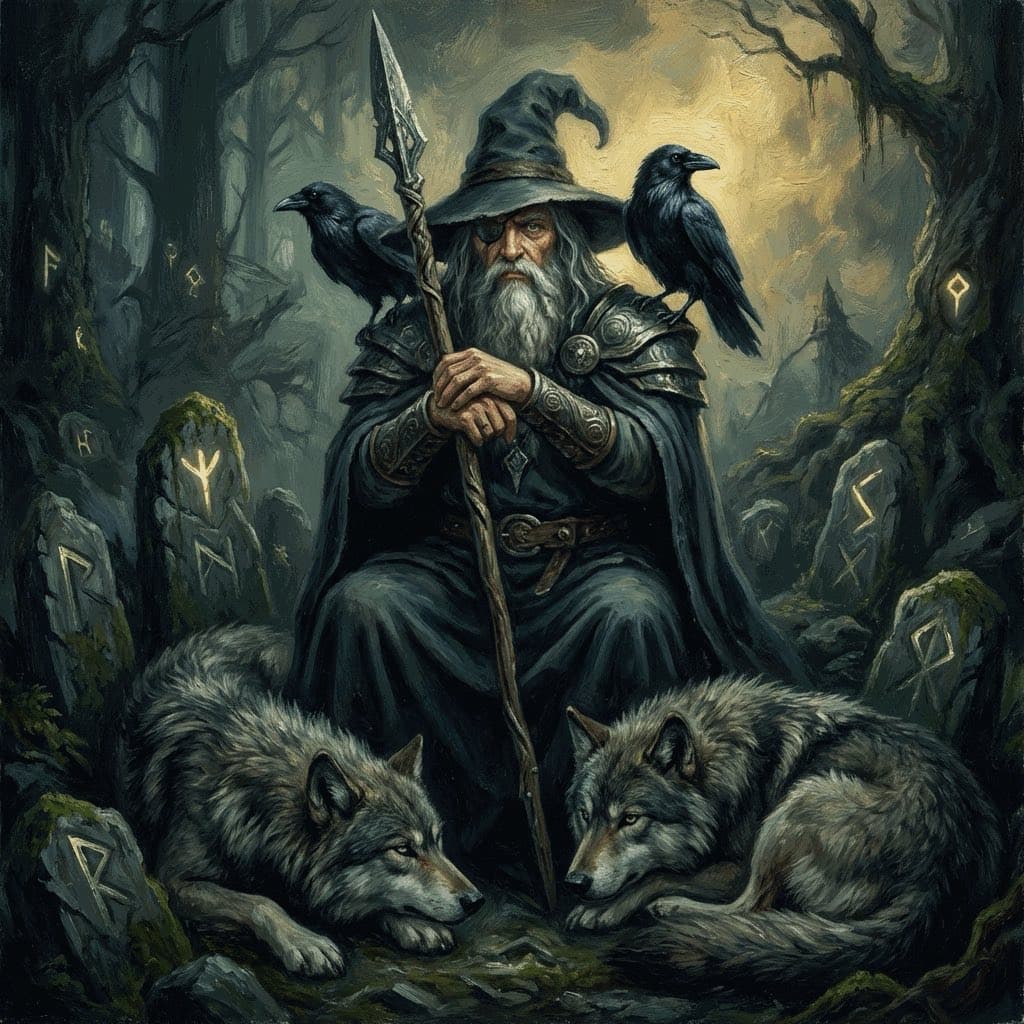
Symbolschain Gleipnir, massive wolf, jawsspear Gungnir, ravens Huginn and Muninn, eight-legged horse Sleipnir, wolves Geri and Freki, one eye
Also calledFenrisulfr, Fenris WolfAllfather, Woden, Wotan, The Wanderer

Where they meet

The atlas records no domain or symbol that Fenrir and Odin share.

They are compared because of how the myths connect them, not because of what they rule.

Where they part

Only Fenrir

Associated with destruction, chaos, and fate.

Only Odin

Associated with wisdom, war, death, poetry, magic, and knowledge.

How each was worshipped

Fenrir

Cult sites
No attested temple in the surviving record

Fenrir is bound in the myths, not housed. There is no wolf-priesthood in the Eddas. The honest note is absence: a doom, not a cult.

Odin

Cult sites
Temple at Uppsala (Adam of Bremen), with Thor and Freyr; No surviving named stave-church equivalent; mounds, trees, and halls
Festivals
Yule; Sacrifices for victory (sigurblót)

Hanged god, poetry, and the war-dead. Wednesday keeps his name. Uppsala tradition put him with Thor and Freyr. Spear, ravens, and the high seat are the cult signs; evidence is later and Christian-filtered, and should be read that way.

The two figures

Norse Pantheon

Fenrir

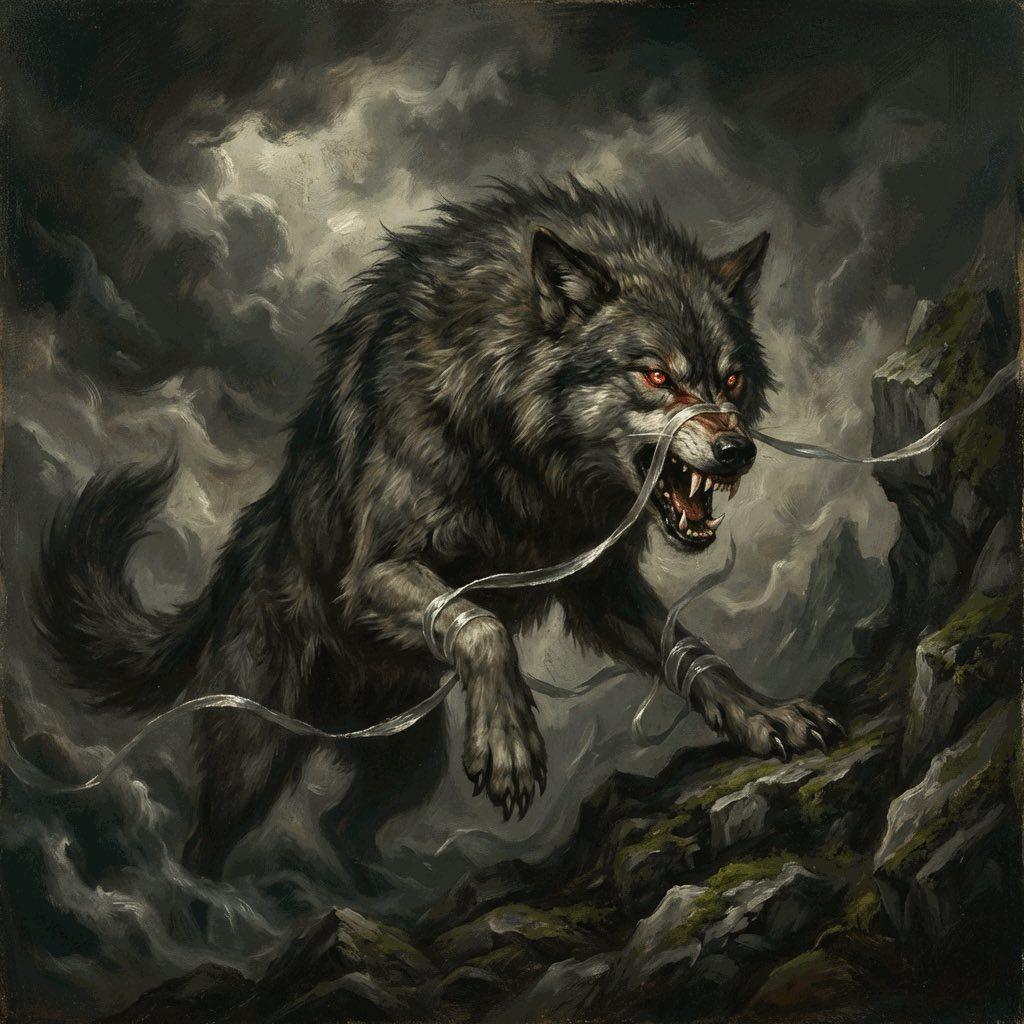
Monstrous wolf, son of Loki. Bound by the gods but prophesied to break free at Ragnarok and devour Odin. Represents the inevitable forces of chaos and destruction.

Fenrir was born to the trickster god Loki and the giantess Angrboda in the dark forests of Jotunheim. He was one of three monstrous siblings - his brother Jormungandr became the World Serpent, and his sister Hel became ruler of the dead. When the gods learned of these children and the prophecies surrounding them, they brought them to Asgard. Fenrir alone was raised among the gods, but he grew so rapidly and so fierce that only Tyr dared to feed him. Fearing the prophecy that he would devour Odin, the gods bound him with the magical fetter Gleipnir on the island of Lyngvi, where he will remain until the twilight of the gods.

Fenrir is the most infamous child of Loki. He grew so large and terrifying that the gods tricked him into being bound by the magical ribbon **Gleipnir** (costing Tyr his hand).

Read the full Fenrir entry

Norse Pantheon

Odin

King of the Aesir and god of wisdom, war, and death. Odin sacrificed his eye at Mimir's well for wisdom and hung himself on Yggdrasil for nine days to learn the runes.

Odin is the son of the primordial beings Borr and Bestla. Along with his brothers Vili and Ve, he slew the giant Ymir and created the world from his body.

Odin is the chief of the Aesir, a relentless seeker of wisdom. He sacrificed his eye to Mimir's Well for knowledge and hung himself from Yggdrasil for nine nights to discover the runes.

Read the full Odin entry
About this comparison

Comparisons pair figures that play a similar role across traditions, or that the myths connect within one. A shared role does not, by itself, establish a shared origin.