Norse Pantheon
Fenrir
Also known as Fenrisulfr, Fenris Wolf
- destruction
- chaos
- fate
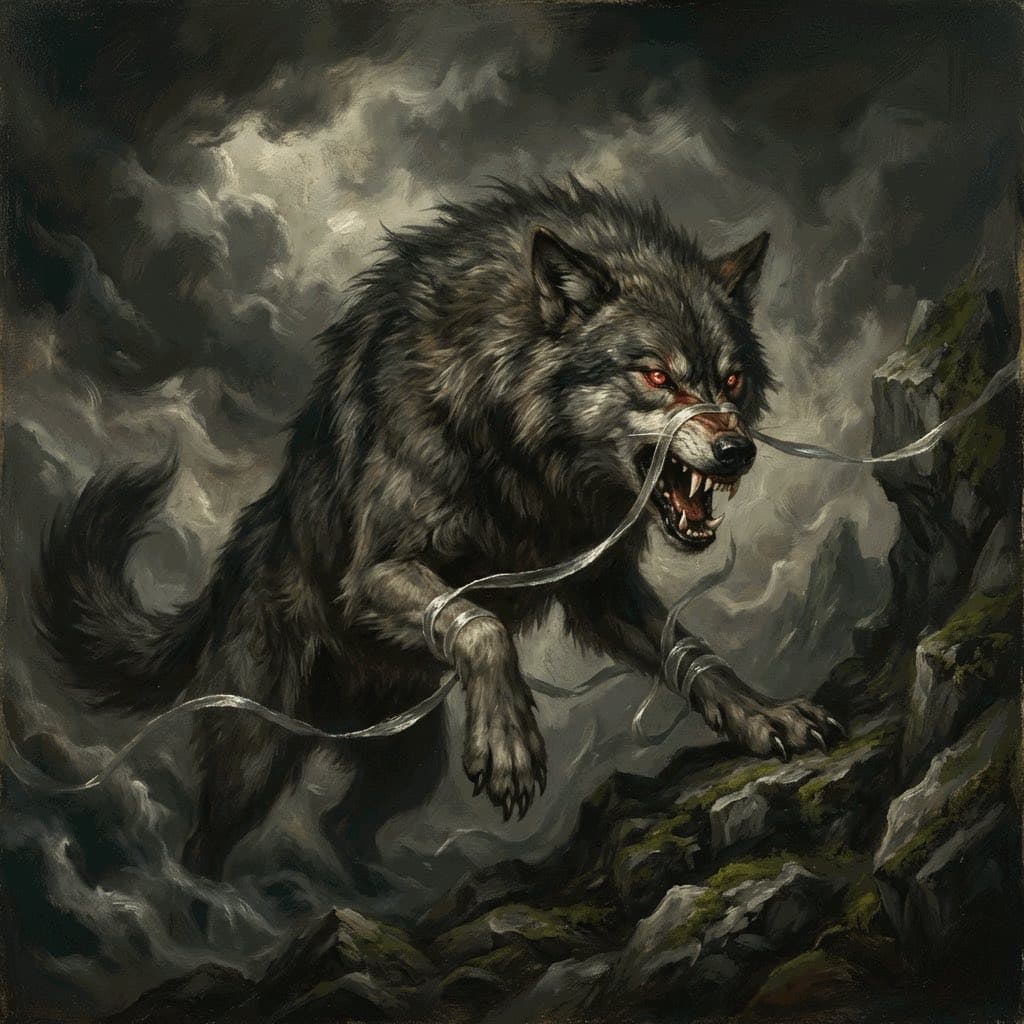
Monstrous wolf, son of Loki. Bound by the gods but prophesied to break free at Ragnarok and devour Odin. Represents the inevitable forces of chaos and destruction.
About Fenrir
The World-Eater
Fenrir is the most infamous child of Loki. He grew so large and terrifying that the gods tricked him into being bound by the magical ribbon Gleipnir (costing Tyr his hand).
Ragnarok
He is destined to remain bound until Ragnarok, when he will break his chains and swallow Odin whole, ending the reign of the Aesir. He will eventually be slain by Odin's son Vidar.
Origin story
Fenrir was born to the trickster god Loki and the giantess Angrboda in the dark forests of Jotunheim. He was one of three monstrous siblings - his brother Jormungandr became the World Serpent, and his sister Hel became ruler of the dead. When the gods learned of these children and the prophecies surrounding them, they brought them to Asgard. Fenrir alone was raised among the gods, but he grew so rapidly and so fierce that only Tyr dared to feed him. Fearing the prophecy that he would devour Odin, the gods bound him with the magical fetter Gleipnir on the island of Lyngvi, where he will remain until the twilight of the gods.
Worship and cult
Temples, festivals, and practices recorded for Fenrir
Fenrir is bound in the myths, not housed. There is no wolf-priesthood in the Eddas. The honest note is absence: a doom, not a cult.
Sacred sites
- No attested temple in the surviving record
Family
Relationship sources
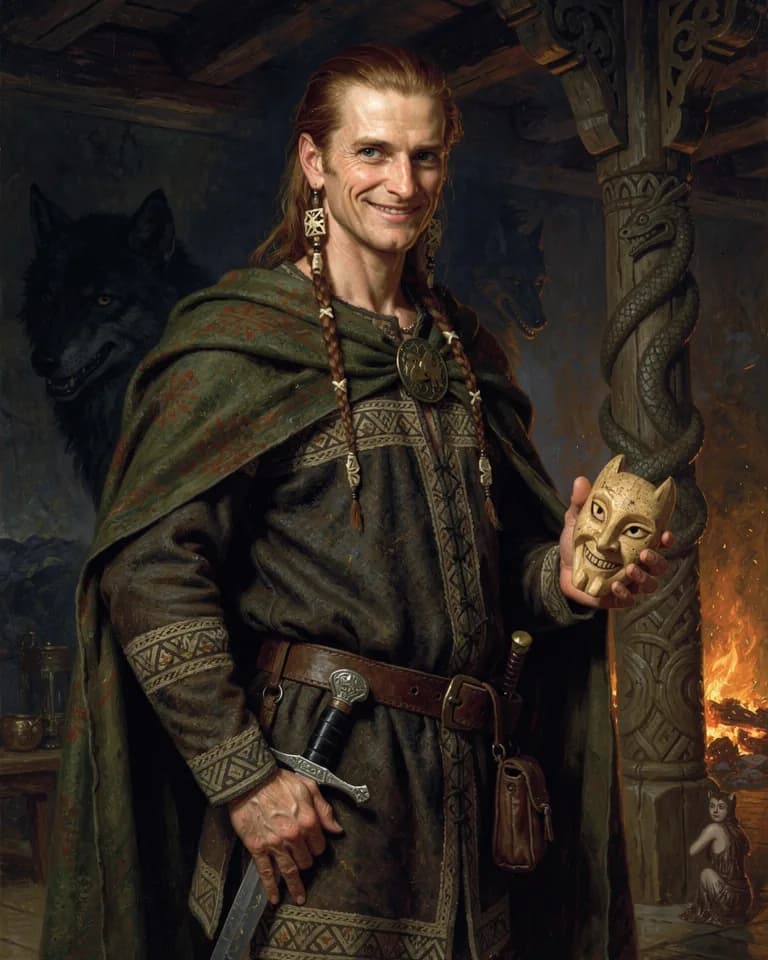
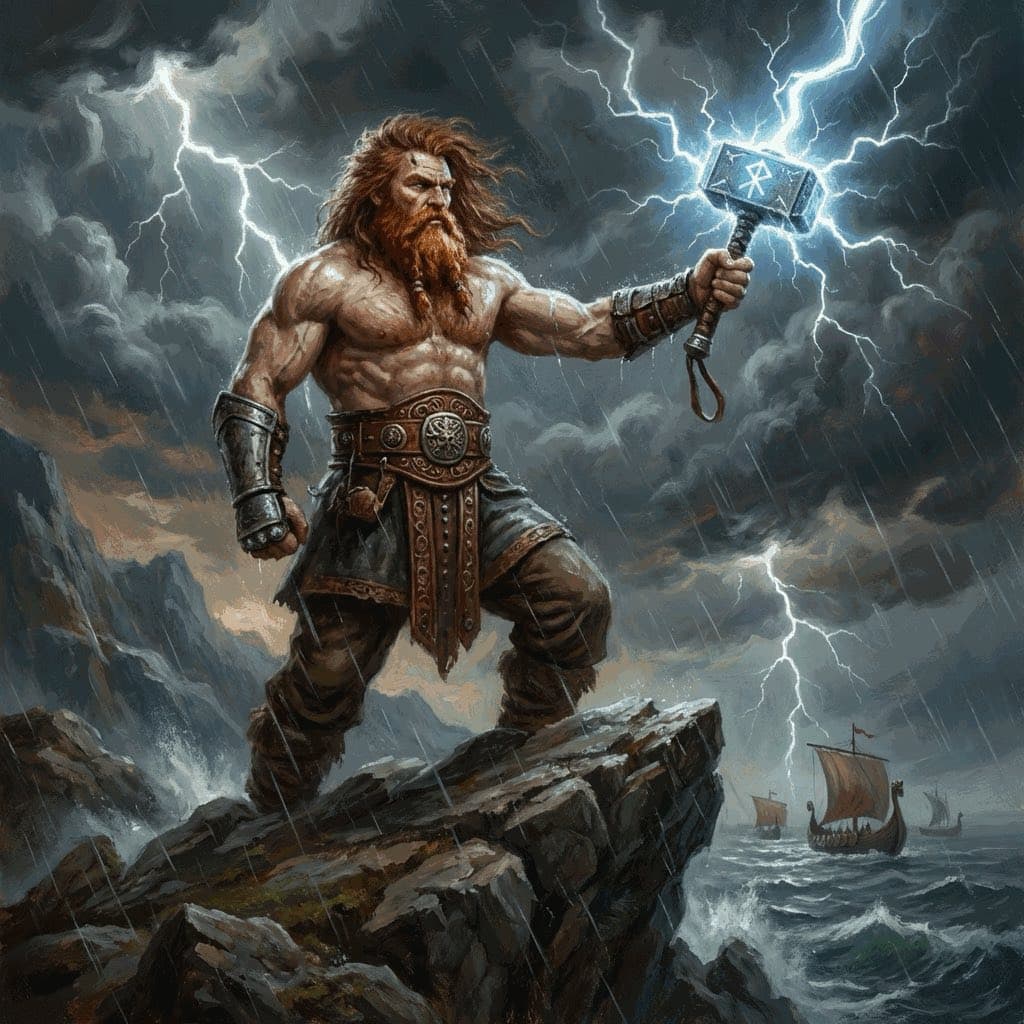
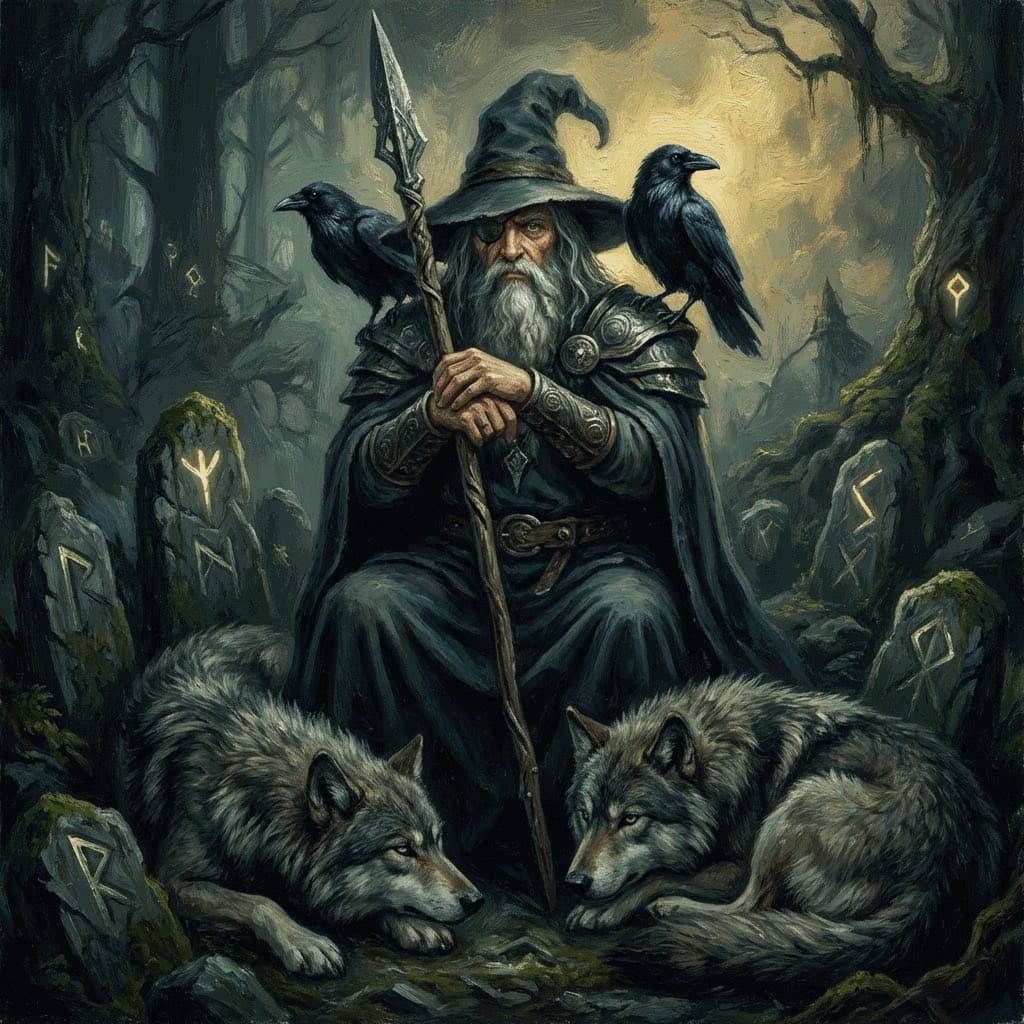
Prose Edda — Loki parent of Fenrir
Snorri Sturluson · Arthur Gilchrist Brodeur, The Prose Edda (1916), American-Scandinavian Foundation; Internet Sacred Text Archive transcription · Gylfaginning XXXIV (34)
Questions about Fenrir's family
- Who are Fenrir's parents?
- The atlas's kinship records name one parent of Fenrir: Loki. Ancient accounts do not always agree on divine parentage.
In the atlas
Where Fenrir appears
Play the myth
Branching retellings featuring Fenrir: your choices decide the ending.
Sources and further reading
Source notes
These references are recorded in the catalog. Their passage wording and translation have not been checked, so quotations are not displayed here.
- Prose Edda, Gylfaginning (trans. Anderson)
Cite this page
No publication date is recorded for this page, so each citation uses n.d. and today's date as the access date.
About this entry
By Elizabeth Stein for Mythos Atlas. About the author. Editorial notes are grounded in the site's cited sources and can be challenged through the contact page.
Parallels are editorial comparisons across traditions: a shared role does not, by itself, establish a shared origin.
Family relationships come from the atlas's kinship records. Ancient sources often disagree on divine genealogy.
Keep exploring
One myth a week, with its sources in a short email. The sign-up form is just below.
Genealogy
Family tree
Fenrir's parents, consorts, children and rivals, as recorded in the atlas.