Finnish Tradition (Kalevala)
Lemminkäinen
Lemminkäinen
Also known as Ahti Saarelainen, Kaukomieli, Lemminkainen
- adventure
- love and seduction
- war
- magic song
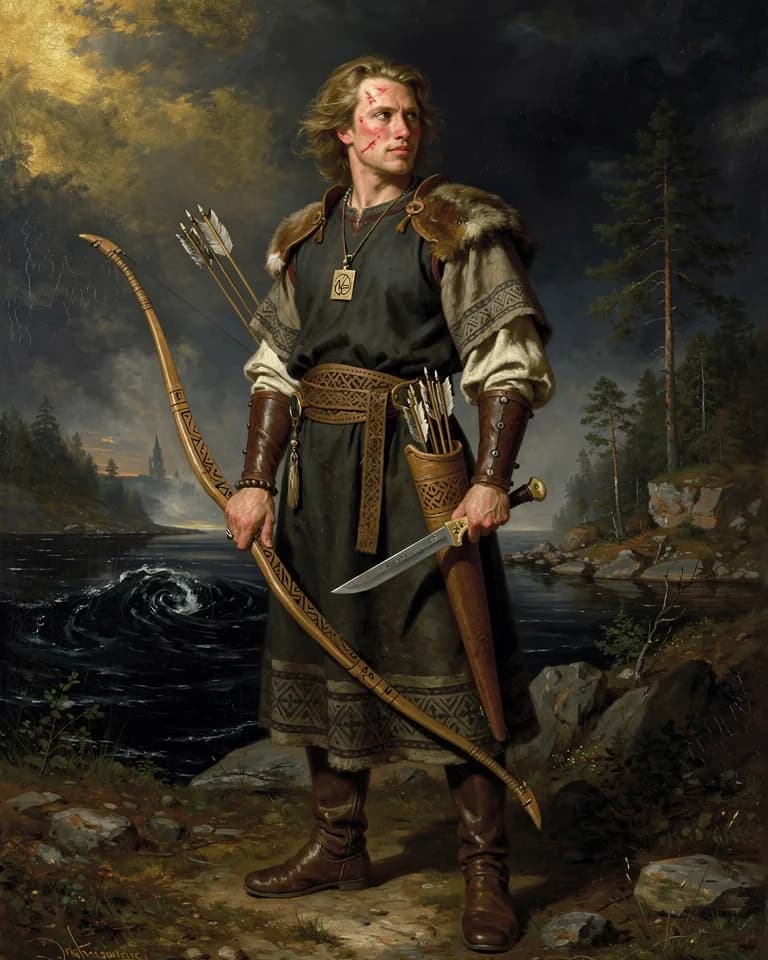
The reckless, handsome adventurer of the Kalevala, who is killed at the river of Tuonela while trying to shoot its swan and cut to pieces, and whom his mother rakes from the river and restores to life.
About Lemminkäinen
A composite hero
In Finnish folk poetry Lemminkäinen, Ahti Saarelainen ('Ahti the Islander'), and Kaukomieli were related but partly separate figures, heroes of songs about uninvited guests at feasts, sea raids, and duels of magic. Lönnrot combined them into one character, which is why the Kalevala calls him by all three names.
Death and return
In the Kalevala Lemminkäinen abducts and marries Kyllikki, then goes to Pohjola to woo Louhi's daughter, leaving his hairbrush with his mother: if it bleeds, he is dead. Louhi sets him three tasks: to ski down the elk of Hiisi, to bridle the fire-breathing gelding of Hiisi, and to shoot the swan on the black river of Tuonela with a single arrow. At the river a blind cowherd he had insulted kills him with a water-snake and throws him in, and the son of Tuoni hacks his body to pieces. The hairbrush bleeds. His mother searches the world, has Ilmarinen forge a long copper rake, and rakes his pieces from the river; she joins them with charms, and a bee brings honey from beyond the ninth heaven to anoint him until he rises again.
Later deeds
He returns uninvited to the wedding feast at Pohjola, kills its master in a sword duel, and must hide on an island. Later he joins Väinämöinen and Ilmarinen in the raid on the Sampo, where his singing wakes the crane that rouses Pohjola. Jean Sibelius's Lemminkäinen Suite (1895-1896), including The Swan of Tuonela, made him known internationally.
Origin story
Son of a devoted, unnamed mother, the 'islander' raised on the headland; the Kalevala gives no divine parentage.
Across traditions
Parallel figures
Figures who play a role like Lemminkäinen's in other traditions.
 EgyptianOsiris
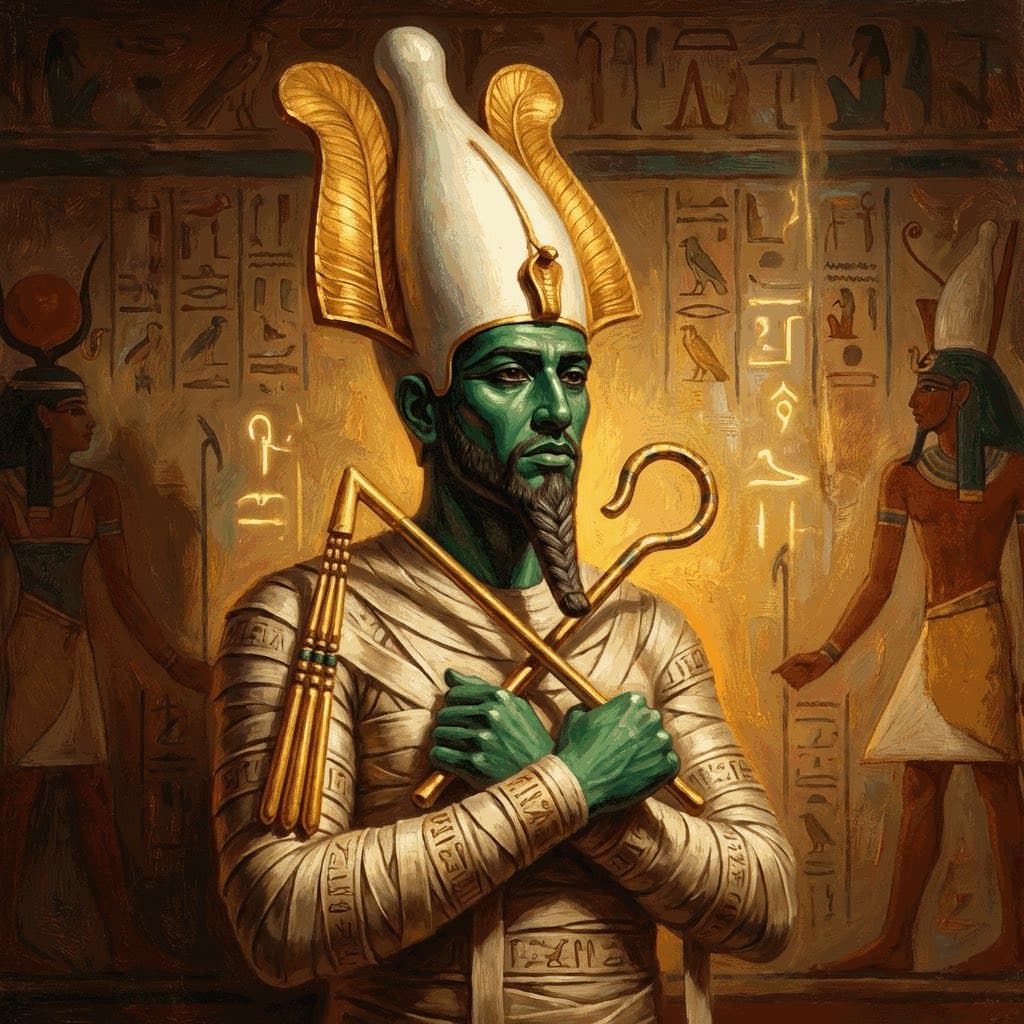
Both are dismembered and scattered in water, then gathered and restored by a devoted woman (Lemminkäinen by his mother with a copper rake, Osiris by Isis), a parallel often noted by comparative mythologists.
Compare Lemminkäinen and Osiris side by side
Worship and cult
Temples, festivals, and practices recorded for Lemminkäinen
A hero of song rather than an object of worship; his episodes were sung as epic and adapted in charms.
In the atlas
Where Lemminkäinen appears
Sources and further reading
Source notes
These references are recorded in the catalog. Their passage wording and translation have not been checked, so quotations are not displayed here.
- Kalevala (trans. John Martin Crawford, 1888), Rune XV (the mother's plea for the rake)
- Kalevala, Rune 15 (paraphrase)
Appears in
Ancient and classical works featuring this figure.
the reckless adventurer killed at the river of Tuonela and restored by his mother (Runes 11-15, 26-30)
About this entry
By Elizabeth Stein for Mythos Atlas. About the author. Editorial notes are grounded in the site's cited sources and can be challenged through the contact page.
Parallels are editorial comparisons across traditions: a shared role does not, by itself, establish a shared origin.
Genealogy
Family tree
Lemminkäinen's parents, consorts, children and rivals, as recorded in the atlas.