Inca and Andean Traditionweapon
Sling of Illapa
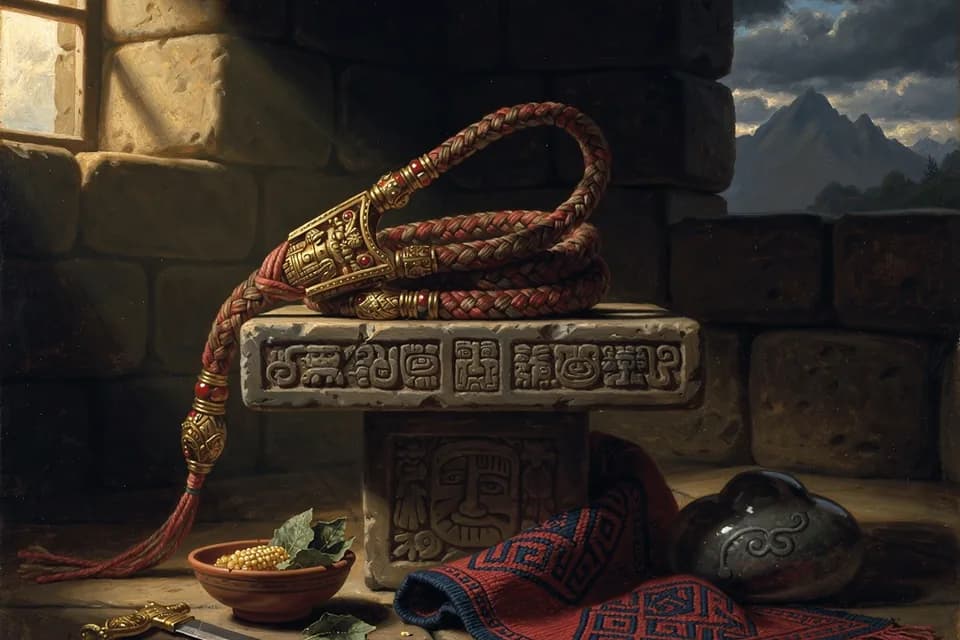
- Thunder
- Summoning rain and hail
The sling of the Thunder god: its crack was the thunderclap, and with it Illapa drew water from the river of the sky to pour down as rain and hail.
About Sling of Illapa
A herder's weapon in the sky
The sling (warak'a) was an everyday Andean tool, used by herders to guide flocks and by soldiers in war. Bernabé Cobo (1653), drawing on reports from the sixteenth century, says the Andeans pictured the Thunder as a man in the sky holding a club and a sling: when he whirled the sling it cracked like a whip, and that was the thunder, while the flash of his clothing was the lightning. With it he governed rain, hail, and storms, taking water from the river of the sky, the Milky Way, and letting it fall on the earth.
Slings and thunder elsewhere in the sources
In the Pacaritambo origin story, the strongest of the Ayar brothers, Ayar Cachi, splits hills with his sling, a detail that links the sling with superhuman power. After the conquest, the thunder's identification with Saint James (Santiago), whose image showed him charging on horseback, gave the old sky-warrior a new form; the crack of the sling and the saint's gunfire could be heard in the same storm.
Evidence
No sacred sling of Illapa is known as a physical object. The sling belongs to the god's image as colonial writers recorded it.
Origin
Part of Illapa's image as described by Bernabé Cobo from earlier reports (Historia del Nuevo Mundo, Book 13).
Sources and further reading
Source notes
These references are recorded in the catalog. Their passage wording and translation have not been checked, so quotations are not displayed here.
- Bernabé Cobo, Historia del Nuevo Mundo, Book 13 (paraphrase)
About this entry
By Elizabeth Stein for Mythos Atlas. About the author. Editorial notes are grounded in the site's cited sources and can be challenged through the contact page.