Mythos Atlas

Side by sideParallel across traditions

Aje vs Plutus

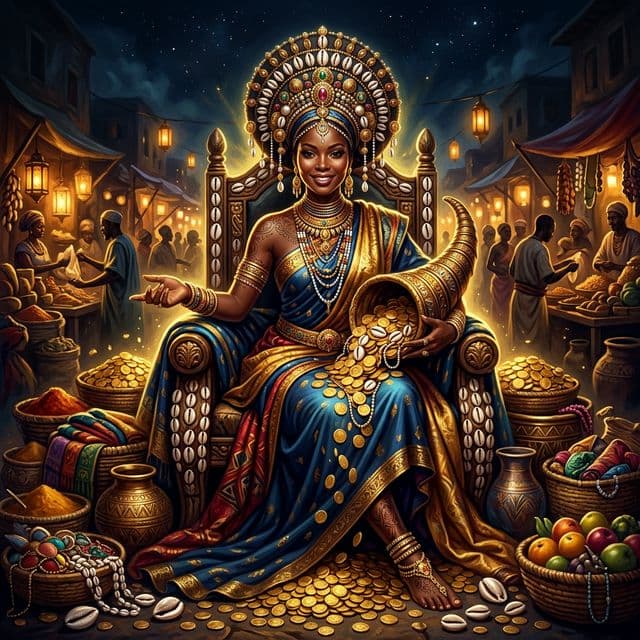
Aje
AjeYoruba
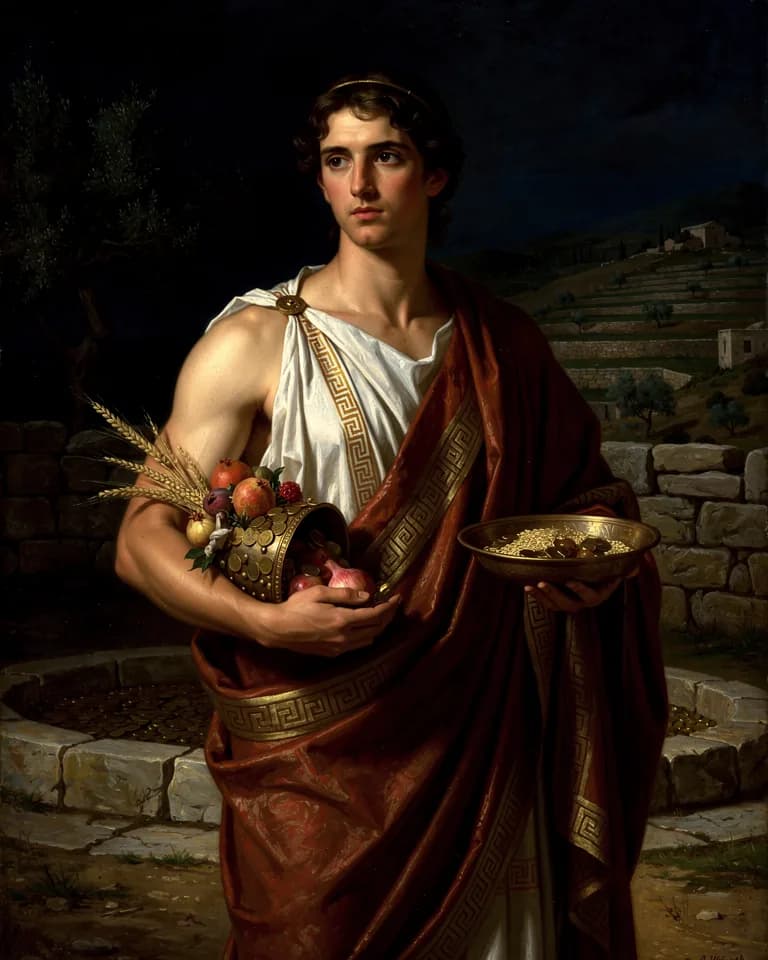
Plutus
PlutusGreek

Both personify wealth as a divine power that chooses whom it enriches.

At a glance

Aje and Plutus compared
AjePlutus
TraditionYoruba TraditionGreek Pantheon
Domainswealth, prosperity, commerce, abundancewealth, agricultural abundance
Symbolscowrie shells, gold coins, money, market goodscornucopia, child held by Eirene (Peace) or Tyche (Fortune)
Also calledAje Shaluga, Aje OlokunPloutos

Where they meet

Both are associated with wealth.

Where they part

Only Aje

Associated with prosperity, commerce, and abundance.

Only Plutus

Associated with agricultural abundance.

How each was worshipped

Aje

Cult sites
Market shrines; women's trading cults

Wealth that moves in the market. Not a sky god. The cult is the stall, the cowrie, and the women who keep both.

Plutus

No cult sites or festivals are recorded in the atlas.

The two figures

Yoruba Tradition

Aje

The Orisha of prosperity and material wealth. Aje blesses commerce and brings financial abundance to her devotees.

Aje emerged from the primordial waters alongside Olokun, carrying the essence of abundance into the world of humans.

Aje embodies the spiritual force behind material wealth. In Yoruba thought, wealth is not merely physical but has a spiritual dimension that must be properly cultivated.

Read the full Aje entry

Greek Pantheon

Plutus

The god of wealth, son of Demeter and the hero Iasion, born in a thrice-plowed field on Crete. Originally the wealth of the harvest, he became the personification of riches in general, most memorably as the blind god of Aristophanes' comedy.

Plutus was born to Demeter and the mortal hero Iasion, who lay together in a thrice-plowed fallow field in Crete. In the version Homer knows, Zeus killed Iasion with a thunderbolt for this union.

Hesiod tells how Demeter lay with the hero Iasion in a thrice-plowed fallow field on Crete and bore Plutus, a kindly god who goes everywhere over land and sea and makes rich whoever finds him. The story roots wealth in grain: in an agrarian world, the harvest was riches.

Read the full Plutus entry
About this comparison

Comparisons pair figures that play a similar role across traditions, or that the myths connect within one. A shared role does not, by itself, establish a shared origin.