Mythos Atlas

Side by sideParallel across traditions

Daikokuten vs Plutus

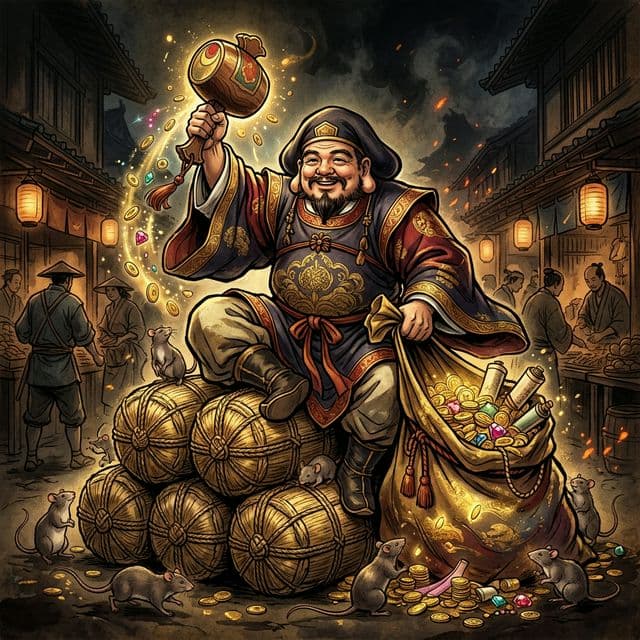
Daikokuten
DaikokutenJapanese
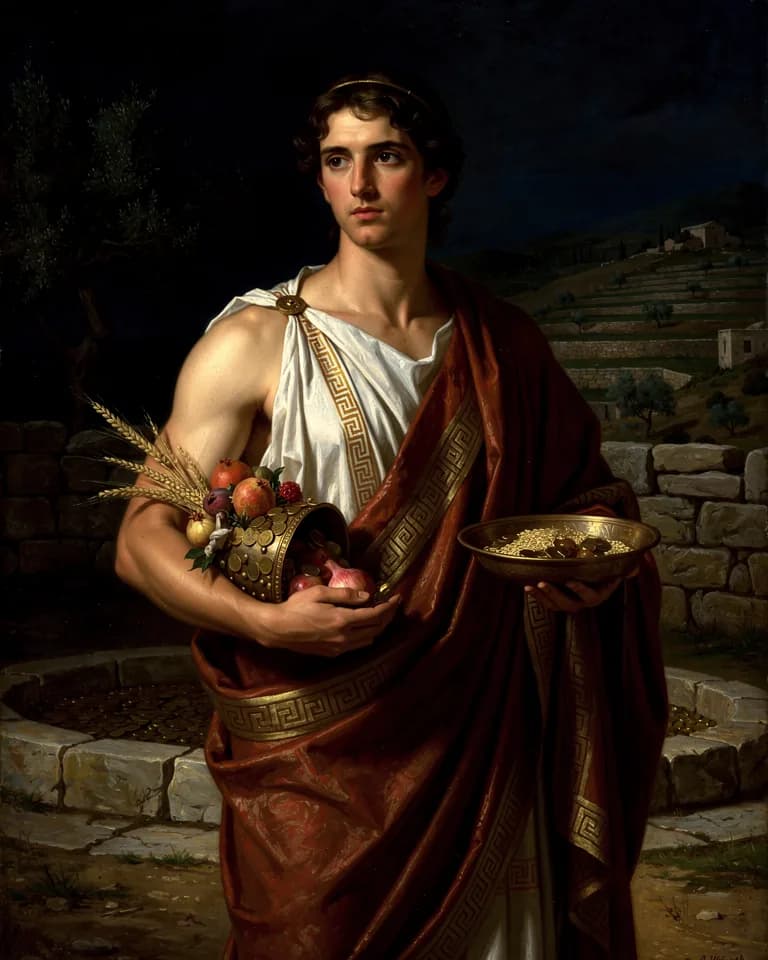
Plutus
PlutusGreek

Both are deities of wealth and abundance.

At a glance

Daikokuten and Plutus compared
DaikokutenPlutus
TraditionJapanese PantheonGreek Pantheon
Domainswealth, commerce, harvest, farmers, kitchenwealth, agricultural abundance
Symbolsmagic mallet (uchide no kozuchi), treasure sack, rice bales, ratscornucopia, child held by Eirene (Peace) or Tyche (Fortune)
Also calledDaikoku, Daikoku-sama, Okuninushi (syncretic)Ploutos

Where they meet

Both are associated with wealth.

Where they part

Only Daikokuten

Associated with commerce, harvest, farmers, and kitchen.

Only Plutus

Associated with agricultural abundance.

How each was worshipped

Daikokuten

Cult sites
Kitchen and storehouse; paired with Ebisu
Festivals
New Year luck-god rounds

Mallet, rice bales, and a grin. Kitchen god by way of Mahakala. The cult is the pantry.

Plutus

No cult sites or festivals are recorded in the atlas.

The two figures

Japanese Pantheon

Daikokuten

One of the Seven Lucky Gods. God of wealth, farmers, and the kitchen. Derived from the Hindu deity Mahakala but merged with the native kami Okuninushi in Japan.

Daikokuten entered Japan through Buddhist transmission as **Mahakala**, a fierce protector deity. Over centuries, his character softened and merged with the Shinto kami **Okuninushi**, the earthly ruler of Izumo. This syncretism transformed him into a benevolent god of wealth and abundance.

**Daikokuten** is a smiling, portly deity who brings wealth, good harvests, and prosperity to households. As one of the **Shichifukujin** (Seven Lucky Gods), he is often paired with Ebisu—the two are frequently depicted together as a duo bringing commercial success and domestic prosperity.

Read the full Daikokuten entry

Greek Pantheon

Plutus

The god of wealth, son of Demeter and the hero Iasion, born in a thrice-plowed field on Crete. Originally the wealth of the harvest, he became the personification of riches in general, most memorably as the blind god of Aristophanes' comedy.

Plutus was born to Demeter and the mortal hero Iasion, who lay together in a thrice-plowed fallow field in Crete. In the version Homer knows, Zeus killed Iasion with a thunderbolt for this union.

Hesiod tells how Demeter lay with the hero Iasion in a thrice-plowed fallow field on Crete and bore Plutus, a kindly god who goes everywhere over land and sea and makes rich whoever finds him. The story roots wealth in grain: in an agrarian world, the harvest was riches.

Read the full Plutus entry
About this comparison

Comparisons pair figures that play a similar role across traditions, or that the myths connect within one. A shared role does not, by itself, establish a shared origin.