Mythos Atlas

Side by sideParallel across traditions

Lakshmi vs Plutus

Lakshmi
LakshmiHindu
Plutus
PlutusGreek

Both are divine sources of prosperity, though Lakshmi is a major goddess and Plutus a minor personification.

At a glance

Lakshmi and Plutus compared
LakshmiPlutus
TraditionHindu PantheonGreek Pantheon
Domainswealth, fortune, prosperity, beautywealth, agricultural abundance
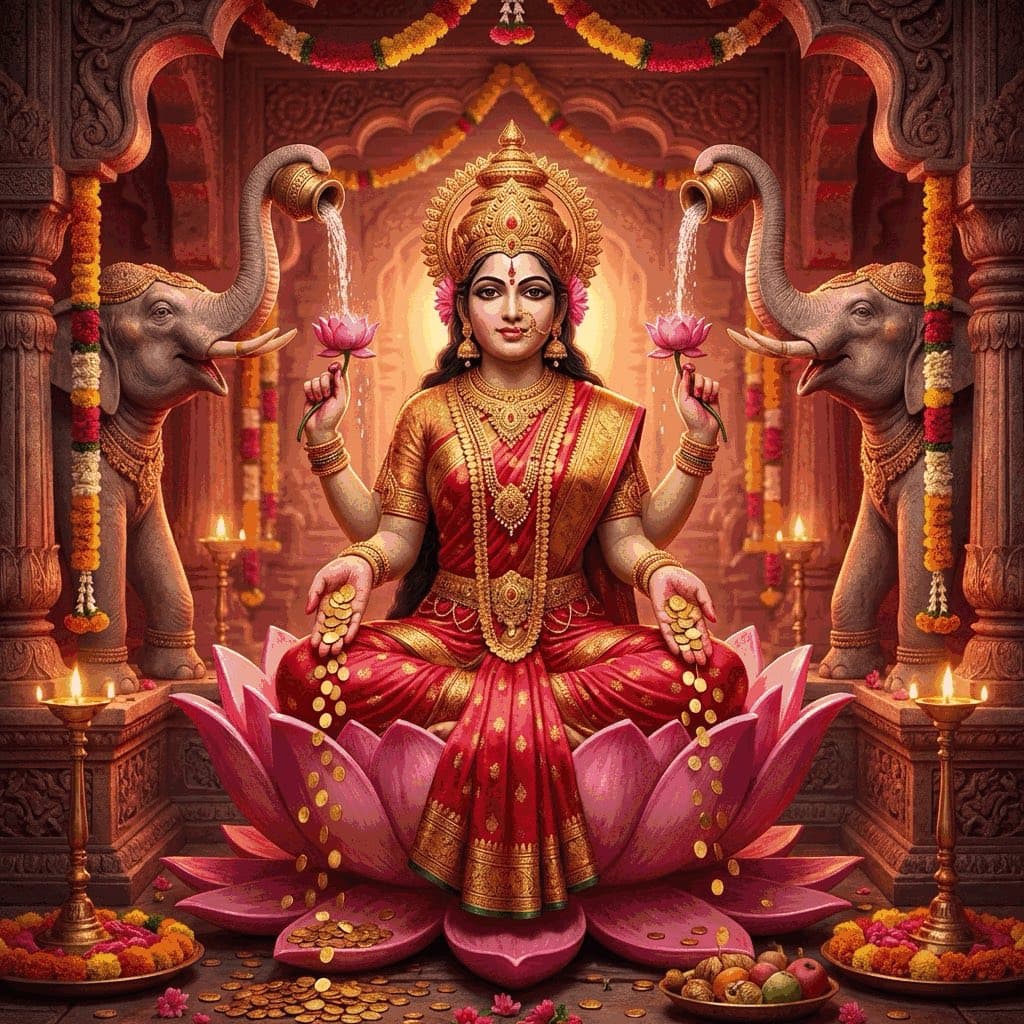
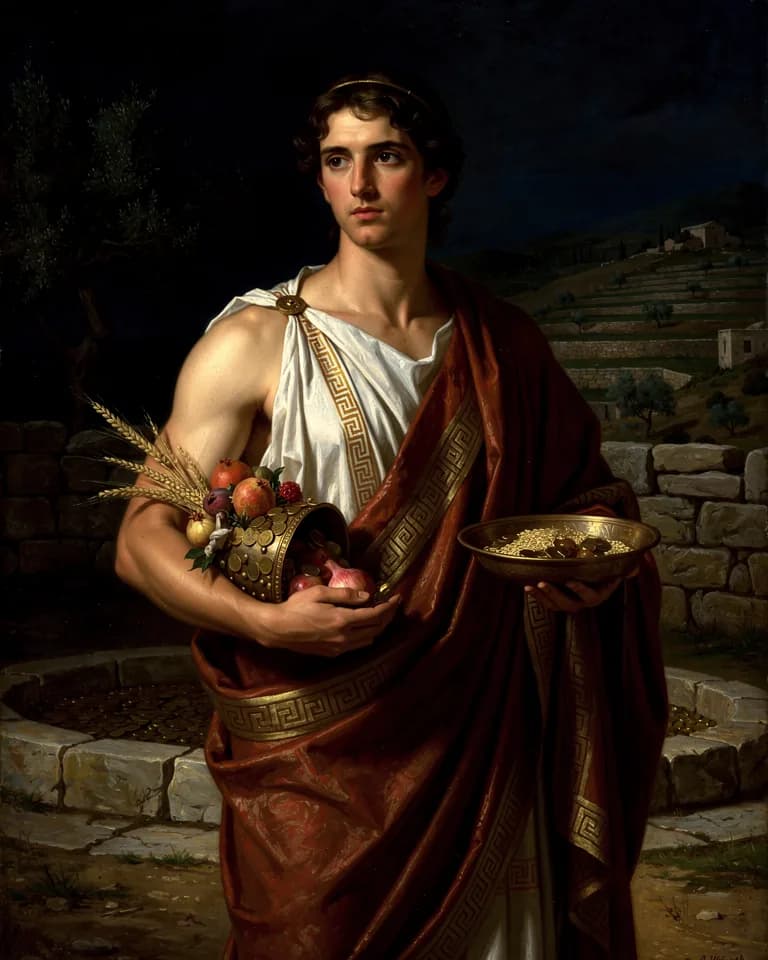
Symbolslotus, gold coins, owl, elephantcornucopia, child held by Eirene (Peace) or Tyche (Fortune)
Also calledSri, MahalakshmiPloutos

Where they meet

Both are associated with wealth.

Where they part

Only Lakshmi

Associated with fortune, prosperity, and beauty.

Only Plutus

Associated with agricultural abundance.

How each was worshipped

Lakshmi

Cult sites
Padmavathi Temple at Tiruchanur; Ashtalakshmi temples; Household shrines beside Vishnu
Festivals
Diwali / Deepavali; Varalakshmi Vratam; Kojagiri Purnima

Coins, lotus, and a swept threshold on Diwali. Vaishnava houses keep her with Vishnu; merchants keep her for the till. The cult is invitation: she stays where the house is clean.

Plutus

No cult sites or festivals are recorded in the atlas.

The two figures

Hindu Pantheon

Lakshmi

Goddess of wealth, fortune, prosperity, and beauty. Consort of Vishnu, she incarnates alongside him in his avatars. She represents both material and spiritual prosperity.

Lakshmi emerged from the churning of the cosmic ocean (Samudra Manthan), standing on a lotus flower. The gods and demons churned the ocean to obtain the nectar of immortality, and Lakshmi arose as one of the treasures.

Lakshmi is the goddess of **wealth**, fortune, prosperity, and beauty. She is the divine consort of **Vishnu** and accompanies him in each of his avatars—as Sita with Rama, as Rukmini with Krishna. She embodies both material abundance and spiritual grace.

Read the full Lakshmi entry

Greek Pantheon

Plutus

The god of wealth, son of Demeter and the hero Iasion, born in a thrice-plowed field on Crete. Originally the wealth of the harvest, he became the personification of riches in general, most memorably as the blind god of Aristophanes' comedy.

Plutus was born to Demeter and the mortal hero Iasion, who lay together in a thrice-plowed fallow field in Crete. In the version Homer knows, Zeus killed Iasion with a thunderbolt for this union.

Hesiod tells how Demeter lay with the hero Iasion in a thrice-plowed fallow field on Crete and bore Plutus, a kindly god who goes everywhere over land and sea and makes rich whoever finds him. The story roots wealth in grain: in an agrarian world, the harvest was riches.

Read the full Plutus entry
About this comparison

Comparisons pair figures that play a similar role across traditions, or that the myths connect within one. A shared role does not, by itself, establish a shared origin.