Mythos Atlas

Side by sideParent and child

Demeter vs Plutus

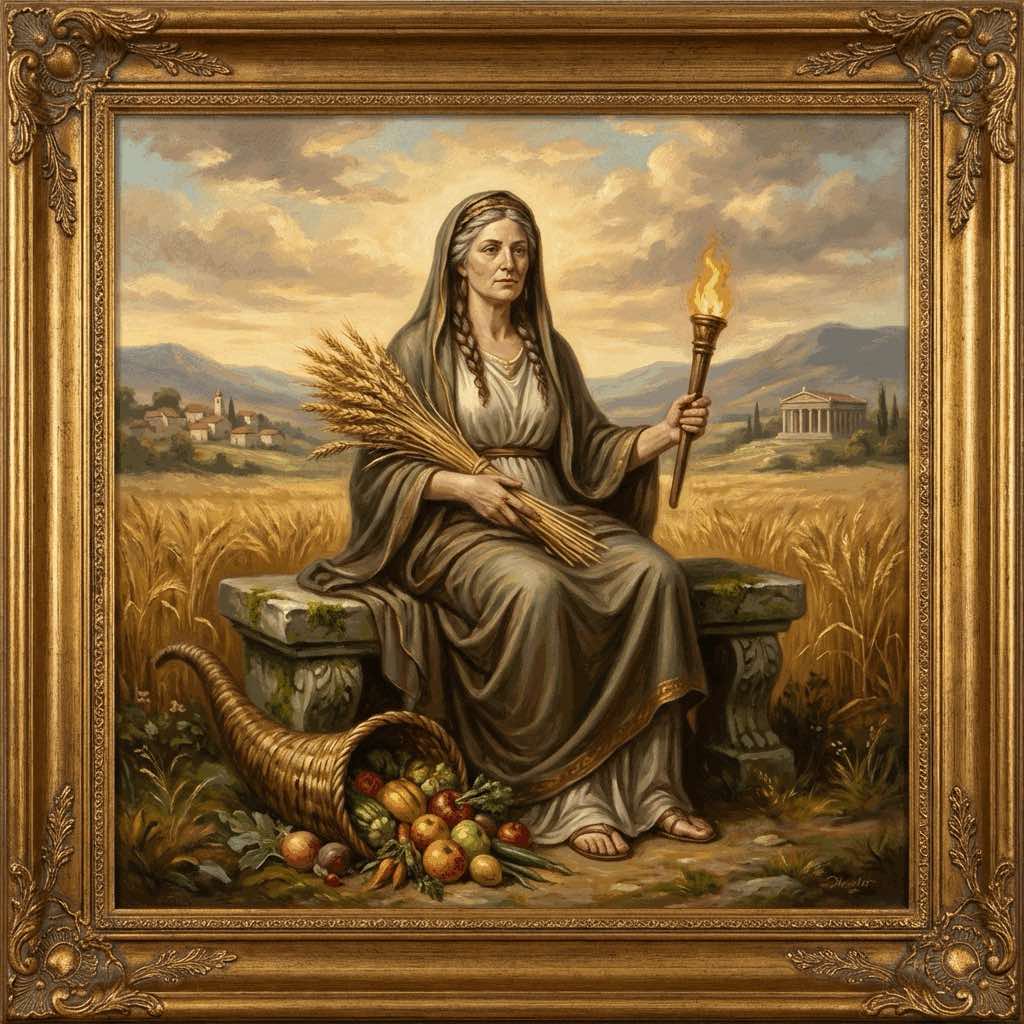
Demeter
DemeterGreek
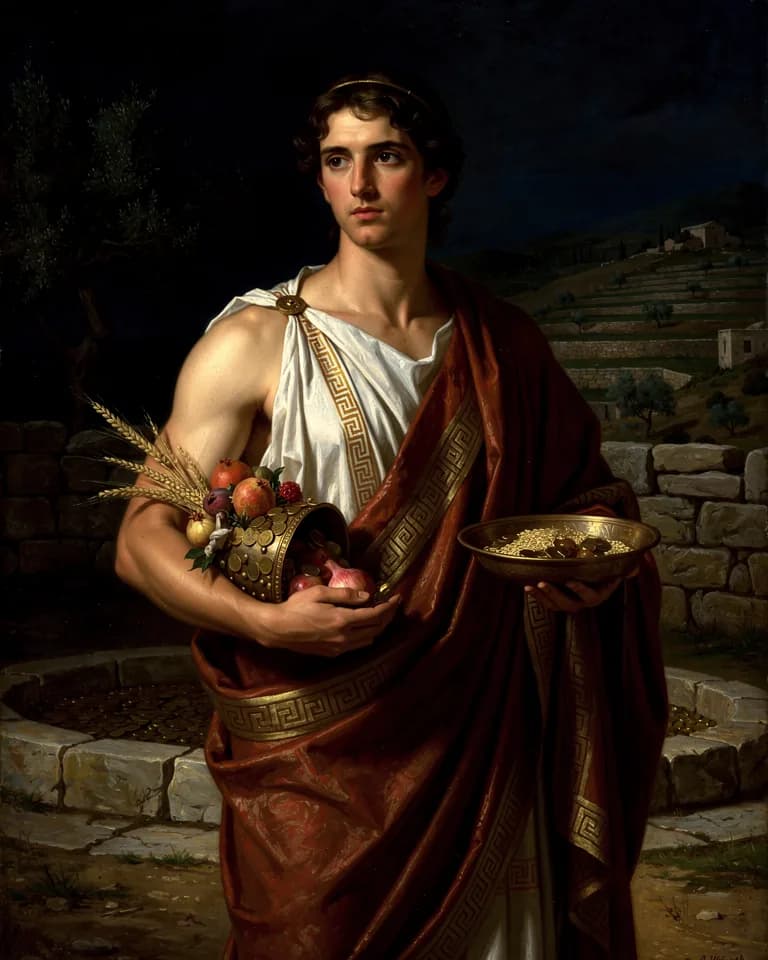
Plutus
PlutusGreek

Demeter and Plutus are recorded as parent and child in the Greek Pantheon.

At a glance

Demeter and Plutus compared
DemeterPlutus
TraditionGreek PantheonGreek Pantheon
Domainsagriculture, harvest, fertility, sacred lawwealth, agricultural abundance
Symbolswheat, torch, cornucopia, poppiescornucopia, child held by Eirene (Peace) or Tyche (Fortune)
Also calledCeresPloutos

Where they meet

They share a symbol: cornucopia.

  • cornucopia

Where they part

Only Demeter

Associated with agriculture, harvest, fertility, and sacred law.

Only Plutus

Associated with wealth and agricultural abundance.

How each was worshipped

Demeter

Cult sites
Telesterion at Eleusis; Thesmophorion sanctuaries in many cities
Festivals
Eleusinian Mysteries; Thesmophoria; Haloa

Grain and the mother's grief. Eleusis promised a better lot after death to initiates who could keep silence. The Thesmophoria was a women's festival of piglets and decayed offerings. Sicily claimed her as strongly as Attica.

Plutus

No cult sites or festivals are recorded in the atlas.

The two figures

Greek Pantheon

Demeter

Goddess of agriculture, harvest, and fertility. Mother of Persephone, whose abduction by Hades explains the seasons.

Demeter acts as the provider of food and the protector of marriage. She presides over the cycle of life and death through the harvest.

Read the full Demeter entry

Greek Pantheon

Plutus

The god of wealth, son of Demeter and the hero Iasion, born in a thrice-plowed field on Crete. Originally the wealth of the harvest, he became the personification of riches in general, most memorably as the blind god of Aristophanes' comedy.

Plutus was born to Demeter and the mortal hero Iasion, who lay together in a thrice-plowed fallow field in Crete. In the version Homer knows, Zeus killed Iasion with a thunderbolt for this union.

Hesiod tells how Demeter lay with the hero Iasion in a thrice-plowed fallow field on Crete and bore Plutus, a kindly god who goes everywhere over land and sea and makes rich whoever finds him. The story roots wealth in grain: in an agrarian world, the harvest was riches.
Read the full Plutus entry
About this comparison

Comparisons pair figures that play a similar role across traditions, or that the myths connect within one. A shared role does not, by itself, establish a shared origin.