
Side by sideParallel across traditions

Artemis vs Bastet

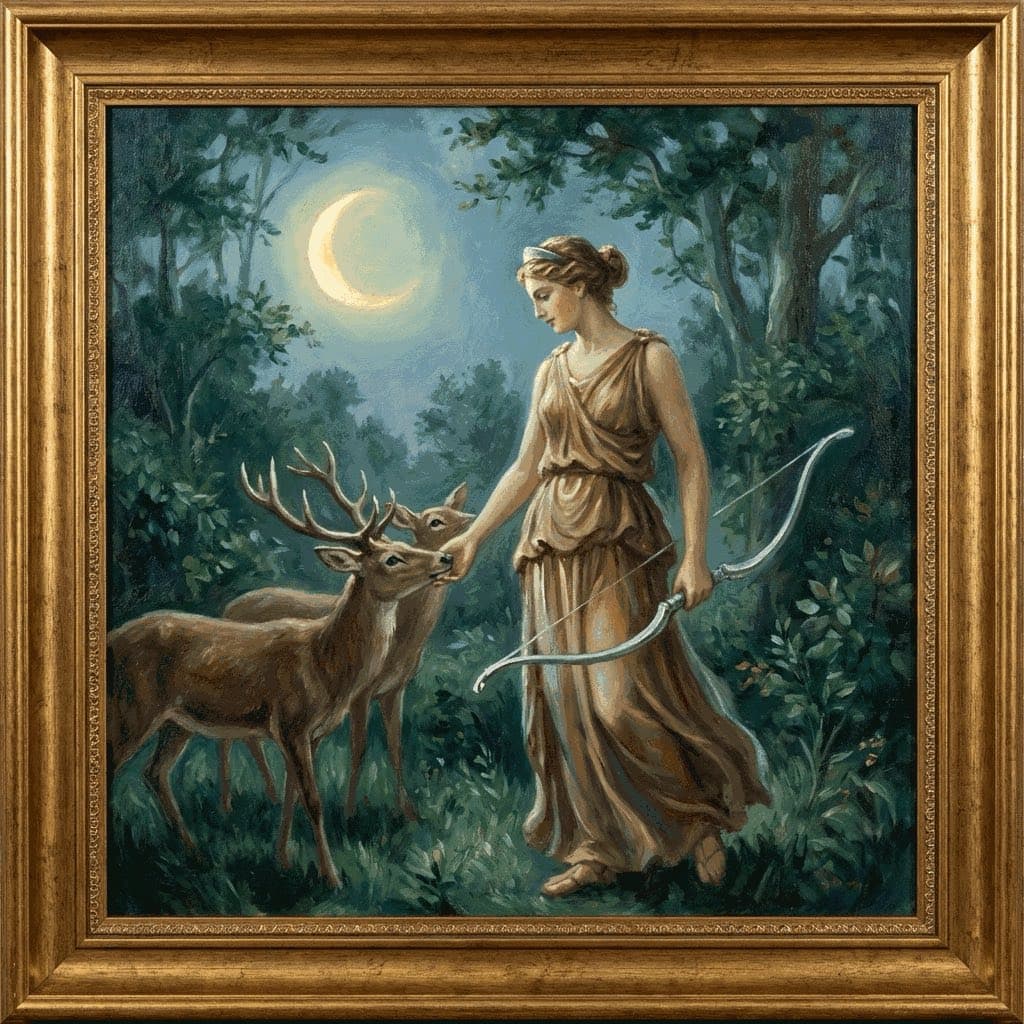
Artemis
ArtemisGreek
Bastet
BastetEgyptian

Herodotus explicitly identifies Bastet with Artemis; both are protective goddesses associated with the moon, joy, and the hunt/wild animals.

At a glance

Artemis and Bastet compared
ArtemisBastet
TraditionGreek PantheonEgyptian Pantheon
Domainshunt, wilderness, moon, childbirth, virginityprotection, cats, joy, dance, music, fertility
Symbolsbow and arrow, deer, moon, cypresscat, lioness, sistrum, aegis
Also calledDianaBast, Ubasti, Lady of Dread

Where they meet

The atlas records no domain or symbol that Artemis and Bastet share.

They are compared for the part each plays in their own tradition rather than for any attribute in common.

Where they part

Only Artemis

Associated with hunt, wilderness, moon, childbirth, and virginity.

Only Bastet

Associated with protection, cats, joy, dance, music, and fertility.

How each was worshipped

Artemis

Cult sites
Artemision at Ephesus; Brauron in Attica; Sanctuary at Aulis
Festivals
Brauronia; Elaphebolia; Ephesian Artemisia

Wild animals, childbirth, and girls leaving childhood are hers. Brauron kept the arktoi, the 'bears.' Ephesus housed a many-breasted civic image that is not a Greek huntress in a short chiton. Both are Artemis.

Bastet

Cult sites
Temple of Bastet at Bubastis (Per-Bastet)
Festivals
Bubastis festival described by Herodotus

Cat, perfume, and a noisy river pilgrimage. Herodotus says boats, music, and a larger crowd than any other Egyptian feast. Later she is the gentle counterpart to Sekhmet; both are the same solar eye in different moods.

The two figures

Greek Pantheon

Artemis

Goddess of the hunt, wilderness, and the moon. Twin sister of Apollo, protector of young women and animals.

Artemis is the fierce virgin goddess of the hunt and the wilderness ("*Potnia Theron*"). She roams the forests with her band of nymphs, protecting the natural world and punishing those who disrespect it.

Read the full Artemis entry

Egyptian Pantheon

Bastet

Goddess of home, fertility, and protection. Originally a fierce lioness warrior goddess, she later became gentler as a cat goddess.

Bastet was originally a lioness goddess of war, daughter of the sun god Ra. In her fierce form, she was nearly identical to Sekhmet, representing the destructive power of the sun. Over millennia, as domestic cats became cherished in Egyptian households for protecting grain stores from vermin, Bastet's image softened. She became associated with the protective, nurturing aspects of the sun rather than its scorching heat. By the Late Period, she was depicted primarily as a graceful cat or a woman with a cat's head, embodying domesticity and maternal care.

Bastet is the feline goddess of the home, protection, pleasure, and good health. In the earliest periods, she was depicted as a fierce lioness warrior deity, but over time she transformed into the gentler domestic cat goddess beloved throughout Egypt.
Read the full Bastet entry
About this comparison

Comparisons pair figures that play a similar role across traditions, or that the myths connect within one. A shared role does not, by itself, establish a shared origin.